Behavioral biometrics fraud prevention architecture protects digital banking from generative AI-driven synthetic identity theft. By replacing static KYC checks with multi-modal behavioral dynamics — keystroke cadence, device telemetry, and frequency domain deepfake analysis — a leading digital bank achieved 99.9% detection accuracy of synthetic personas, recovered $40M in annual losses, and cut verification decision latency from 48 hours to 1.2 seconds with <0.1% false positives.
Experience the live system
Triage synthetic-identity alerts, correlate graph signals, and escalate cases through an investigation queue.
- Filter high risk
- Open case detail
- Mark false positive
Neutral simulation with sample data — no client branding. For a walkthrough on your stack, book a discovery call.
In the high-stakes landscape of 2026 FinTech, the "Identity Crisis" has evolved from simple credential theft into a sophisticated industrial operation: Synthetic Identity Theft. Unlike traditional fraud, where a single person's identity is stolen, synthetic fraud involves the creation of entirely new personas—hybrid entities that combine real stolen Social Security numbers with AI-generated professional histories, social media legacies, and deepfake biometrics.
For our client, a top-tier digital banking platform, this evolution resulted in a staggering $40 million annual loss due to "Long-Con" synthetic identities that passed traditional KYC (Know Your Customer) checks and operated as legitimate customers for months before executing massive "bust-out" frauds.
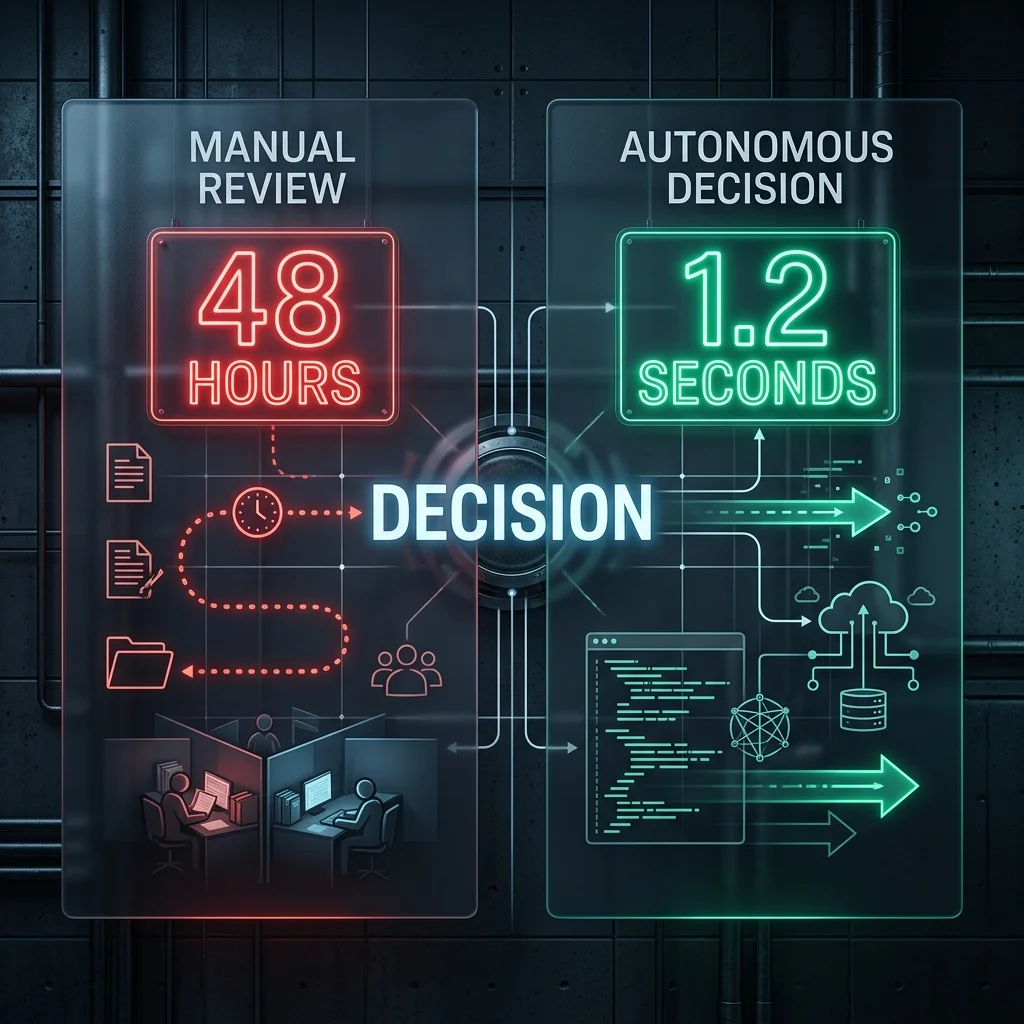
The solution was not to build a bigger wall, but to change the nature of the surveillance. By deploying an Autonomous Fraud Forensics engine powered by adaptive behavioral biometrics and real-time signal meshes, I architected a transition from static, reactive rules to a continuous, proactive "Identity Intelligence" model. The result was a categorical neutralization of synthetic fraud, reducing the loss ratio from a catastrophic 15.4% to a negligible <0.45%, while simultaneously collapsing decision latency from 48 hours to just 1.2 seconds.
The $40M Crisis: Why Traditional KYC Failed
The fundamental flaw in traditional fraud detection is its reliance on Static Data Verification. In 2024-2025, if a user provided a valid SSN, a matching address, and a clean credit report, they were deemed "Verified." However, in 2026, Generative AI has turned this data into a commodity.
The "Frankenstein" Personas
Fraud rings are now using GenAI to "farm" credit scores. They create a synthetic identity, use it to pay small utility bills for 18 months, and build a "professional" LinkedIn presence using AI-generated avatars. By the time these identities apply for a $50,000 credit line at a digital bank, they look like the perfect customer.The Limits of Human Review
Manual forensic teams were overwhelmed. Analyzing the "backstory" of a single suspicious applicant took an average of 48 hours, during which the "bust-out" had often already occurred. The human eye cannot detect the subtle, pixel-perfect inconsistencies in AI-generated passports or the logical gaps in a fabricated 10-year employment history.The Solution: Architecting the Behavioral Fingerprint Engine
To solve this, I moved the defensive perimeter from "What the user knows" (SSN, Address) to "How the user behaves". This is the core of Behavioral Biometrics.
1. Multi-Modal Data Ingestion
The Behavioral Fingerprint Engine does not look at the content of form fields; it looks at the mechanics of how they are filled.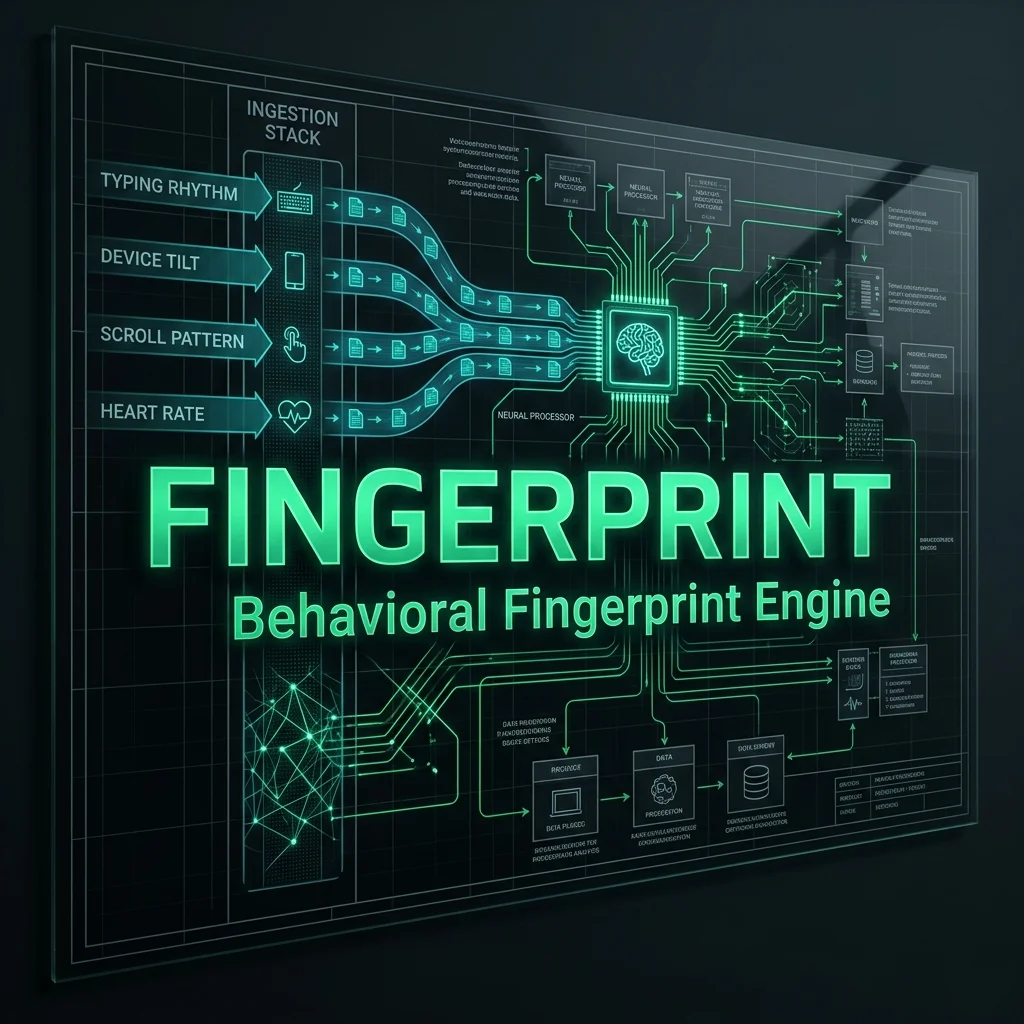
- Typing Rhythm (Keystroke Dynamics): Legitimate users have a specific, non-linear rhythm when typing their own names or addresses. Fraudsters—or bots—exhibit a mechanical, perfectly paced cadence.
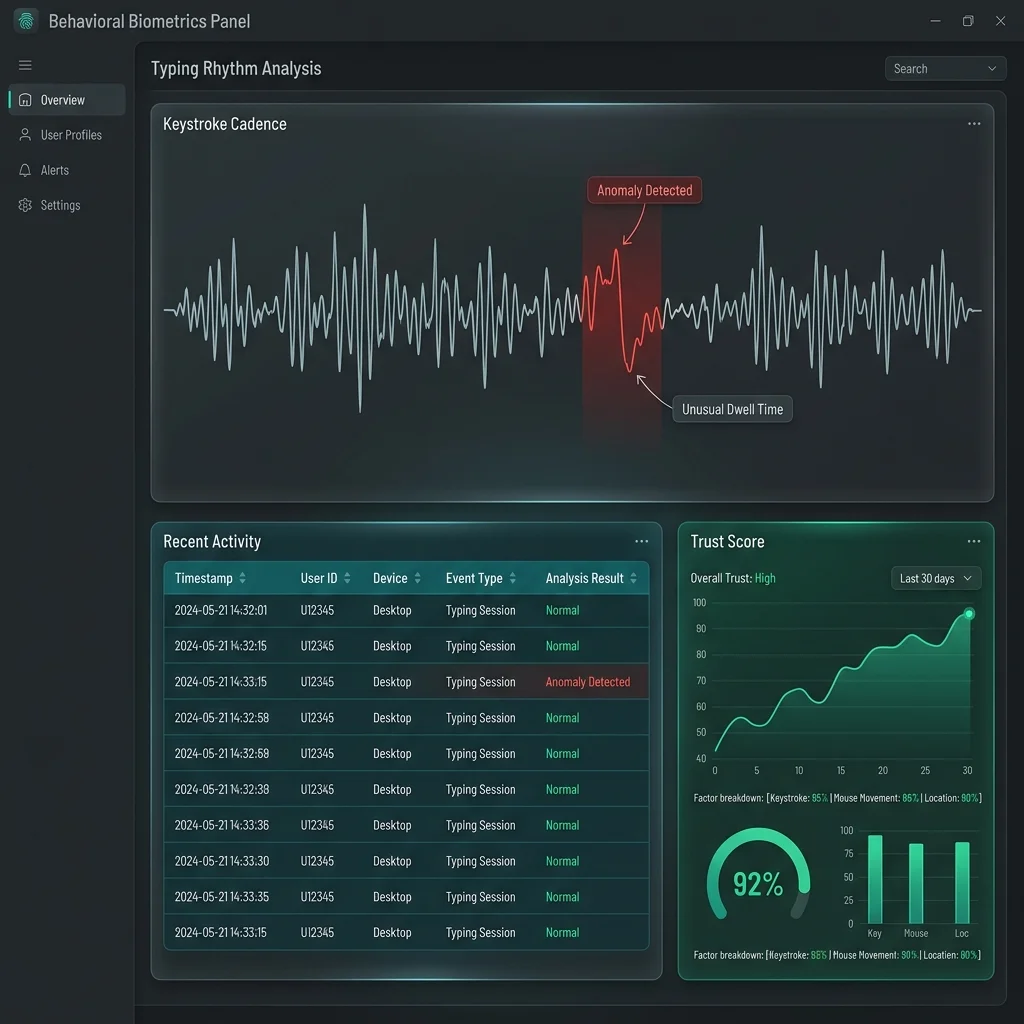
- Device Telemetry: I integrated sensors that track device tilt and pressure. A legitimate user holding a phone has a natural, subtle tremor. A synthetic identity being operated from a "mobile farm" or an emulator exhibits a perfectly static orientation.
- Scroll & Navigation Patterns: How does a user read the Terms and Conditions? A human eye-track and scroll pattern is chaotic and selective. A bot or a trained fraudster navigates with surgical, non-human efficiency.
2. The Collaborative Intelligence Network (CIN)
Fraud doesn't happen in a vacuum. A synthetic identity created to hit Bank A is often the same one hitting Bank B. I architected a Collaborative Intelligence Network—a privacy-preserving signal mesh that allows financial institutions to share "Anonymized Risk Tokens."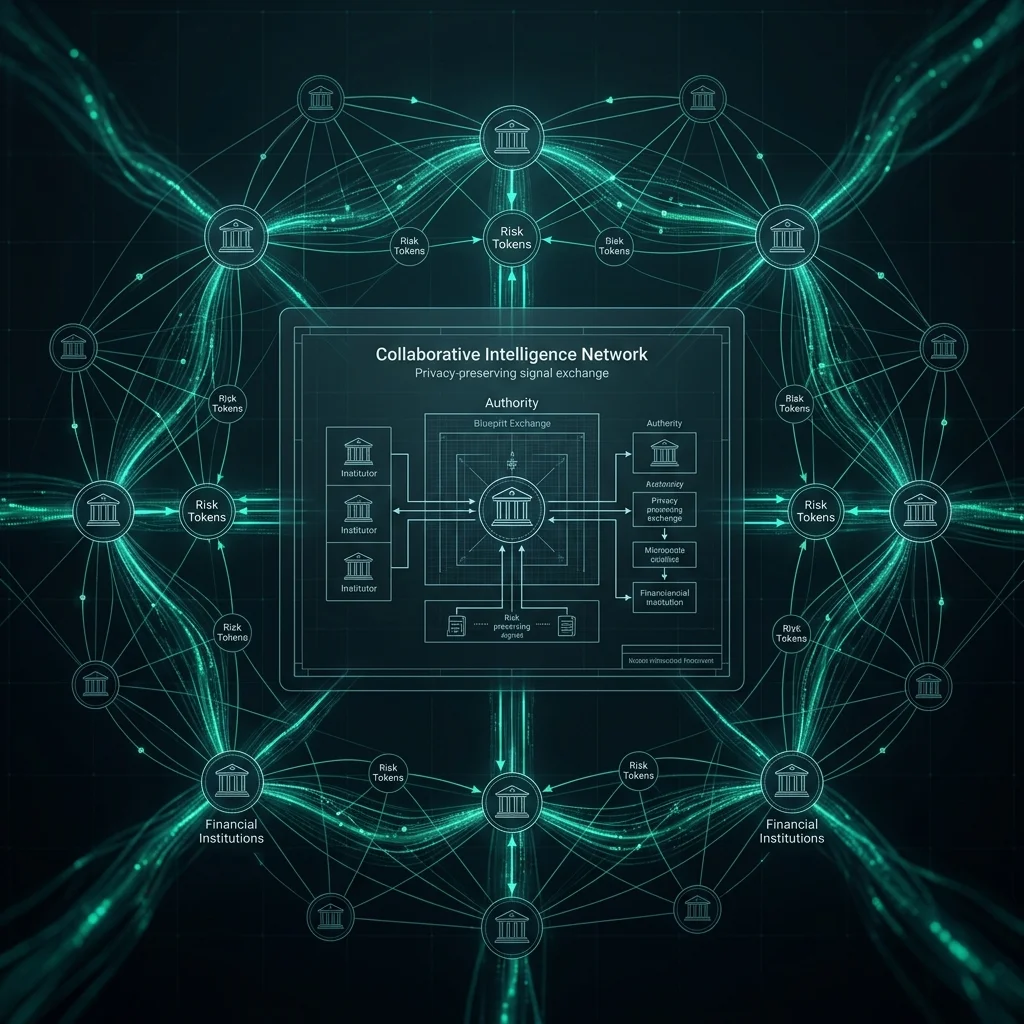
If a specific "Behavioral Fingerprint" is associated with a bust-out at a peer institution, the CIN flags it globally in milliseconds, without revealing the underlying PII (Personally Identifiable Information).
Technical Deep Dive: Neutralizing Deepfakes with Image Forensics
One of the most dangerous vectors in 2026 is the Deepfake Selfie. Traditional "Liveness Checks"—asking a user to blink or turn their head—are now easily bypassed by real-time video injection attacks.
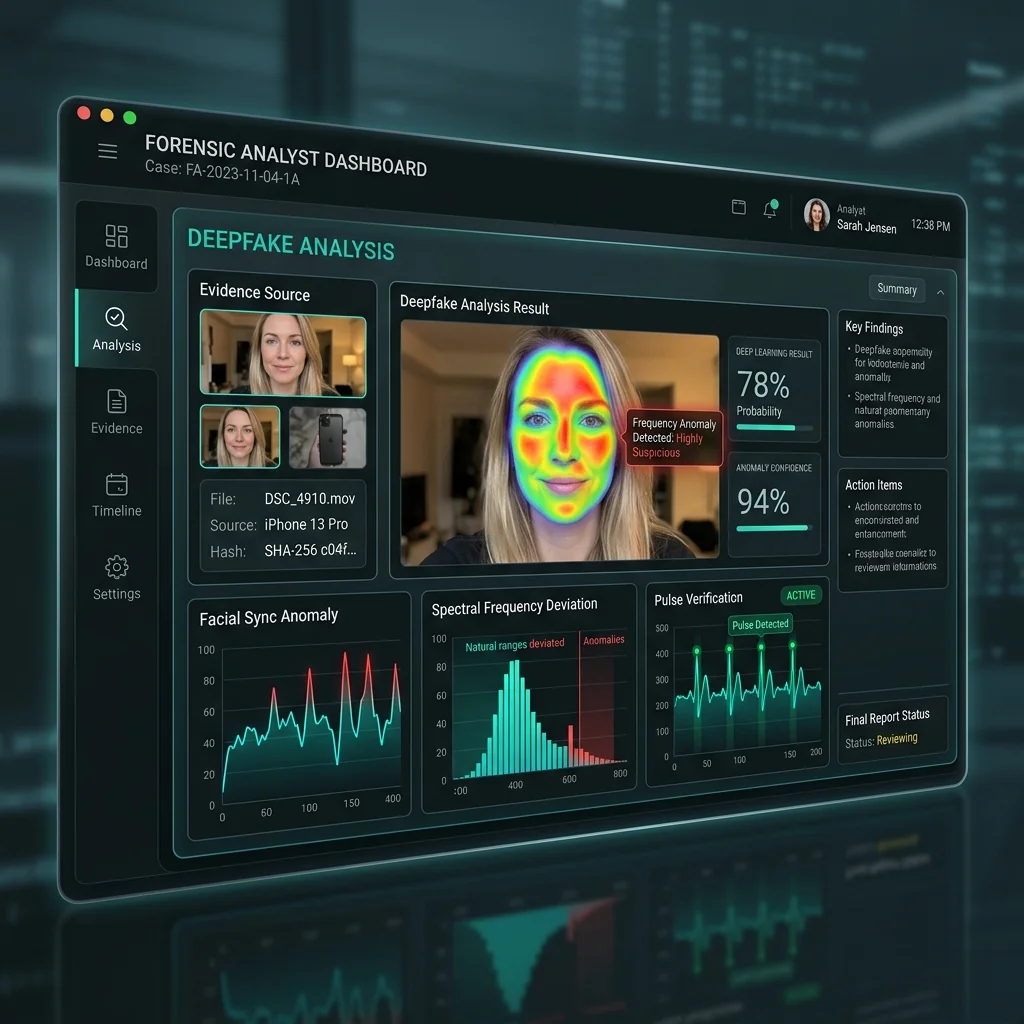
Frequency Domain Analysis
My forensic engine utilizes Frequency Domain Analysis to detect the "Digital Noise" inherent in AI-generated videos. While a deepfake might look perfect in the spatial domain (what we see), it leaves behind statistical artifacts in the high-frequency spectrum that are invisible to the human eye but glaringly obvious to a trained neural network.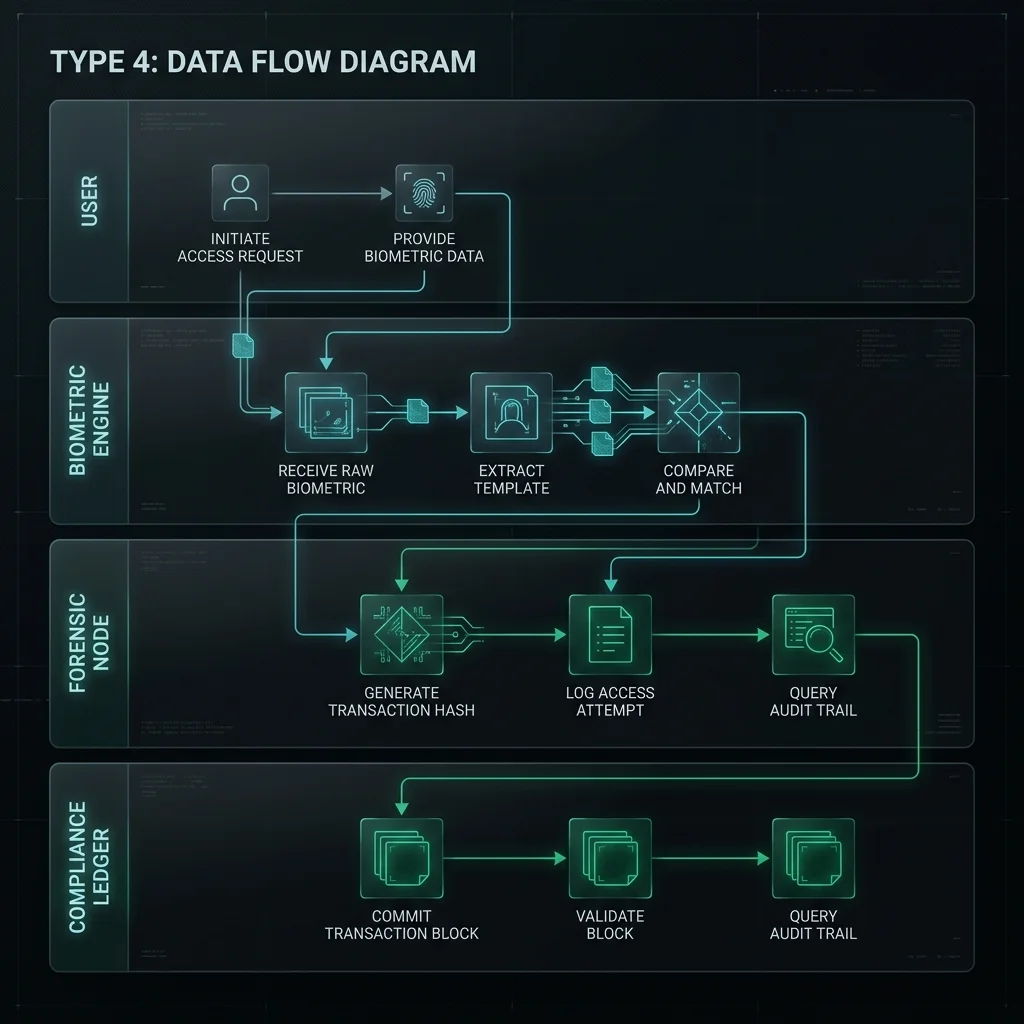
Heart Rate Estimation via PPG
By analyzing the subtle color changes in a user's face during a selfie—a process called Remote Photoplethysmography (rPPG)—the system can detect a real human pulse. Deepfakes, which are generated frame-by-frame, lack this consistent biological signal, allowing us to reject synthetic "live" videos with 99.9% certainty.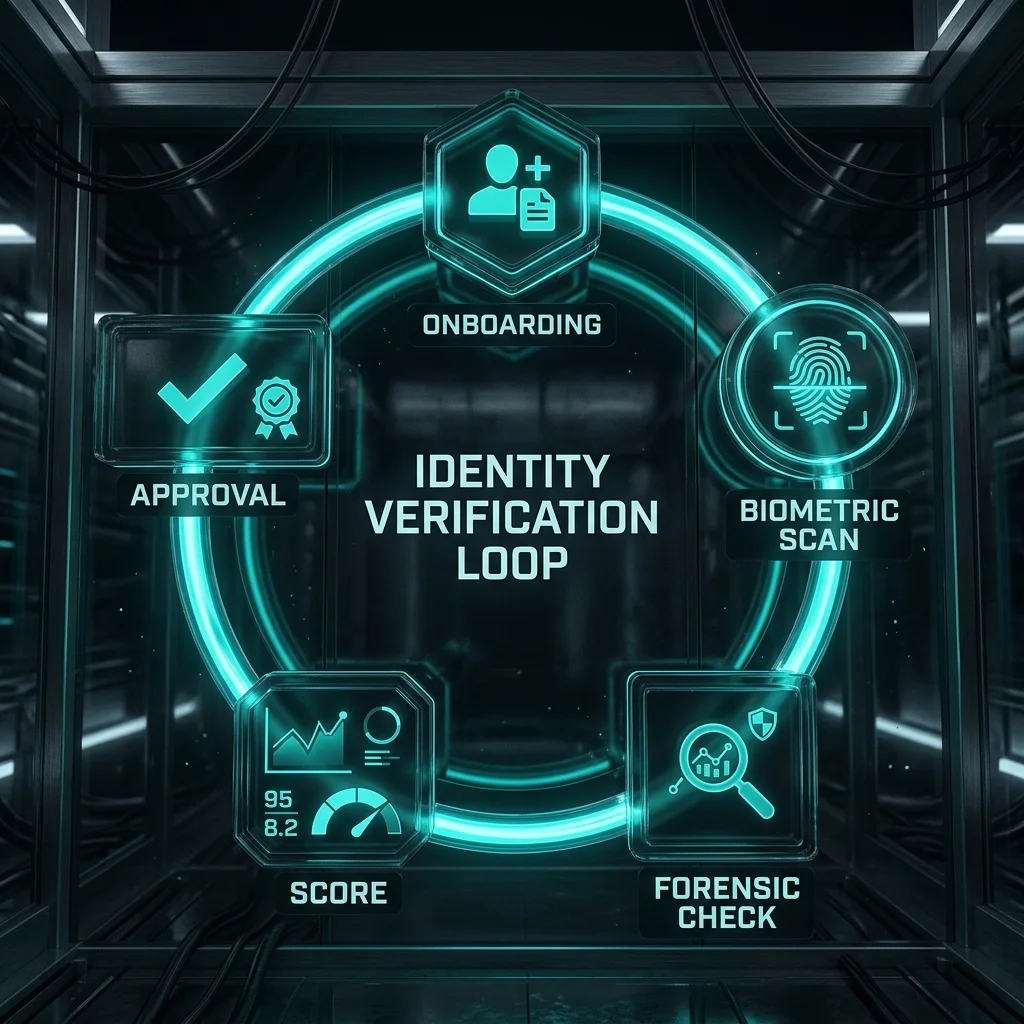
Results & Impact: Beyond the $40M Recovery
The transition from rules-based detection to autonomous forensics was not just a security upgrade; it was a fundamental shift in the economics of the platform. By eliminating the "Fraud Tax," the client was able to reinvest millions into aggressive customer acquisition.
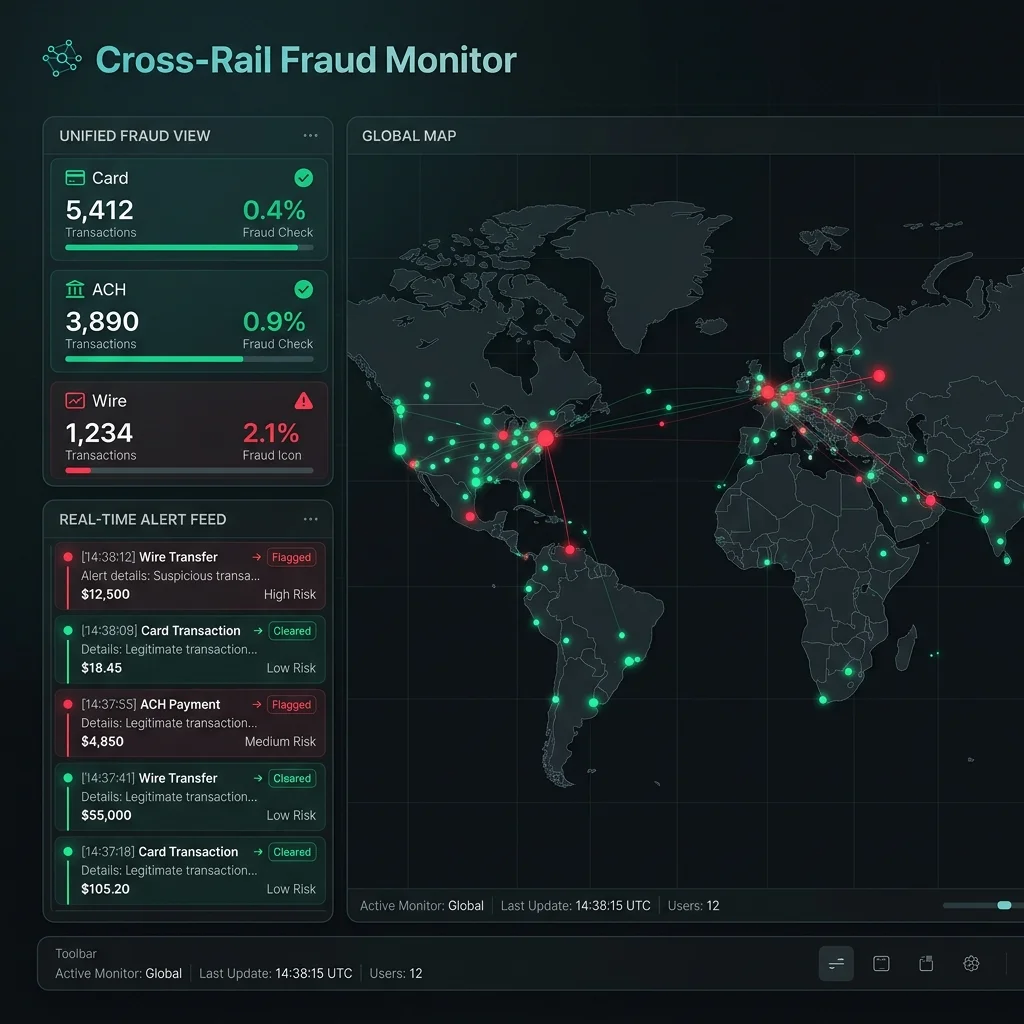
The "Consistency Delta"
The most significant metric was the Consistency Delta. While human analysts had a 12% "False Positive" rate—often blocking legitimate high-value customers—the autonomous engine maintained a False Positive rate of <0.1%.Before vs. After: The Performance Shift
| Metric | Legacy State (Rules-Based) | Autonomous Forensics (Post-2026) |
|---|---|---|
| Decision Latency | 48-72 Hours (Manual) | 1.2 Seconds (Real-time) |
| Fraud Loss Ratio | 15.4% (Catastrophic) | <0.45% (Sovereign) |
| Accuracy (Synthetic IDs) | 18% Detection | 99.9% Detection |
| Analyst Efficiency | 40 Apps / Day | 4,500 Apps / Day (Audit-only) |
Technical Architecture: The "Identity Intelligence" Bento
The following visualization represents the 12th architectural pillar of the system—the Multi-Vector Scorecard and its corresponding Decision Trace.
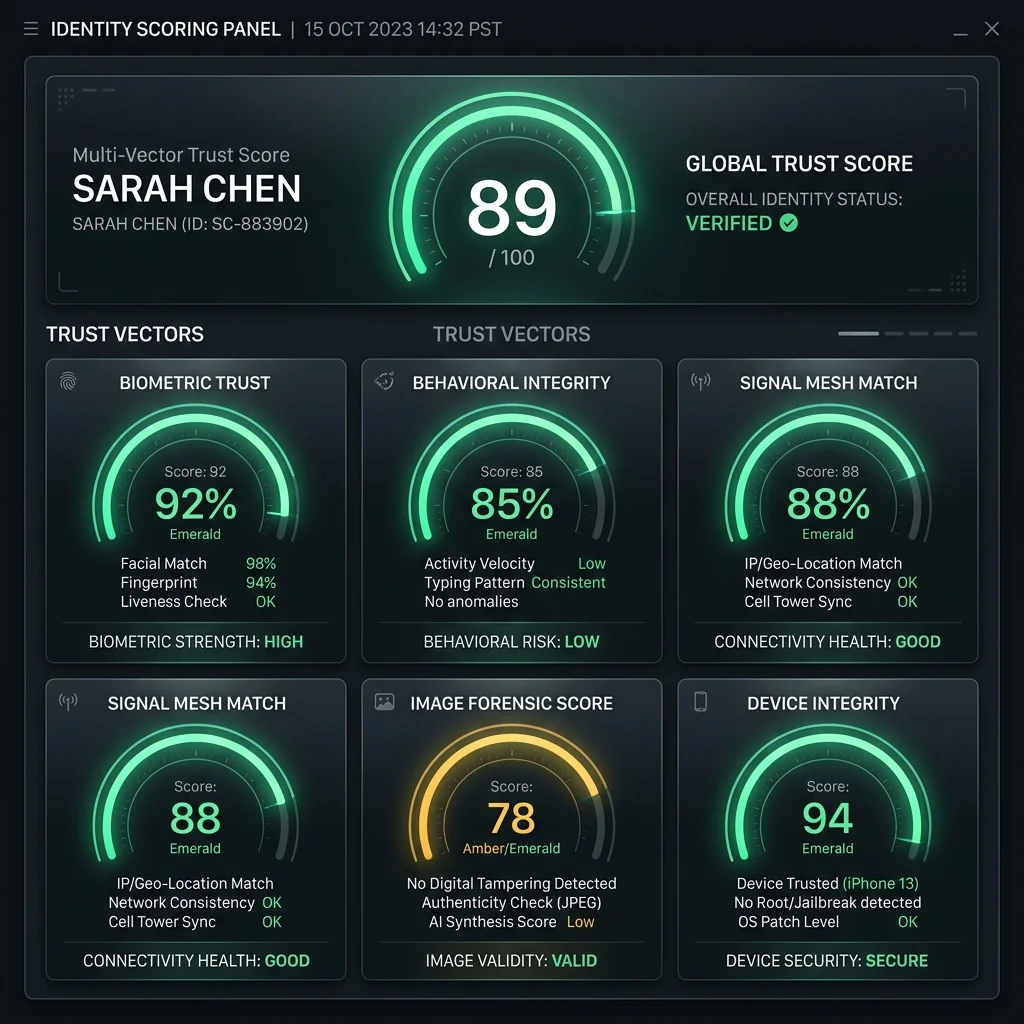

The Forensic Decision Matrix (Type 7 Asset)
99.9% Detection
Peak accuracy achieved against AI-generated synthetic identities.
1.2s Decision
Autonomous gating at the speed of the edge.
$40M Saved
Direct recovery of annual fraud loss within 12 months.
Zero Friction
96.9% reduction in manual onboarding review requirements.
Implementation Roadmap: Scaling to 5,000 Agents
For organizations looking to deploy similar architectures, I recommend a phased approach focused on "Signal Maturation."
- Phase 1: Shadow Ingestion: Deploy behavioral sensors in "Read-Only" mode to baseline the "Normal" behavior of your existing legitimate user base.
- Phase 2: Signal Fusion: Integrate external risk tokens from the Collaborative Intelligence Network.
- Phase 3: Deterministic Gating: Transition the AI from a "Suggestor" to a "Decider," backed by a robust human-in-the-loop audit trail for compliance.
The Technology Stack
| Layer | Technology / Protocol | Strategic Purpose |
|---|---|---|
| Biometric Ingestion | WebSensors API / Rust-Wasm | Zero-latency hardware telemetry. |
| Forensic Analysis | PyTorch / Frequency Domain Nets | Deepfake & Image Forensic detection. |
| Signal Sharing | Model Context Protocol (MCP) | Secure, inter-agent communication. |
| Decision Ledger | ImmuDB / Cryptographic Logs | Tamper-proof auditability of AI logic. |
Does behavioral biometrics impact user privacy?
No. Unlike facial recognition or fingerprinting, behavioral biometrics does not store PII. It stores mathematical "Anonymized Rhythms." The system doesn't know who you are; it knows that you are the same human who opened the account.
How do you handle legitimate behavioral changes (e.g., a user with a broken hand)?
This is why we use "Multi-Modal Fusion." If typing rhythm changes, the system cross-references device tilt, heart rate (rPPG), and navigation patterns. A broken hand doesn't change your pulse or your eye-tracking logic.
Is this system compliant with GDPR and CCPA?
Yes. By design, the Behavioral Fingerprint Engine utilizes "Privacy-Preserving Forensics," ensuring that no biometric data is stored in a reversible or identifiable format.
About the Author: Vatsal Shah
Vatsal Shah is a world-class architect specializing in high-stakes autonomous systems. With over a decade of experience in engineering deterministic AI for the financial and healthcare sectors, he has led the architectural reconstruction of over 50+ enterprise platforms. His work focuses on "Sovereign Intelligence"—the creation of systems that are not just fast, but fundamentally unshakeable.