STRATEGIC OVERVIEW The Digital Rejection: Why Technology Adoption Fails without Organizational Buy-In When global enterprise organizations initiate an AI transf…
The Digital Rejection: Why Technology Adoption Fails without Organizational Buy-In
When global enterprise organizations initiate an AI transformation, their first instinct is to allocate capital toward technology procurement. They sign multi-million dollar license agreements for enterprise copilots, commission custom API gateways, and hire machine learning engineers to build internal model repositories.
Yet, six months post-launch, executive dashboards show a sobering reality: tool utilization hovers under 15%, productivity metrics remain flat, and the workforce is quietly bypassing the new systems in favor of legacy processes.
This is the Digital Rejection. It occurs because technology adoption is never a pure deployment problem; it is a human alignment problem. In 2026, the delta between what an AI agent can do and what an average employee knows how to ask it to do is the single largest bottleneck in the modern enterprise.
Without targeted change management and workforce upskilling, employees default to defensive posturing. They perceive AI not as a lever to elevate their output, but as a threat to their job security.
To understand why this rejection occurs, we must analyze the structural misalignment between technology procurement and organizational capacity.
The structural friction points that trigger this rejection can be categorized into three distinct operational barriers:
The Skills Deficit: The Context Engineering Divide
In the legacy software era, applications were deterministic. An employee clicked a button, entered a structured form, and got a predictable result. AI-native software is probabilistic. It requires the user to engineer context, define objective functions, and validate non-deterministic outputs.Most non-technical staff do not possess these skills. They treat conversational interfaces like search engines, entering shallow queries and rejecting the system when the first response contains hallucinations. This is a skills gap, not a tool limitation.
Furthermore, context engineering is not a basic typing task. It requires understanding tokens, system roles, data formatting conventions, and instruction parsing. When a non-technical manager attempts to draft a project summary using a simple query like "summarize these files" without specifying format, length, or target context boundaries, the result is unstructured clutter.
The manager then blames the model and abandons the interface, returning to traditional manual writing. This context divide acts as a hard filter that isolates technical capability from operational productivity.
The Adoption Shadow: Passive Rejection
Employees rarely protest new software openly. Instead, they engage in passive resistance. They log in to satisfy monitoring dashboards, run superficial queries, and then return to spreadsheets and manual copy-pasting to do their actual work. This "shadow workflow" masks the failure of the AI initiative until it is too late to salvage the quarter's ROI.This passive rejection is fueled by cognitive overload. If employees must learn five different standalone AI interfaces while maintaining their baseline operational delivery timelines, they will default to the path of least cognitive resistance: their existing manual routines.
A successful change strategy must merge AI capabilities directly into the software they already use, making the path of least resistance the AI-assisted one.
The Incentive Paradox: Punishing Productivity
If an employee uses an AI assistant to compress an eight-hour task into two hours, but the organization's response is to double their workload without adjusting compensation or title, the employee will actively hide their productivity gains. A successful change playbook must realign incentives so that AI augmentation directly benefits the individual contributor.In many corporate systems, productivity gains are immediately socialized for corporate margins, while the worker retains 100% of the validation risk. If the AI makes a mistake, the human validator is blamed. If the AI saves time, the human validator is given more volume. This asymmetrical risk-reward profile must be balanced by leadership before asking staff to embrace AI-driven workflows.
Human-in-the-Loop Change Curves: Managing Fear, Skepticism, and Adoption Inertia
Every major transition in workplace technology—from the mainframe to the cloud—follows a predictable human change curve. However, the AI Change Curve has a uniquely steep psychological dip. Unlike previous tools that merely accelerated manual execution (e.g., email replacing fax), AI simulates cognitive action. This creates existential anxiety.
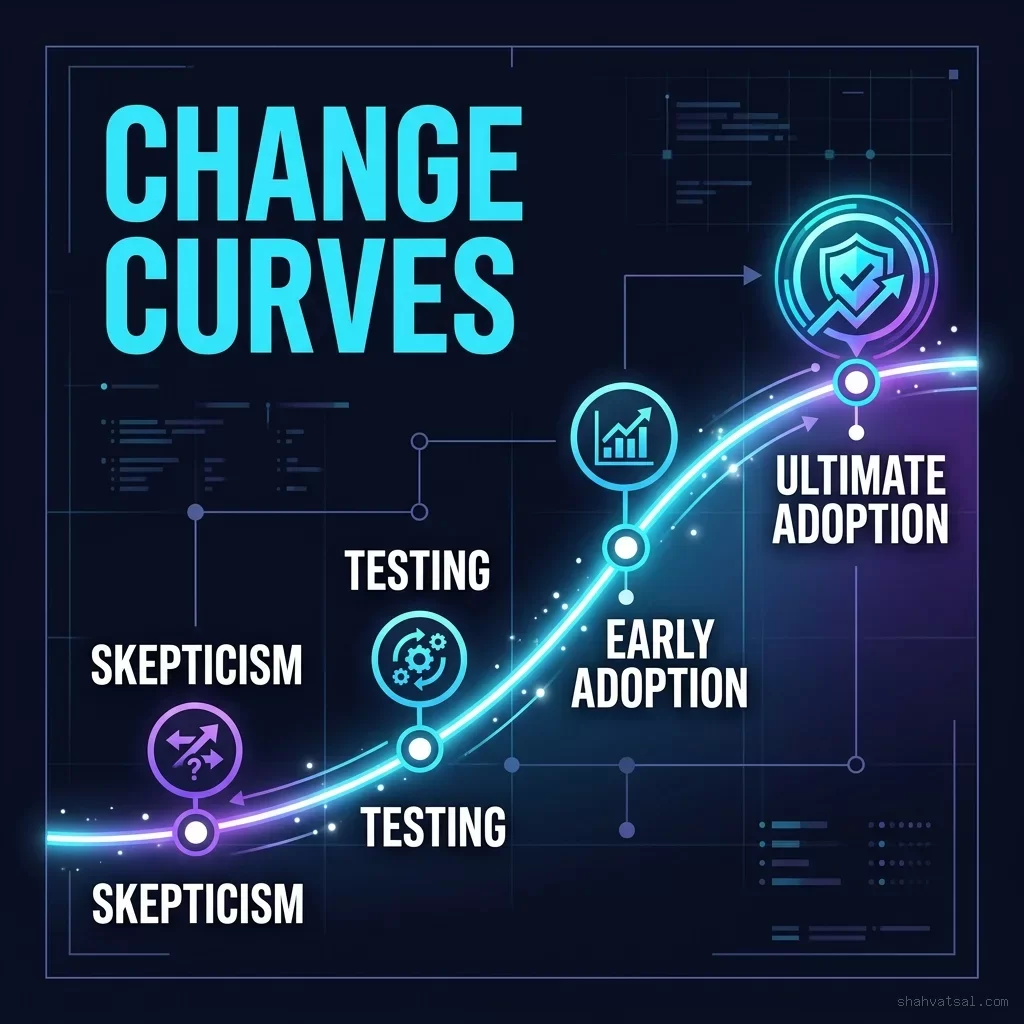
To manage this transition successfully, leadership must actively shepherd the workforce through the five phases of the AI Change Curve. Attempting to skip phases or force immediate adoption only drives skepticism underground.
AI Change Curve Timeline & Emotional Journey:
1. Alarm/Defensiveness: Fears replacement. Focus on baseline.
2. Active Skepticism: Focuses on hallucinations. Explores failure cases.
3. Micro-Testing: Initial trials on personal templates. Low risk.
4. Context Integration: Incorporates AI into specific domain workflows.
5. Workflow Synergy: Team-wide agentic collaboration. Human as validator.
Let's explore the operational phases and active change protocols required at each checkpoint:
Phase 1: Alarm & Defensiveness (The Substitution Threat)
When AI initiatives are announced, the immediate human response is fear of replacement. Employees look at their daily tasks, realize that LLMs can draft their copy, summarize their logs, or write their basic SQL, and conclude that their jobs are obsolete. This manifests as anxiety, friction, and decreased engagement.Action: Transparently define the role of the employee as the Human-in-the-Loop Validator rather than the generator. The focus is augmentation, not substitution. Establish clear guidelines explaining that human intelligence, domain expertise, and subjective judgment are the final gates for all production outputs.
Phase 2: Active Skepticism (The Hallucination Critique)
As employees begin testing the tools, they look for failure cases to validate their initial fear. When the LLM gets a calculation wrong, hallucinates a citation, or misinterprets a complex prompt, the skeptic declares the technology "unusable" and rejects it. This skepticism is an essential defensive coping mechanism.Action: Frame failure cases as expected probabilistic behaviors. Educate teams on validation loops, schema enforcement, and the limits of raw prompt inputs. Teach them how to catch errors systematically rather than dismissing the tool when an error occurs. Skepticism is converted to vigilance by treating model outputs as drafts that require expert human review.
Phase 3: Micro-Testing (Sovereign Context Trials)
Over time, curious employees run low-risk, personal tests. They use the AI to format a messy text block, brainstorm email headlines, or write a utility script. This is the inflection point on the change curve where they discover personal utility. It occurs in isolation, away from the pressure of formal corporate mandates.Action: Provide safe, sandboxed playgrounds where employees can experiment without fear of data leakage or performance monitoring. Celebrate micro-wins and allow individuals to set their own pace for integrating AI helper tasks. The goal is to build organic confidence through self-directed micro-utility.
Phase 4: Context Integration (The Centaur Workflow)
Employees begin designing "Centaur" workflows—integrating AI logic directly into their specific domains. They understand where the AI is strong (drafting, structuring, searching) and where it is weak (math, deep logic, truth verification). They work alongside the model, alternating between human execution and model synthesis.Action: Document and share local success stories across business units to build lateral momentum. Provide structured resources showing how peers solved similar problems using specific context templates, decreasing the cognitive barrier for adjacent team members.
Phase 5: Workflow Synergy (Agentic Partnership)
The employee operates as an orchestrator. They delegate routine text synthesis, context extraction, and reporting tasks to agentic structures, dedicating their time to strategic intent, data validation, and business governance. The team achieves a state of augmented performance where productivity limits are redefined.Action: Formalize these workflows in the company's operating playbook. Transition employee performance metrics to evaluate orchestration efficiency and validation accuracy, turning AI-augmented execution into the new corporate baseline.
Productizing the Upskilling Journey: Tailored Training for Non-Technical Staff
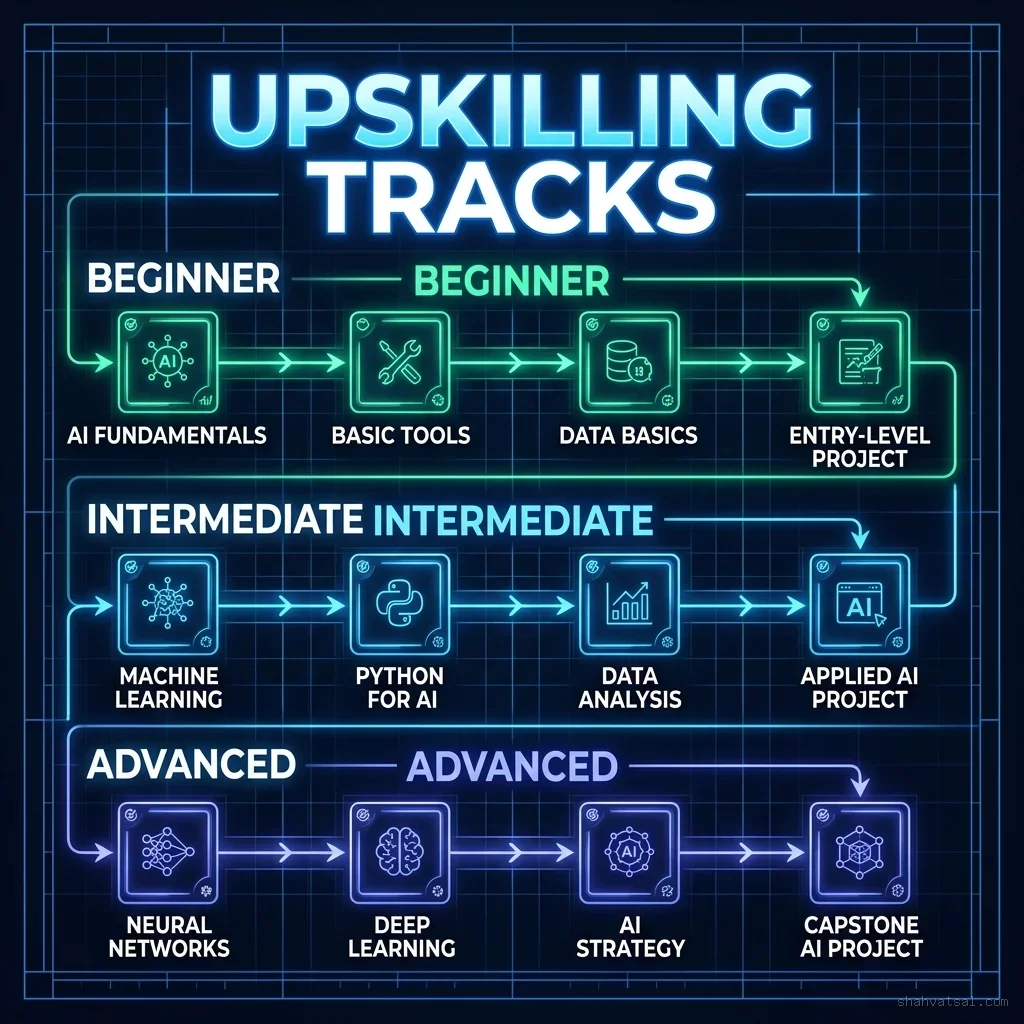
You cannot solve the AI skills deficit with a single weekend workshop or a list of "top 50 prompting templates." Upskilling must be treated like a product rollout: structured, tiered, continually audited, and integrated into the career progression framework of the company.
For an organization to build true cognitive leverage, it must implement a tiered AI Literacy Curriculum tailored to the technical requirements of different business roles.
| Training Tier | Target Audience | Core Focus | Required Competencies | Certification Metric |
|---|---|---|---|---|
| Tier 1: AI Literacy | All Employees | Basic capabilities & security | Privacy rules, SLM vs LLM, detecting hallucinations | Passing score on Prompt Safety and Data Leakage mock audit |
| Tier 2: Context Engineering | Knowledge Workers | Structured prompting & data input | Zero-shot prompting, few-shot prompting, system instructions | Successful construction of a reusable system prompt with schema validation |
| Tier 3: Agentic Orchestration | Business Analysts & Managers | Stateful workflows & tool use | MCP integration, validation loops, loop mitigation | Deploying an operational workflow connecting an LLM to a local database |
Tier 1: AI Literacy — Hardening the Baseline
The foundational level focuses on demystifying probabilistic models and enforcing data security. Non-technical staff must understand that an enterprise LLM is not a database containing facts, but a prediction engine that generates text based on patterns.Crucially, this tier must cover the legal and security guardrails of the organization. Employees must know which data is safe to input (public summaries, generalized code requests) and which is strictly prohibited (PII, client source code, confidential financial disclosures).
Through interactive simulation testing, employees must be trained to recognize semantic drifts and bias patterns in outputs. They learn the core mechanisms of token consumption and cost boundaries, establishing a baseline of respect for shared infrastructure resources.
Tier 2: Context Engineering & Prompting — Maximizing Output Quality
Once the baseline is established, training shifts to maximizing the quality of model outputs. Staff must be transitioned away from "conversational chat" and guided toward Structured Prompting.They learn to define the Role, Context, Task, Constraints, and Output Format of every query. They study the difference between simple prompting and few-shot prompting (providing examples within the prompt) and learn to parse complex outputs against predetermined structures.
In this stage, workers are introduced to linguistic clarity principles. They learn to eliminate vague phrasing like "make it better" and replace it with quantitative constraints like "reorganize into exactly three bullet points containing concrete metric examples." They also build custom system templates that serve as consistent context boundaries for routine daily operations.
Tier 3: Agentic Orchestration — Building Centaur Operators
The highest level of upskilling focuses on turning knowledge workers into system orchestrators. Using low-code tools or unified API frameworks, employees learn to chain multiple prompts together, design validation loops (where one prompt checks the output of another), and connect models to external data sources via standardized protocols like the Model Context Protocol (MCP).They move from executing single prompts to constructing persistent, stateful agentic workflows that automate multi-step business logic.
At this level, the operator is trained to identify and debug execution loops. They learn to manage state variables, store dynamic context, and establish validation thresholds that determine when a task is complete or when it requires human escalation.
They exit this tier not as passive prompt-writers, but as structural builders capable of automating their own repetitive workflows.
Transition Gates: Measuring Actual Transformation Success Beyond Tool Rollout
In the enterprise, what gets measured gets managed. The failure of most AI change plays is rooted in lazy metrics. Executive leadership often measures success by counting tool provisioning rates (e.g., "We have rolled out 5,000 licenses to our HR team").
However, provisioning rates are vanity metrics. They tell you nothing about whether the tools are actively improving operations or if they are sitting idle while employees default to legacy workflows.
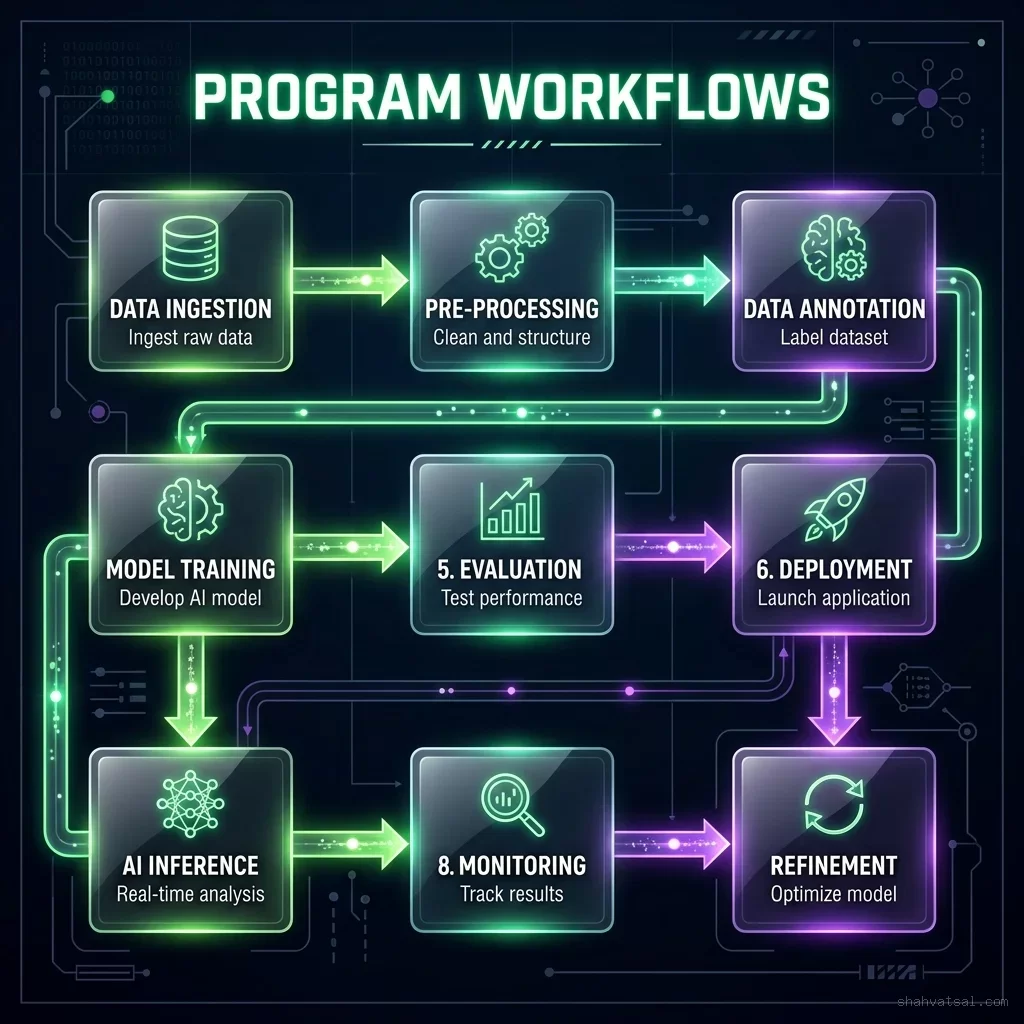
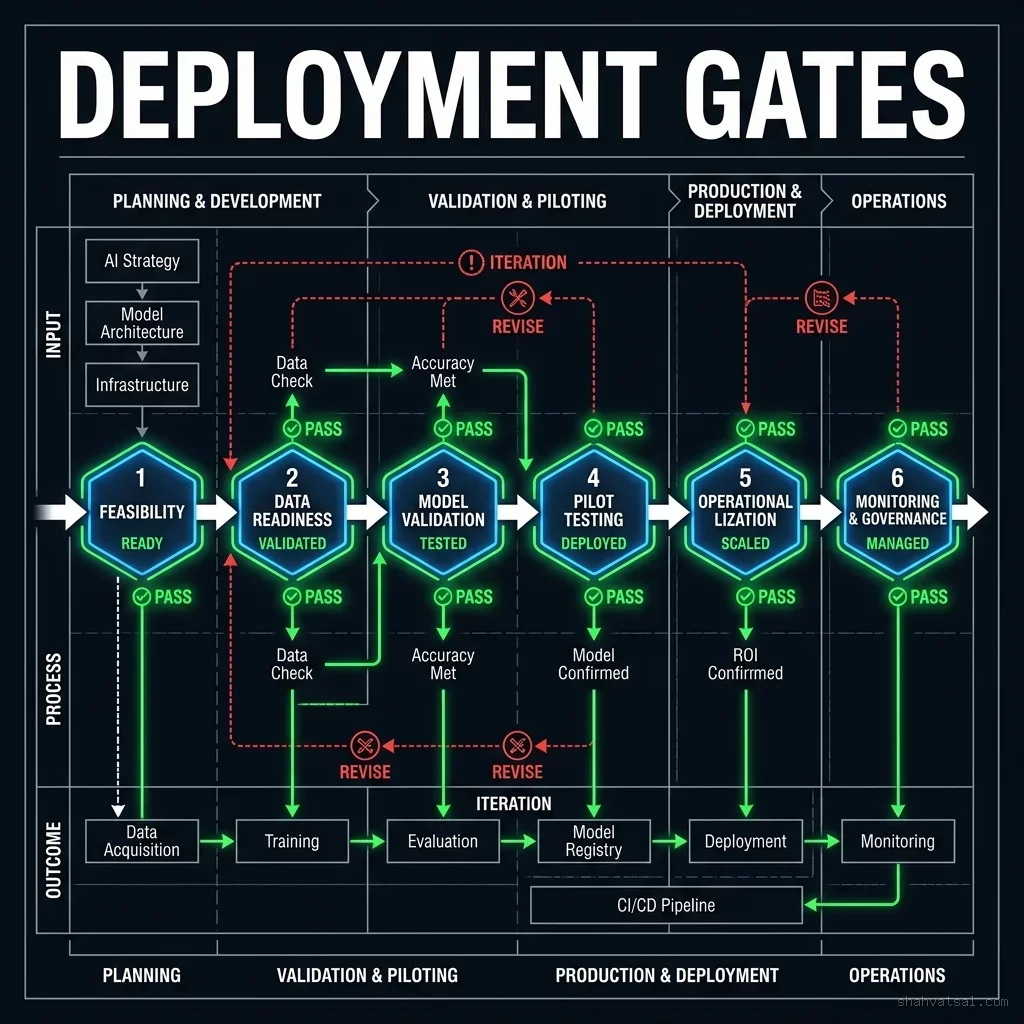
To drive real organizational change, you must implement Transition Gates. These are strict, data-driven milestones that a business unit must clear to prove they have successfully integrated AI into their operational workflow.
Gate 1: Behavioral Integration Rate (BIR)
Rather than measuring if an employee can log in, the BIR measures how often they actively use the tool to solve high-value tasks. It tracks the volume of prompt queries that result in completed actions or document exports, filtering out superficial or experimental chatter.A high BIR indicates that the system is resolving core operational pain points rather than serving as a novel distraction.
Gate 2: The Adoption Gap Analysis
This gate compares the theoretical time saved by AI tools against actual task completion times. If the tool saves two hours per task on paper, but projects are still delivered on the old timelines, the adoption gap is high. This signals workflow bottlenecks, communication latency, or employee hoarding of time.To resolve the adoption gap, leaders must audit the peripheral workflows (e.g., review pipelines, sign-off processes) that may be swallowing the time saved by the AI node.
Gate 3: Error Rate & Human-in-the-Loop Validation Velocity
As AI systems output probabilistic data, employees must serve as validators. This gate measures how quickly and accurately staff identify, correct, and report hallucinations or formatting errors in model-generated outputs. If validation errors slip past the human node into production, the upskilling track has failed.This gate is monitored via automated audit trails that compare raw model outputs with final human edits, calculating edit distance metrics to ensure that critical verification is occurring systematically rather than passively.
Gate 4: Direct Business ROI & Cost Reduction
The final gate measures the financial impact of the transformation. It tracks the reduction in external agency costs, the increase in content/code output volume per head, or the decrease in customer support ticket resolution times. A business unit is only declared "AI-Adopted" when its operational metrics reflect these efficiency gains.These metrics must be audited by independent business controllers to ensure that efficiency gains translate directly to bottom-line performance rather than getting lost in reporting fluff.
+-----------------------------------------------------------------+
|               AI TRANSFORMATION WORKFLOW PIPELINE                |
|                                                                 |
|   [Human Operator] ---> (Structured Input) ---> [AI Agent]      |
|          ^                                           |          |
|          |                                           v          |
|    (Validation) <----- [Deterministic Gate] <--- (Output JSON)  |
|          |                                                      |
|          +------------> [Success Milestone] ---> (ROI Output)   |
+-----------------------------------------------------------------+
Let's organize these metrics into a standardized workflow playbook for tracking team-wide integration:
What to do Monday morning: 3 steps to audit your team's AI readiness
If you are a manager or executive lead, you do not need a three-month consulting engagement to begin your change management play. You can audit your team's current state and start building cognitive leverage on Monday morning with three concrete actions.
1. Perform a "Hidden Skepticism" Audit
Set up one-on-one reviews with your core operators. Do not ask them if they like the new AI tools; ask them to show you their exact chat history.Look for the "hallucination wall"—the point where they ran a prompt, got a poor or incorrect response, and stopped using the tool. This audit will give you a realistic picture of your team's actual adoption status and highlight where basic upskilling is desperately needed.
By mapping these failure points, you can group employees into common friction profiles (e.g., the safety blocker, the prompt failure blocker, or the data access blocker) and address their specific skepticism with targeted guidance.
2. Identify the High-Leverage Pilot Task
Analyze your team's weekly work queue. Identify the single most repetitive, text-heavy, or structure-based task (e.g., drafting weekly status reports, parsing incoming client feedback, or writing template emails).Declare this task the AI-First Pilot. Re-write the operational playbook for this task, mandating that the first draft must be generated by a structured system prompt, with the human employee operating strictly as the validator and refiner.
This pilot must have clear success thresholds (e.g., "Drafting time reduced from 60 minutes to 10 minutes with zero output errors"), grounding the experiment in objective operational metrics.
3. Establish the Team's Shared Context Sandbox
Set up a central, private repository (e.g., a shared folder or custom internal portal) where team members can post their successful system prompts, few-shot templates, and workflow automations.Incentivize this sharing by making "AI enablement" a core criterion in monthly or quarterly performance reviews. By turning individual productivity gains into team-wide context, you prevent isolated successes from fading when a key employee leaves.
Over time, this sandbox will evolve into the team's custom intellectual property repository, acting as a competitive advantage that accelerates onboarding for new hires.
Technical Appendix: Implementing Automated Transition Gate Checks
To verify that teams are not bypassing AI validation checks, engineering leads can implement automated transition gate logs. Below is a sample Python implementation of a validation gateway that tracks human edit distance on model-generated code before it enters production:
import json
import difflib

def calculate_validation_velocity(generated_text: str, human_edited_text: str) -> dict:
    """
    Calculates the Edit Distance and Validation Velocity of a human-in-the-loop audit.
    If human makes 0 edits, it flags potential rubber-stamping (passive risk).
    If human rewrites 100%, it flags model failure or high skepticism.
    """
    matcher = difflib.SequenceMatcher(None, generated_text, human_edited_text)
    similarity = matcher.ratio()

    # Calculate edit metric
    edit_ratio = 1.0 - similarity

    status = "OPTIMAL_COGNITIVE_PARTNERSHIP"
    if edit_ratio < 0.02:
        status = "WARNING: POSSIBLE_RUBBER_STAMPING"
    elif edit_ratio > 0.85:
        status = "WARNING: HIGH_REJECTION_OR_MODEL_FAILURE"

    return {
        "similarity_score": round(similarity, 4),
        "human_edit_ratio": round(edit_ratio, 4),
        "audit_verdict": status
    }

# Example test run
ai_output = "The system will automatically sync changed files on build version 1.3.0.0."
human_final = "The system will sync all changed files on build version 1.3.0.0 for Linux."
result = calculate_validation_velocity(ai_output, human_final)
print(json.dumps(result, indent=2))
This simple script allows you to monitor if your staff is blindly copy-pasting AI outputs (which introduces hallucination risk into your business) or if they are actively auditing and improving them.
By integrating this validator into your team's Git commit hooks or workflow submission channels, you can programmatic enforce human audit requirements, protecting your operations from silent model decay and prompt regressions.
How do we deal with employees who are afraid that AI upskilling will make them redundant?
Frame upskilling as career insurance. An employee who knows how to operate as a Human-in-the-Loop Validator and construct complex context loops is far more valuable to a 2026 enterprise than one who merely manually executes basic tasks. The threat is not AI replacing humans, but humans using AI replacing those who do not.
How long does a typical team take to move through the AI change curve?
With structured upskilling and clear leadership direction, teams usually move from Phase 1 (Alarm) to Phase 4 (Context Integration) in 6 to 12 weeks. Without targeted change management, they often stay stuck in Phase 2 (Skepticism) indefinitely.
How do we track BIR (Behavioral Integration Rate) without invading employee privacy?
You track tool usage logs at the application level—counting API calls, prompt submissions, and structured output validations. You do not monitor individual keystrokes; you measure the functional output delta of the business unit.
Should prompt engineering be taught to non-technical staff?
Yes, but rename it to 'Context Engineering'. Prompt engineering sounds like creative writing; Context Engineering is about structuring data, understanding input limits, and validating outputs. It is a core operational skill for every modern office worker.
What is the single biggest mistake managers make during AI transformation?
Expecting immediate, magic results without providing training or adjusting incentives. AI tools are probabilistic and require human validation. If you do not allocate time for training and validate validation loops, your team will reject the tool.
About the Author
Vatsal Shah is an elite AI Solutions Architect and Technology Leader. He designs and implements the change management playbooks, upskilling frameworks, and agentic orchestration pipelines that allow global enterprise organizations and GCCs to scale their AI capabilities safely, securely, and with clear, measurable ROI.