Table of Contents Introduction What is the Sync-Zero Methodology? The Coordination Tax: Why Scrum is Failing AI-Native Teams Pillars of the Sync-Zero Framework …
Introduction
The core promise of Agile software development was velocity through lightweight coordination. Over the past two decades, however, frameworks like Scrum and SAFe have drifted into bureaucratic systems. Teams find themselves trapped in a cycle of endless meetings: sprint planning, backlog refinement, daily standups, sprint reviews, and retrospectives. These ceremonies were designed for a world where humans had to manually sync their mental states via verbal communication.
In 2026, the rise of the autonomous agentic workforce has rendered these synchronous patterns obsolete. When a team consists of a few human architects directing a mesh of 100+ specialized software agents, holding a 15-minute synchronous "standup" is a major bottleneck. AI agents do not need to attend Zoom meetings to align their tasks; they share context at machine speed. Human developers, similarly, require deep, uninterrupted focus blocks to define strategic intent rather than reporting status. Enter Sync-Zero: the methodology that eliminates meetings in favor of asynchronous, AI-mediated alignment.

What is the Sync-Zero Methodology?
The Sync-Zero Methodology is a software delivery framework optimized for AI-native teams that eliminates synchronous coordination meetings, replacing them with continuous, automated context synchronization via specialized AI agents.
Under Sync-Zero, alignment is maintained not through verbal status updates, but through context-routing engines. These engines continuously analyze commit streams, task state transitions, and workspace modifications. They summarize progress, identify architectural blockages, and route context directly to the contributors (human or agent) who need it, exactly when they need it.
Core Shifts of the Sync-Zero Shift
- Non-Linear Time Execution: Work is no longer bound to time-boxed sprints or uniform timezone hours. Execution flows continuously across parallel development branches.
- AI-Mediated Coordination: Instead of developers manually communicating dependencies, context agents monitor repository state transitions and automatically flag conflicts before code integration.
- Intent-Driven Progress: Status tracking transitions from "what did you do yesterday?" to "does the current system state align with the defined strategic intent?"
The Coordination Tax: Why Scrum is Failing AI-Native Teams
Every time a developer is forced to stop coding, attend a meeting, and restart their task, they pay a high cognitive price known as the Coordination Tax. Studies of engineering velocity show that it takes an average of 23 minutes to refocus after a meeting interruption.
In a traditional scrum environment, a developer's day is fragmented by scheduled meetings. For AI-native teams operating with highly scaled agentic systems, this overhead is unsustainable.
Pillars of the Sync-Zero Framework
To successfully transition to a meeting-free development environment, teams must establish three functional pillars:
- The Intent Ledger: A centralized, version-controlled repository (typically a Git markdown file like
strategic-intent.md) where the product goals, architectural boundaries, and budget allocations are defined. - Context-Streaming Gateways: Infrastructure components that listen to workspace modifications, issue tracking APIs, and system logs, using Model Context Protocol (MCP) to expose these updates to agents.
- Continuous Verification Pipelines: Automated test suites that run on every commit, validating code safety, security compliance, and performance bounds without requiring manual oversight.
The 'Daily Standup' is Now an Automated Intent Diff
In Scrum, the daily standup serves to align the team on progress and blockers. In the Sync-Zero framework, this verbal sync is replaced by an Automated Intent Diff.
At the end of each operational cycle, a specialized summary agent audits repository commits, ticket transitions, and CI logs. It parses these changes against the strategic-intent.md ledger and generates a clear status report. This digest is routed asynchronously to human leads via team channels or dashboard updates, highlighting blockages and code changes without requiring a single meeting.
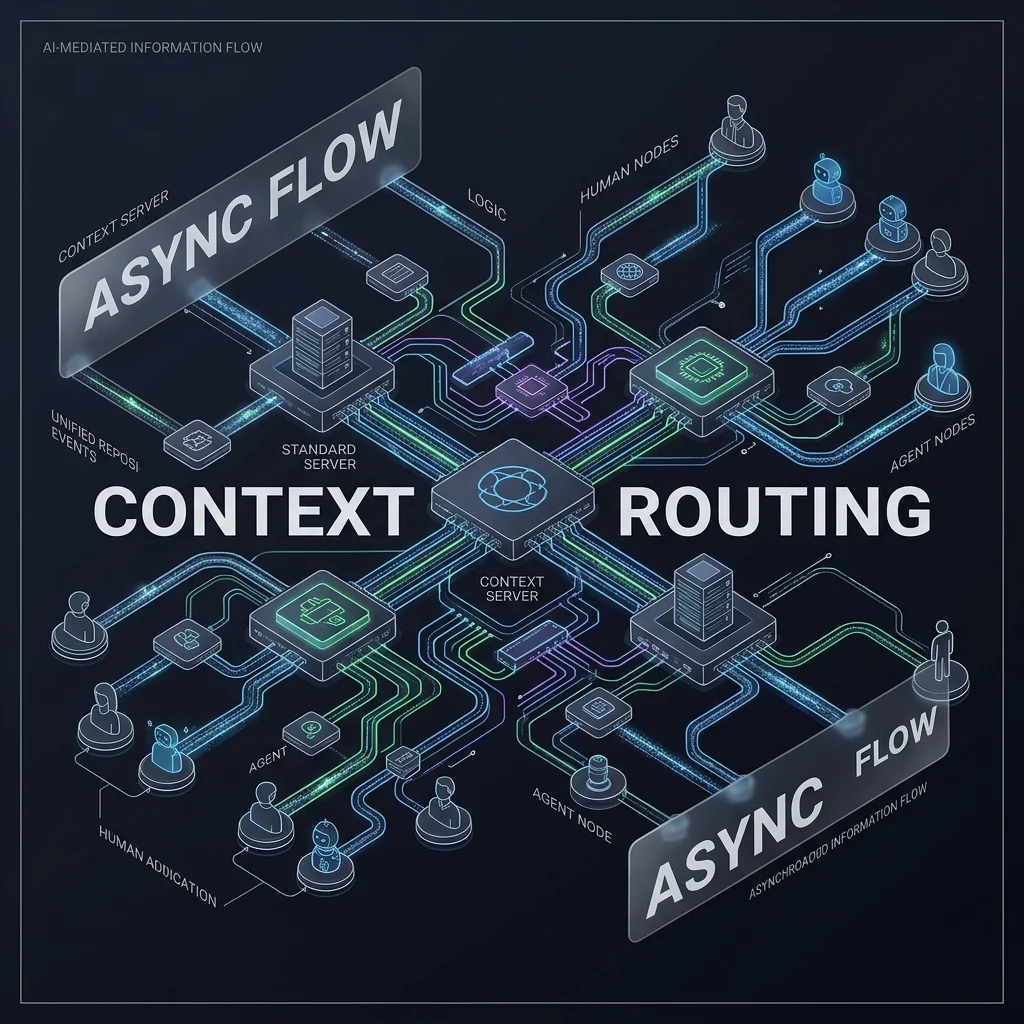
Comparative Intelligence: Traditional Scrum vs. Sync-Zero Agile
The table below breaks down the structural differences between legacy Scrum frameworks and the AI-native Sync-Zero methodology:
| Operational Dimension | Traditional Scrum Framework | Sync-Zero Agile Methodology |
|---|---|---|
| Primary Coordination Layer | Verbal meetings (Standups, Planning, Retros) | Asynchronous context-routing agents via MCP |
| Execution Cadence | Time-boxed 2-week iterations (Sprints) | Continuous pipeline flow based on intent diffs |
| Developer Focus Windows | Fragmented (frequent meeting interruptions) | High-fidelity focus blocks (zero scheduled meetings) |
| Task Allocation | Manual assignments during planning sessions | Algorithmic routing to specialist agent groups |
| Blocker Resolution | Discussed at the next daily standup | Automatically flagged by conflict-monitoring agents |
| Documentation Stance | Manual updates (often stale wikis and PDFs) | Self-documenting repositories using agent updates |
The 'Agentic Glue' Architecture
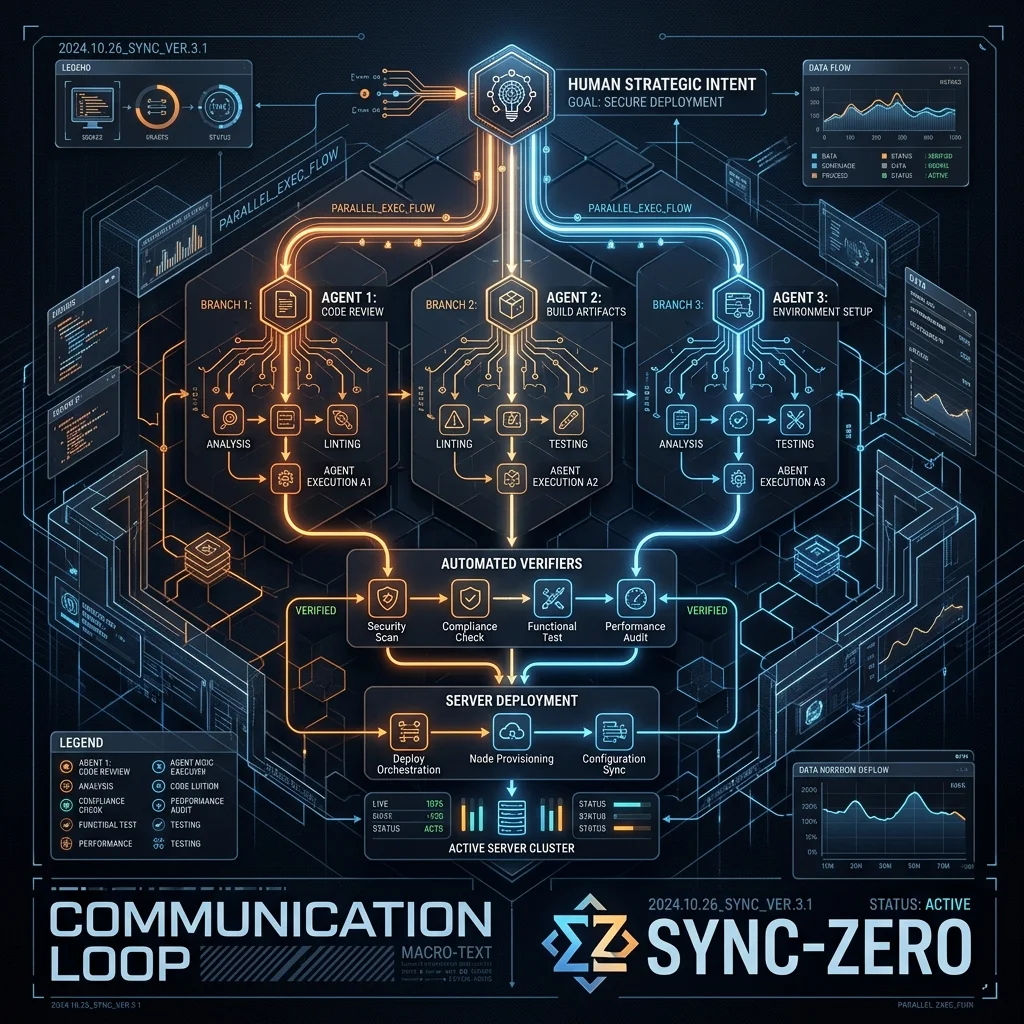
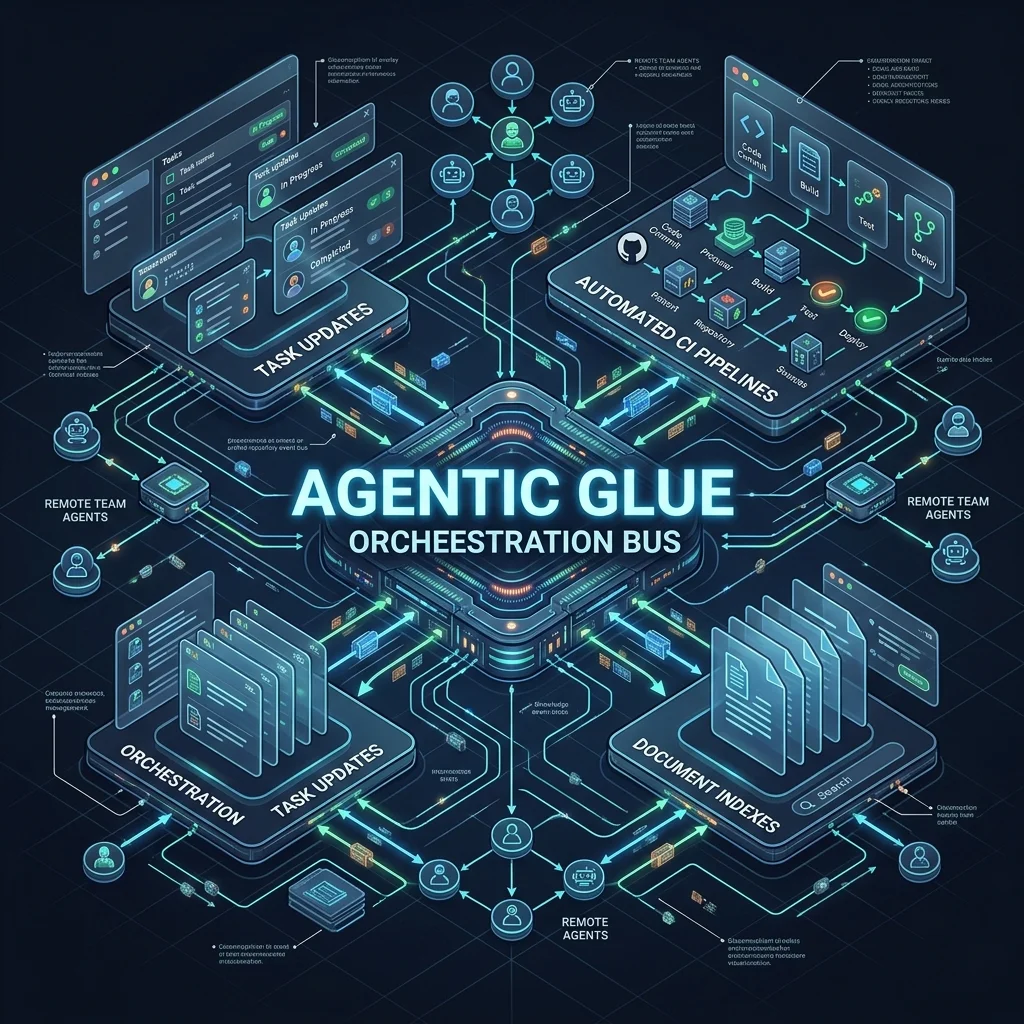
To maintain coordination without meetings, the system relies on an Agentic Glue architecture. This system acts as the messaging bus for the organization, connecting code events, ticket states, and documentation indexes.
Whenever a human architect updates a requirement in the issue tracker:
- The event is captured by the Router Agent.
- The Router Agent checks the code repository using an MCP gateway.
- The Agent identifies which files need modification and spins up a specialist agent group to write the code.
- The Verifier Agent tests the code against performance bounds.
- A summary agent post a message to the team channel detailing the change, the test results, and the deploy state.
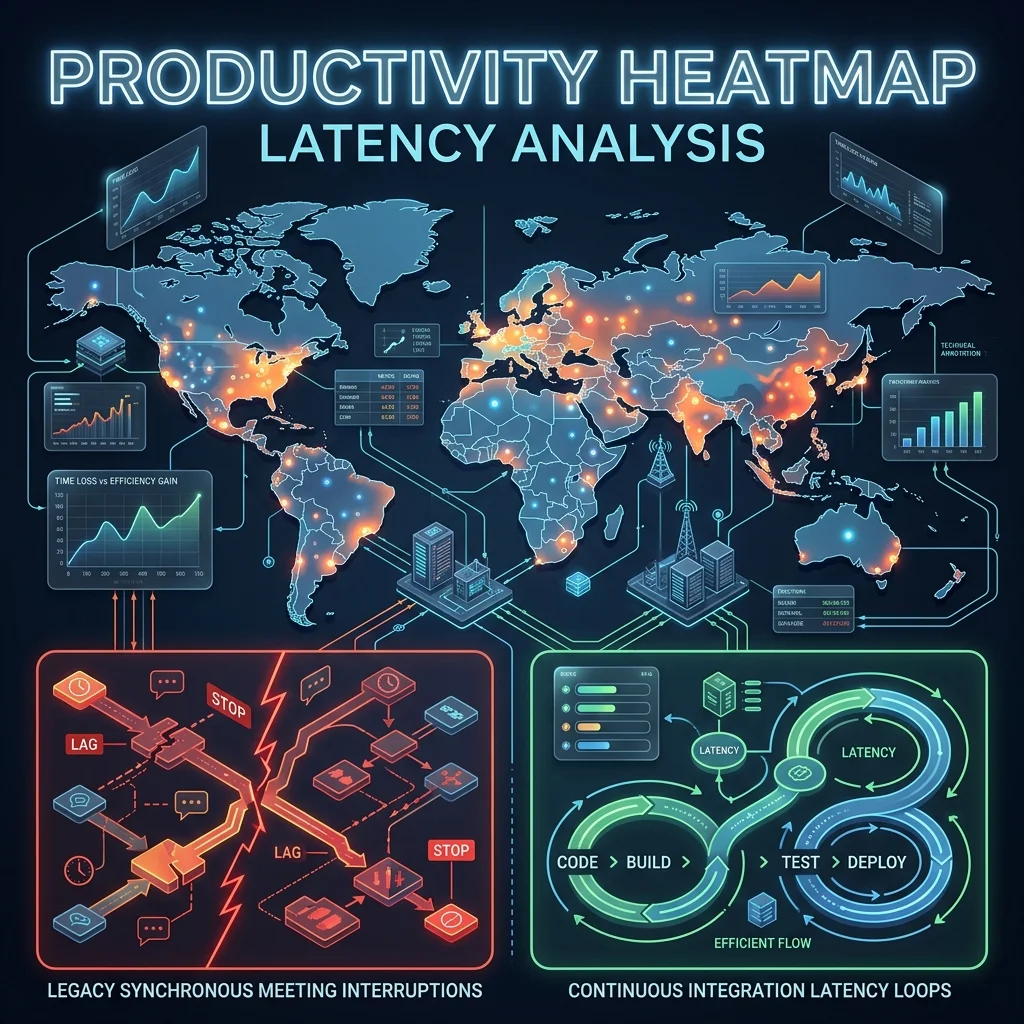
Procedural Logic: Automating the Asynchronous Intent Digest
To implement Sync-Zero, teams deploy automated event listeners that process repository changes and generate status updates. Below is a TypeScript example of a server function that listens to webhook events, compares changes to the intent ledger, and posts updates to team channels.
import { Client } from '@notionhq/client';
import axios from 'axios';

interface GitCommitPayload {
  commitId: string;
  author: string;
  message: string;
  diff: string;
  timestamp: string;
}

export class SyncZeroDigestEngine {
  private notion: Client;
  private teamWebhookUrl: string;

  constructor() {
    this.notion = new Client({ auth: process.env.NOTION_API_KEY });
    this.teamWebhookUrl = process.env.TEAM_CHAT_WEBHOOK_URL || '';
  }

  /**
   * Processes incoming commit payloads and generates asynchronous status updates.
   */
  public async processCommitEvent(payload: GitCommitPayload): Promise<boolean> {
    console.log(`[Sync-Zero] Auditing commit: ${payload.commitId} by ${payload.author}`);

    // 1. Analyze commit message and code diff for intent alignment
    const isAligned = this.verifyIntentAlignment(payload.message, payload.diff);
    if (!isAligned) {
      await this.sendAlertToTeam(payload.commitId, payload.author, "Potential Intent Mismatch Detected.");
      return false;
    }

    // 2. Generate an automated status summary using a lightweight parser
    const summary = this.generateTechnicalSummary(payload.message, payload.author);

    // 3. Post the summary asynchronously to the team channel
    await this.postAsynchronousUpdate(summary);
    return true;
  }

  private verifyIntentAlignment(message: string, diff: string): boolean {
    // Check if the change bypasses standard compliance tags or contains debug code
    if (diff.includes('console.log') && !message.includes('allow-debug')) {
      return false;
    }
    return true;
  }

  private generateTechnicalSummary(message: string, author: string): string {
    return `### ⚡ Sync-Zero Update\n` +
           `**Author:** ${author}\n` +
           `**Action:** Commit verified and merged to production.\n` +
           `**Summary:** ${message}\n` +
           `*No action required. Alignment index remains stable.*`;
  }

  private async postAsynchronousUpdate(message: string): Promise<void> {
    try {
      await axios.post(this.teamWebhookUrl, { text: message });
      console.log('[Sync-Zero] Asynchronous update posted successfully.');
    } catch (error) {
      console.error('[Sync-Zero Error] Failed to post update:', error);
    }
  }

  private async sendAlertToTeam(commitId: string, author: string, alertReason: string): Promise<void> {
    const alertMessage = `### ⚠️ Sync-Zero Alert\n` +
                         `**Commit:** ${commitId} by ${author}\n` +
                         `**Warning:** ${alertReason}\n` +
                         `*Attention required: Human review recommended.*`;
    await axios.post(this.teamWebhookUrl, { text: alertMessage });
  }
}
Pitfalls and Common Anti-Patterns
Moving to a Sync-Zero model requires discipline. Teams must watch out for these key anti-patterns:
- Asynchronous Spam: Replacing meetings with constant, automated notifications in team channels. This simply shifts the coordination tax from calendars to chat apps. Use summary filters to only notify teams when action is required.
- The Coordination Vacuum: Failing to maintain a clear
strategic-intent.mdledger. If intent is poorly defined, agents will execute tasks based on incorrect assumptions, creating massive merge conflicts. - Lack of Trust in Pipelines: Human managers reverting to manual code reviews for every commit. The verification pipeline must be trusted to catch errors, with manual audits reserved for high-risk changes.
Futuristic Horizon: 2027–2030 Roadmap
The transition to meeting-free software organizations will follow a clear evolutionary timeline:
Phase 1 (2026): The Hybrid Async Team
Daily standups are eliminated, replaced by automated text digests. Planning and reviews remain human-led, but use agent-generated data to speed up decision-making.Phase 2 (2028): Agent-Mediated Planning
Refinement and planning sessions are handled asynchronously. Agents run simulation runs to estimate task scope, identify dependencies, and assign tasks to specialist groups without scheduling a meeting.Phase 3 (2030): Pure Sync-Zero Organizations
Corporate execution is completely asynchronous. The organization runs as a continuous system of intent definition and automated delivery, scaling project velocity without calendar overhead.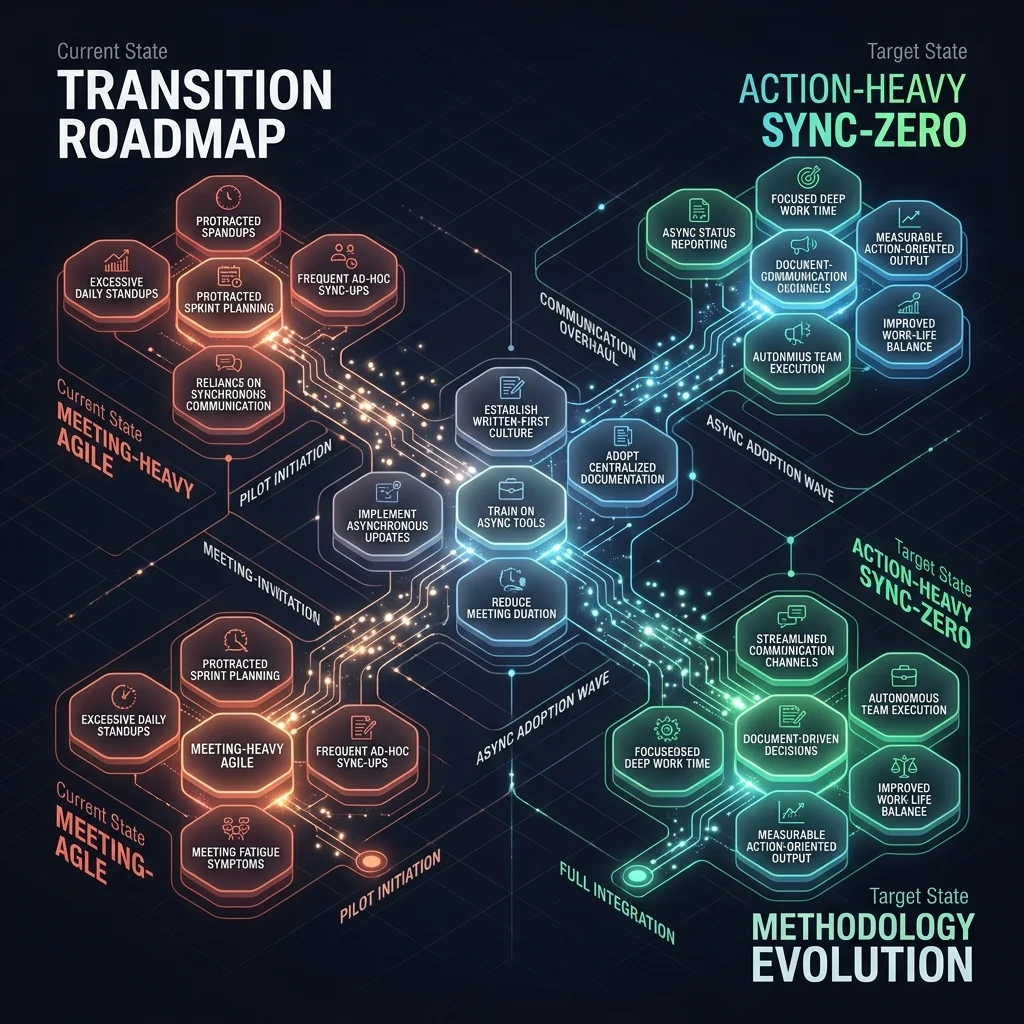
Key Takeaways
- Stop Scheduling Meetings: Replace daily syncs with automated, async intent summaries.
- Define Clear Intent: Maintain a central
strategic-intent.mdledger to guide your human and agent contributors. - Automate Verification: Enforce quality, security, and performance standards at the deployment pipeline layer.
- Filter Notifications: Avoid chat spam by only alerting human team members when a task fails verification.
- Use MCP Gateway Services: Standardize context sharing across your workspaces to keep your tools connected.
FAQ
How do teams solve blocker issues without meetings under Sync-Zero?
Blockers are flagged automatically by system monitoring agents that watch git commits and issue states. When a conflict is identified, the system alerts the affected contributors asynchronously in the team channel, prompting them to resolve the issue directly.Does Sync-Zero mean team members never talk to each other?
No. Sync-Zero eliminates routine coordination meetings. Human team members still connect for social check-ins, strategic brainstorming, and custom architectural reviews.What happens if an agent misunderstands the intent ledger?
If an agent generates code that doesn't align with the system architecture, the automated verification suite will block the commit. The system then alerts a human architect to refine the ledger before the task runs again.How do we track team velocity without sprints?
Velocity is measured by the cycle time of task transitions in the ledger. Because execution is continuous, teams track how long it takes to move intent from definition to verified deployment.Is Sync-Zero suitable for small teams?
Yes. Sync-Zero is highly effective for small teams. By removing meeting overhead, small teams can maintain a high focus state, allowing them to match the output of much larger organizations.About the Author
Vatsal Shah is a Senior AI Solutions Architect and Tech Director who helps companies implement scalable AI systems, modern API architectures, and agile project workflows. With over a decade of experience leading software teams, Vatsal designs practical solutions that help businesses scale their operations through modern technology.
Conclusion + CTA
Scrum was built for a world of human-only coordination. In the era of autonomous agents, calendar syncs are a bottleneck. By shifting to a Sync-Zero model, engineering teams can eliminate meeting overhead and focus on shipping code.
Ready to optimize your agile process? Connect with Vatsal Shah to design your asynchronous workflow and boost your team's velocity.