The corporate org chart is undergoing a seismic reorganization. Instead of human-only hierarchies or simple automated scripts, modern enterprise operations are…
TL;DR: Strategic Overview
1. The Historical Genesis of Synthetic Staffing
For decades, enterprise automation meant codifying static rules. If an event occurred, execute a specific database script. Systems were deterministic; they did exactly what they were programmed to do, no more and no less. If a user entered a typo or formatting variance, the script threw a runtime exception or corrupted the downstream data.
The advent of Large Language Models (LLMs), reasoning networks, and agentic loop frameworks changed this paradigm. Automation has transitioned from syntactic matching to semantic reasoning. Agents can understand context, handle ambiguity, make decisions, correct their own errors, and interact with tools.
This capability introduces the "Synthetic Employee." A synthetic employee is an autonomous agentic system assigned a specific operational role (e.g., Lead Qualifier, Security Auditor, Invoice Processor) with defined inputs, outputs, system tools, and boundary constraints.
+-------------------------------------------------------------+
|                      WORKFORCE SPECTRUM                      |
+------------------------------+------------------------------+
|       DETERMINISTIC          |          STOCHASTIC          |
|    (Legacy Automation)       |     (Synthetic Staffing)     |
+------------------------------+------------------------------+
| - Exact rules matching       | - Semantic understanding     |
| - Fixed input/output         | - Tool call decision loops   |
| - Fails on formatting shift  | - Handles edge-case drift    |
| - High maintenance overhead  | - Self-correcting reasoning  |
+------------------------------+------------------------------+
Organizations are realizing that software licensing models are transforming into labor-as-a-service (LaaS). Instead of paying per seat for an email marketing tool, enterprises lease or build agents that write, send, and analyze the email campaigns autonomously.
2. Hybrid Human-Agent Workforce Topologies
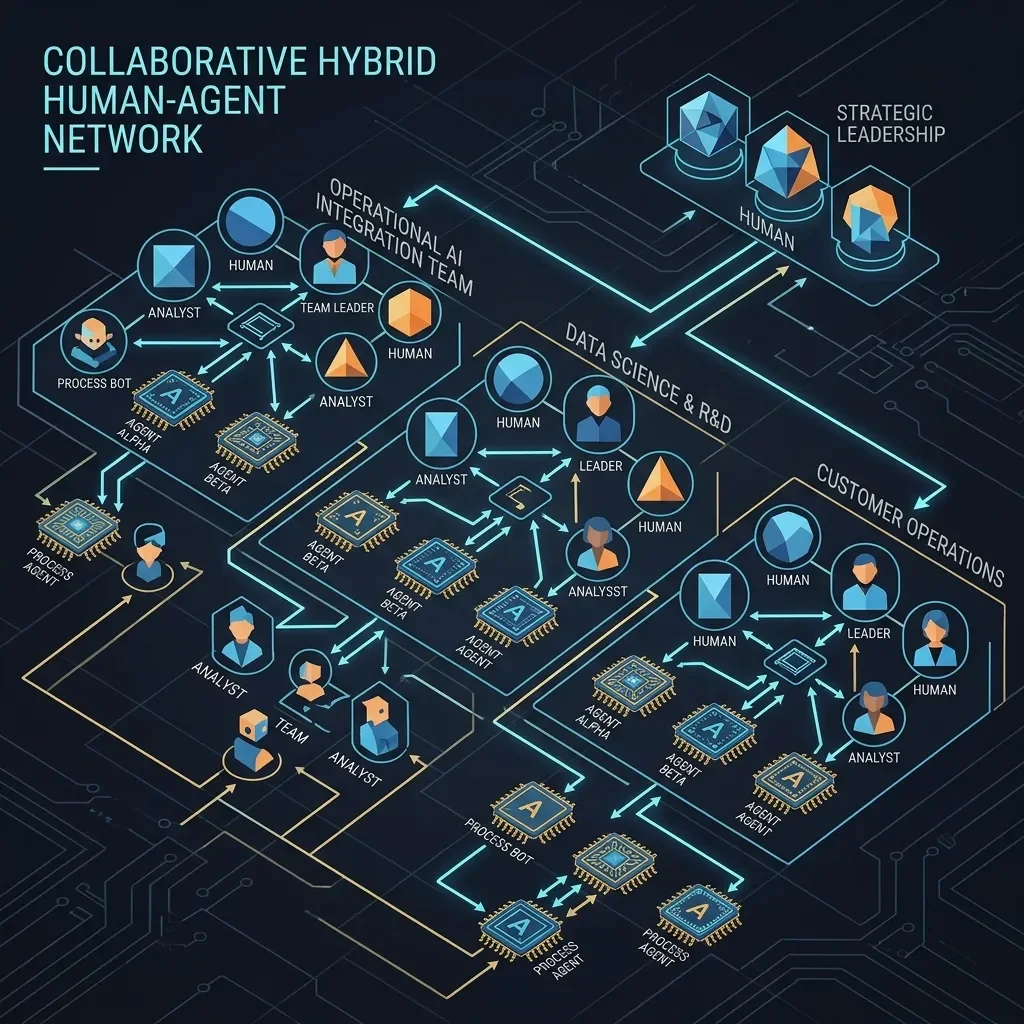
How do you organize humans and agents? We categorize hybrid human-agent workforces into four primary topologies. Choosing the right topology depends on the task complexity, financial risk, and latency tolerances.
2.1 Copilot Topology (Human-Led)
The traditional model. The human remains the sole operator of the workflow, using the agent to autocomplete code, draft emails, or search documentation.- Control: 100% human.
- Leverage: 1.2x to 1.5x efficiency gains.
- Risk: Extremely low.
- Best Suited For: Creative writing, high-stakes client strategy, and complex legal negotiations.
2.2 Guardian Topology (Agent-Led, Human-Audited)
Agents process 100% of incoming tasks. They retrieve context, make decisions, execute tools, and draft outputs. However, all outputs are held in a quarantine queue until a human operator reviews and approves the execution.- Control: Hybrid.
- Leverage: 3x to 5x efficiency gains.
- Risk: Low-Medium. Highly scalable but bound by human review bottlenecks.
- Best Suited For: Outbound sales communication, customer service responses, and initial medical diagnosis drafts.
2.3 Escalation Topology (Hybrid Routing)
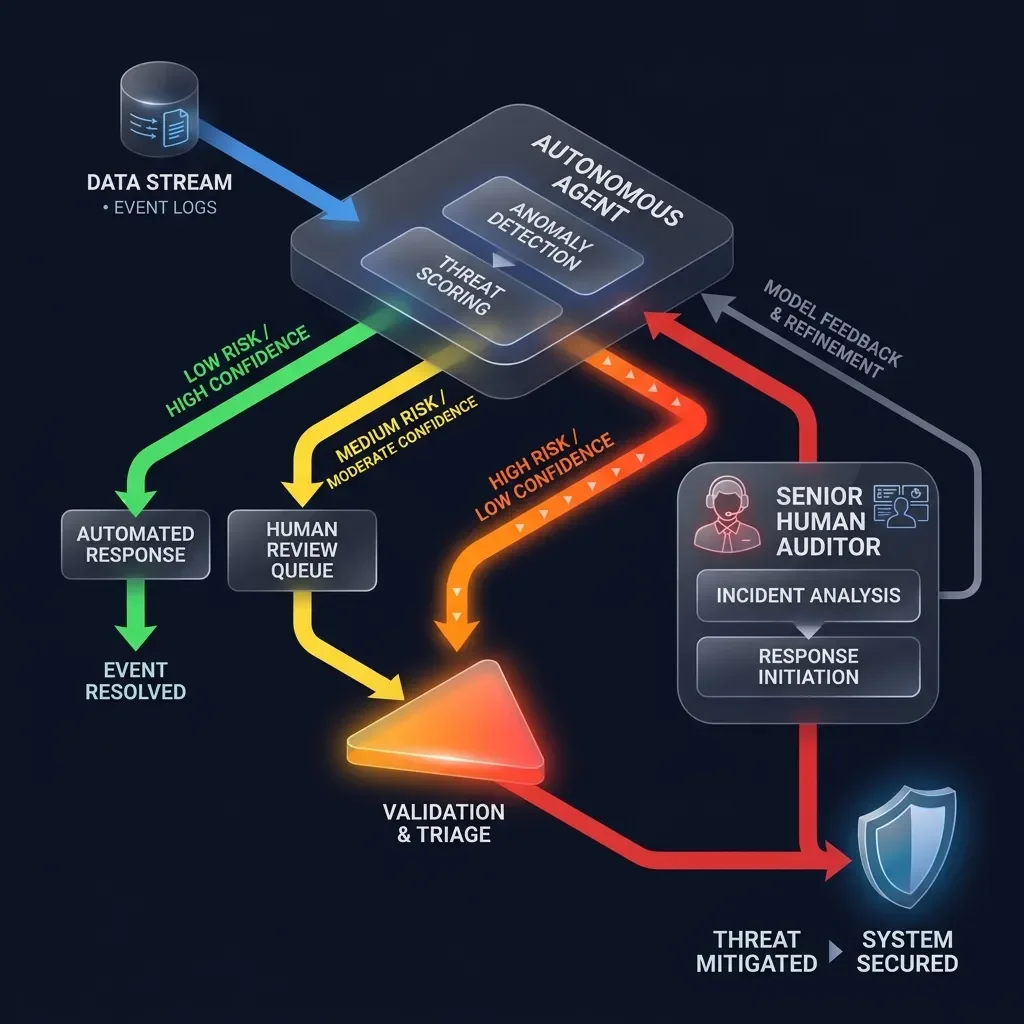
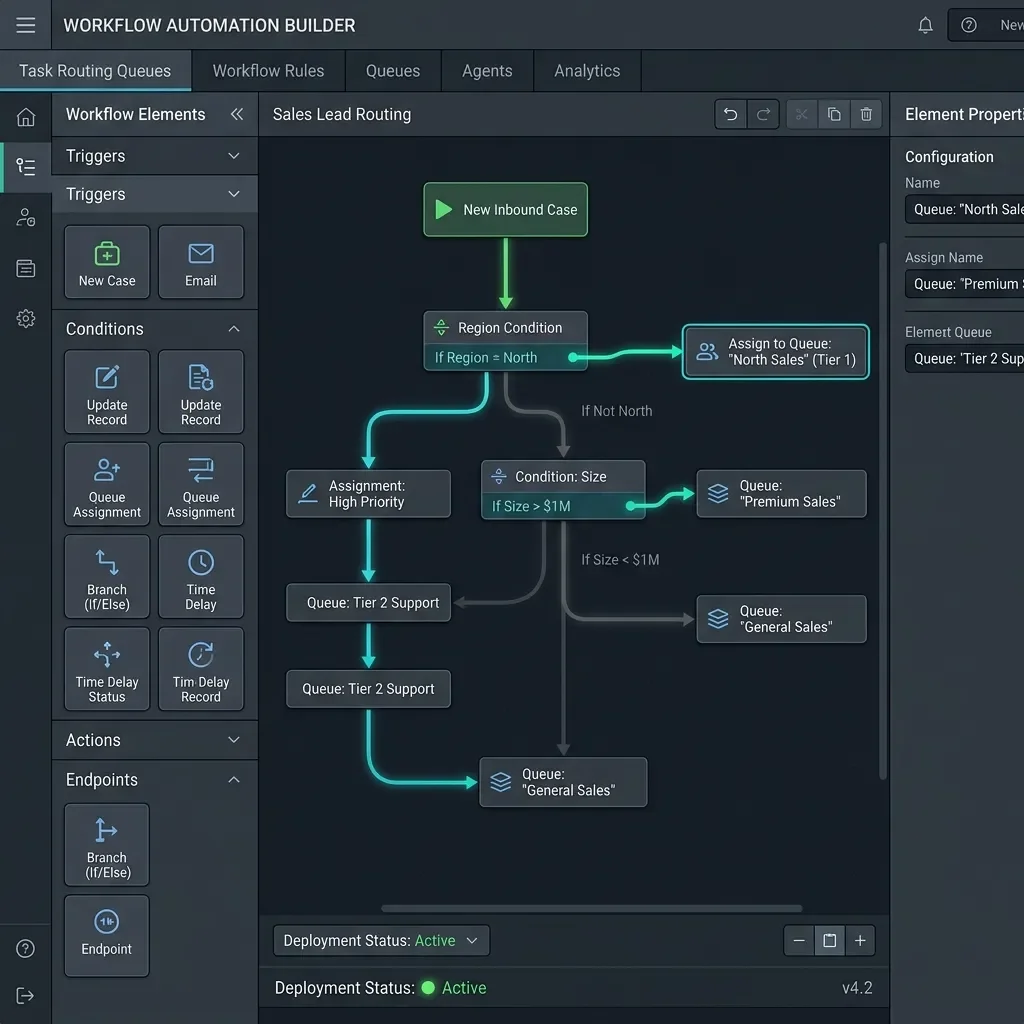
The default enterprise standard. Agents process all inputs. If an agent encounters a task with a confidence score below a set threshold, or if the transaction value exceeds a specific financial limit, the orchestrator routes the task to a human specialist.- Control: Algorithmic routing.
- Leverage: 5x to 10x efficiency gains.
- Risk: Medium. Requires highly reliable anomaly detection and exception queues.
- Best Suited For: Loan underwriting, invoice reconciliation, and software vulnerability remediation.
2.4 Autonomous Pipeline Topology (Sovereign Execution)
Agents run end-to-end pipelines with zero human intervention. This is reserved for low-risk, high-volume tasks like log monitoring, initial threat triaging, or data synchronization.- Control: 100% agent.
- Leverage: 20x+ efficiency gains.
- Risk: High. Requires strict ephemeral sandboxes and self-healing error state routines.
- Best Suited For: Synthetic threat modeling, code compilation checks, and system log analysis.
| Model Dimension | Traditional FTE Outsourcing | Co-Sourcing (Human + SaaS) | Synthetic Staffing Model |
|---|---|---|---|
| Scaling Latency | Months (Hiring & training) | Weeks (Software integration) | Seconds (Instance spin-up) |
| Unit Cost | High (Salaries, benefits) | Medium (Licensing + Labor) | Low (Token compute cost) |
| Reliability | Variable (Human error, fatigue) | High (Rule-based constraints) | High (Deterministic agent loops) |
| Security Isolation | Complex (Access controls, NDAs) | Medium (API-key security boundaries) | Total (Sandbox container isolation) |
3. Orchestration Mechanics: Routing and Hand-offs
The core engine of a synthetic workforce is the Orchestrator Router. It acts as the traffic controller, determining which node (human or agent) is best equipped to handle a specific payload. Rather than sending tasks directly to individual workers, all work requests pass through the orchestrator.
3.1 The Confidence Metric (θ)
Every agent output must be accompanied by a self-evaluation confidence metric, mapped from 0.0 to 1.0.- Heuristic Validation: The orchestrator checks if the output matches expected regular expressions, schema types, or length bounds.
- Semantic Confidence: A secondary validator model evaluates the reasoning trace of the primary agent: Did the agent verify its facts? Did it follow the safety guidelines?
- Escalation Trigger: If $θ < 0.85$, the orchestrator immediately intercepts the execution and routes the task payload to the human exception queue.
import os
import json
from typing import Dict, Any

class OrchestratorRouter:
    def __init__(self, threshold: float = 0.85):
        self.threshold = threshold
        self.human_queue = []
        self.db = {} # Simulated persistent store

    def evaluate_confidence(self, task_result: Dict[str, Any]) -> float:
        # 1. Structural evaluation
        has_schema = task_result.get("schema_valid", False)
        if not has_schema:
            return 0.0

        # 2. Extract self-evaluation metric from reasoning trace
        self_eval = task_result.get("confidence", 0.0)

        # 3. Check for specific critical tool failure flags
        if "error" in task_result.get("logs", "").lower():
            return self_eval * 0.5  # Heavy penalty

        return self_eval

    def process_task(self, task_id: str, agent_output: Dict[str, Any]) -> str:
        theta = self.evaluate_confidence(agent_output)

        if theta >= self.threshold:
            # Commit changes automatically (Autonomous / Guardian approval)
            self.commit_to_production(task_id, agent_output)
            return "AUTO_COMMITTED"
        else:
            # Escalate to human exception queue
            self.escalate_to_human(task_id, agent_output, theta)
            return "ESCALATED"

    def commit_to_production(self, task_id: str, data: Dict[str, Any]):
        print(f"[MUTATION] Committing task {task_id} data to production database.")
        self.db[task_id] = {"status": "SUCCESS", "payload": data.get("result")}

    def escalate_to_human(self, task_id: str, data: Dict[str, Any], theta: float):
        print(f"[ESCALATION] Task {task_id} confidence ({theta}) below threshold ({self.threshold}).")
        self.human_queue.append({
            "task_id": task_id,
            "failed_payload": data,
            "confidence": theta,
            "status": "AWAITING_AUDIT"
        })
3.2 Human-to-Agent Feedback Loops
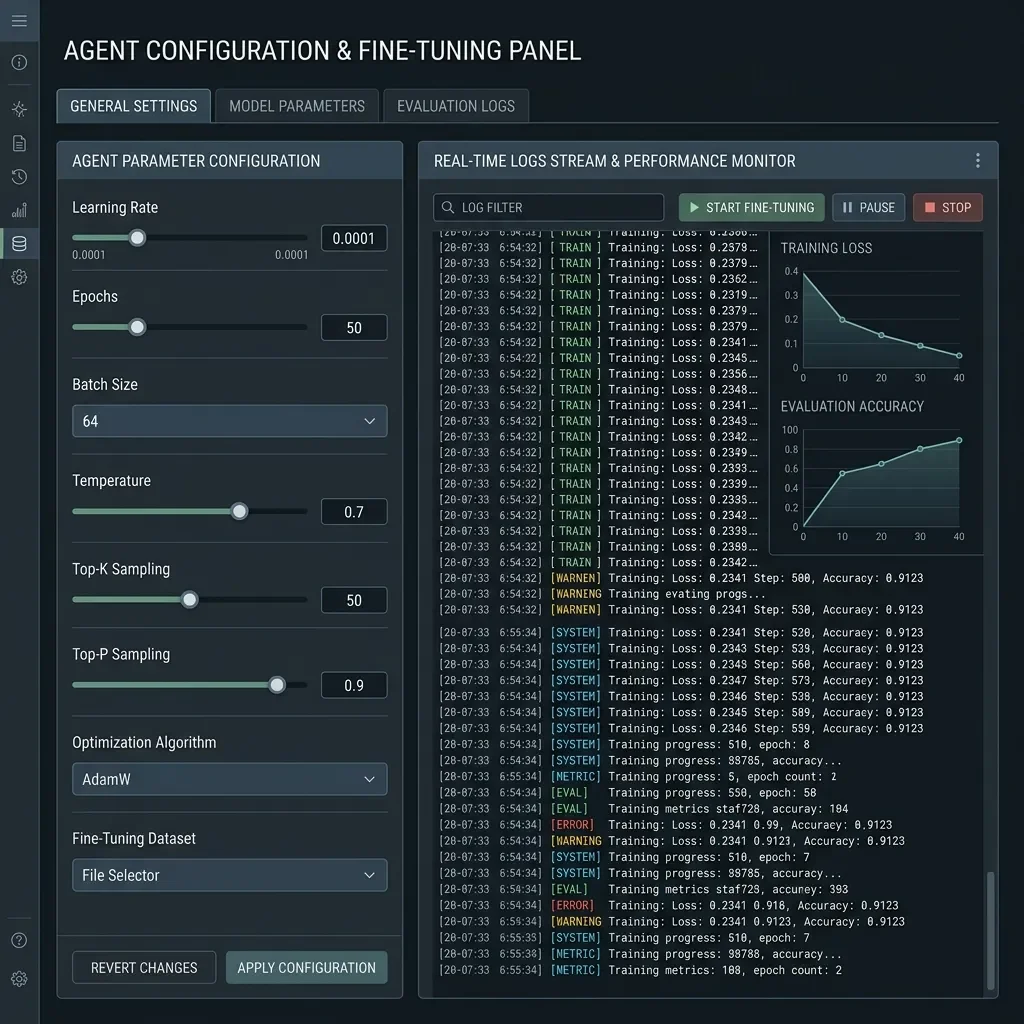
When a human corrects an escalated task, the correction must not be lost. We implement a closed-loop system:- Fine-Tuning Data Accumulation: The corrected payload (Input + Human Corrected Output) is saved to an append-only training dataset.
- RAG Memory Injection: The correction is converted into a vector chunk and injected into the agent's system prompt context library, preventing the agent from repeating the error.
4. Measuring Performance: Synthetic ROI Formulas
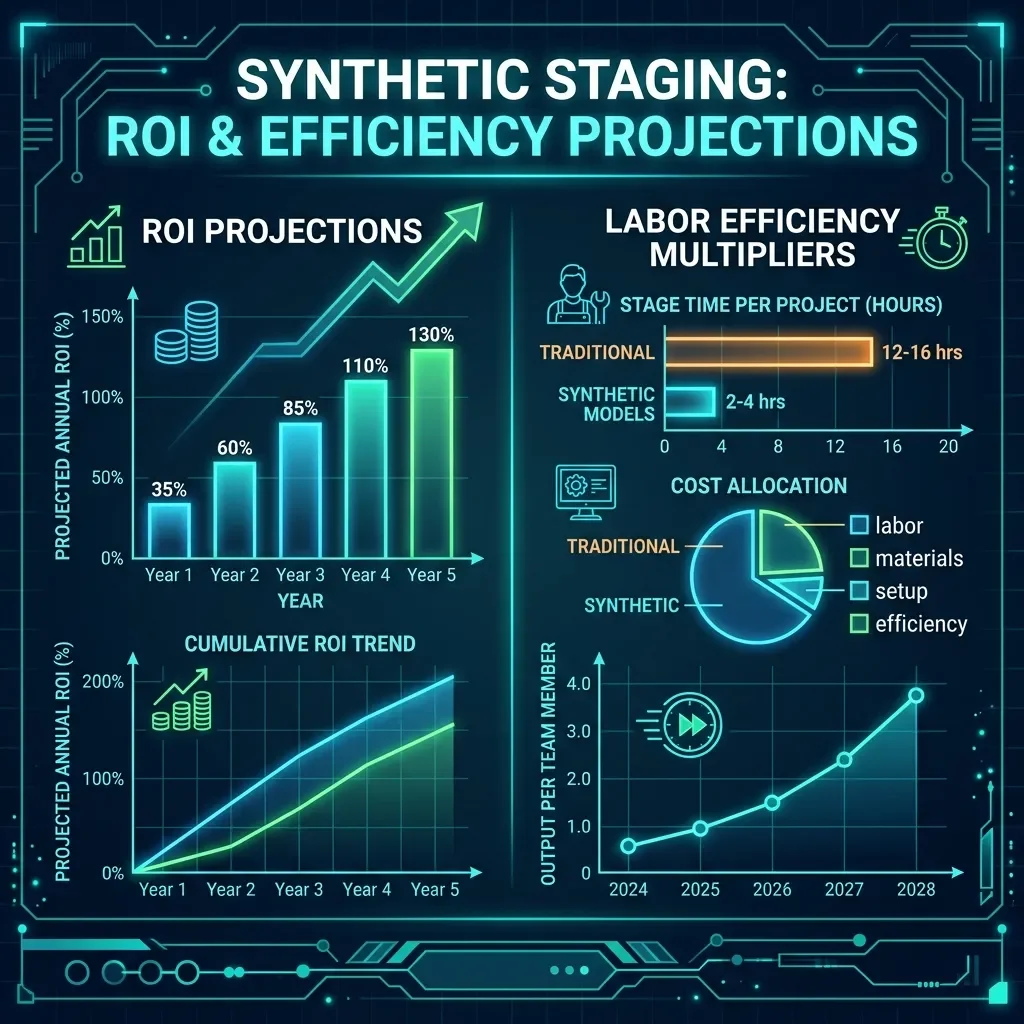
In a traditional workforce, performance is tracked via metrics like Key Performance Indicators (KPIs) and Service Level Agreements (SLAs). For synthetic workforces, we must bridge the gap between engineering latency and operational productivity.
4.1 Cost Per Successful Task (CPST)
Software pricing often focuses on subscription fees. In a LaaS model, compute cost fluctuates depending on token usage, model choices, and agent retries.
$$\text{CPST} = \frac{\sum(\text{Inference Cost}) + \sum(\text{Tool Call Infrastructure Cost}) + \sum(\text{Human Auditing Cost})}{\text{Total Successfully Executed Tasks}}$$
- Inference Cost: Sum of input and output tokens multiplied by the API rate.
- Tool Call Infrastructure Cost: Compute costs for hosting sandboxes and databases during tool executions.
- Human Auditing Cost: The hourly rate of human auditors divided by the number of tasks they audited.
4.2 Error Propagation and Cascade Failure Risk (CFR)
In a multi-agent system, an error in Agent A's output can propagate to Agent B, causing Agent B to fail or generate toxic context.
$$\text{CFR} = 1 - \prod_{i=1}^{n} (1 - P_i)$$
Where $P_i$ is the probability of failure for agent $i$ in a chain of $n$ agents. If you have 5 agents in a sequential pipeline, and each agent has a 95% success rate ($P_i = 0.05$), the overall system failure risk is:
$$\text{CFR} = 1 - (0.95)^5 \approx 0.226 \quad (22.6\%)$$
This demonstrates why complex, unmonitored agent chains are highly fragile in production.
5. Human-in-the-loop Guardrails
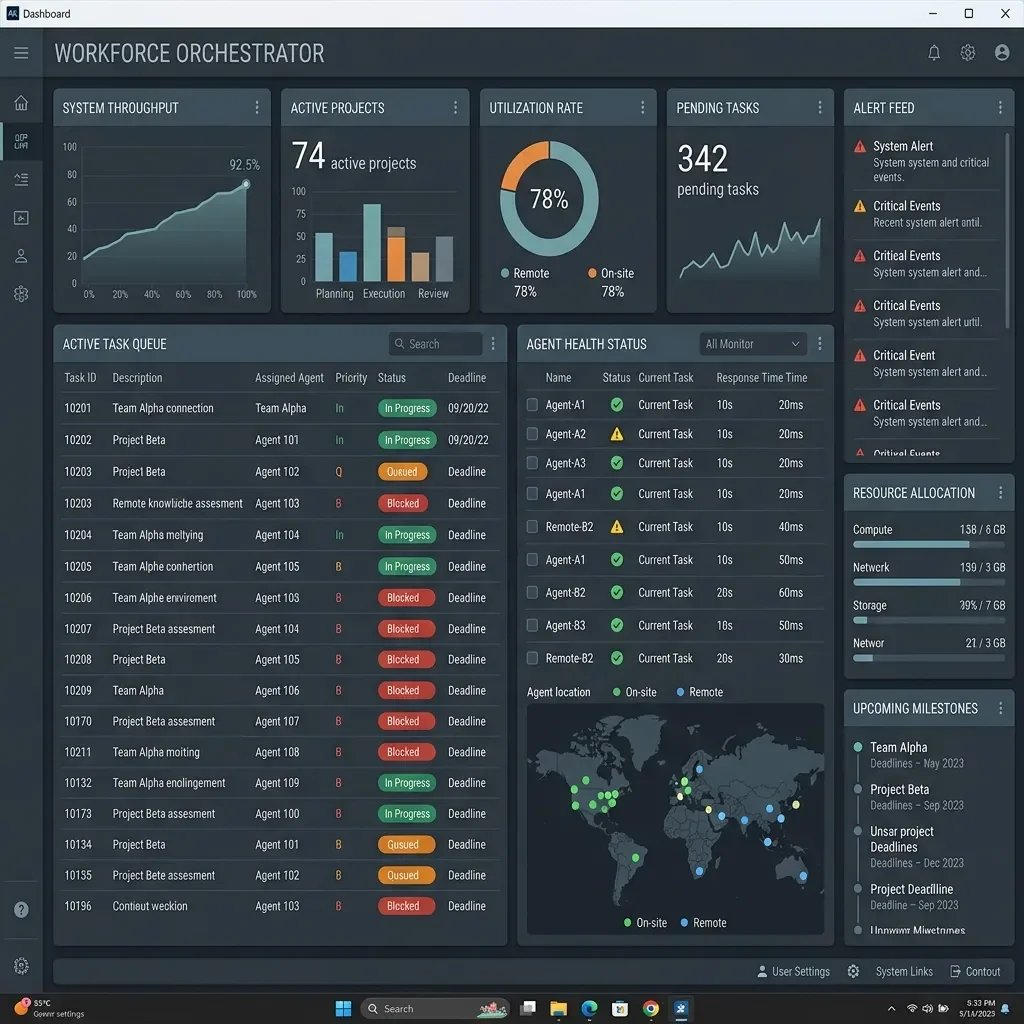
To prevent cascade failures and protect enterprise integrity, workflows must utilize strict "Human-in-the-loop" (HITL) gates. An agent should never be allowed to execute mutations on external databases or interfaces without structured oversight boundaries.
5.1 The Isolation Gate Pattern
Any mutating action (such as writing database records, executing financial transactions, or updating client-facing interfaces) must be routed to an isolated state queue.- The Sandbox Queue: The agent executes the transaction in a read-only simulated environment and generates a "Transaction Proposal."
- The Human Review Interface: The proposal is rendered in a dedicated UI showing:
- Commit or Rollback: The human auditor click-approves the proposal, triggering the actual database execution, or rolls it back with feedback.
6. Software Architecture for Synthetic Staffing
To build a scalable, resilient synthetic workforce, you must move away from ad-hoc Python scripts. You need an enterprise-grade execution platform that supports transaction safety, event tracing, and state preservation.
6.1 State Management (Event Sourcing)
Agents are inherently non-deterministic. When debugging an agent's failure, you cannot simply look at a stack trace; you need to inspect the state history.- State Logs: Use event-sourcing patterns to record every state change, message exchange, and tool call in an immutable log.
- Trace IDs: Generate unique transaction trace IDs that map across all sub-agents involved in a workflow. This allows developers to audit exactly how a task transitioned from a customer email to an invoice generation.
CREATE TABLE agent_execution_logs (
    log_id VARCHAR(64) PRIMARY KEY,
    trace_id VARCHAR(64) NOT NULL,
    agent_name VARCHAR(100) NOT NULL,
    step_number INT NOT NULL,
    action_taken VARCHAR(255) NOT NULL,
    input_payload JSON,
    output_payload JSON,
    confidence_score DECIMAL(3, 2),
    execution_time_ms INT,
    created_at TIMESTAMP DEFAULT CURRENT_TIMESTAMP,
    FOREIGN KEY (trace_id) REFERENCES execution_traces(trace_id)
);
6.2 Containerized Tool Sandboxes
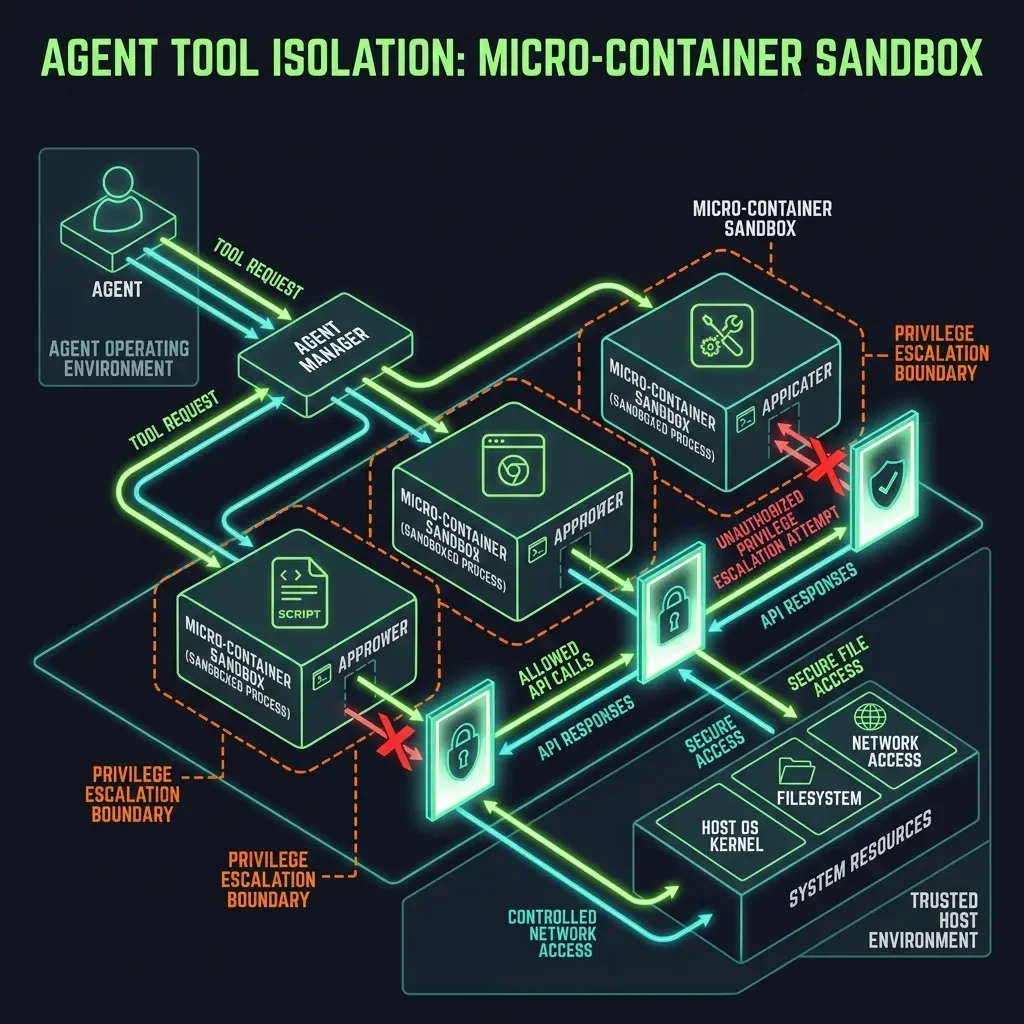
If agents can execute python code or modify file directories, they must run inside isolated micro-containers.- MicroVMs: Use platforms like Firecracker or gVisor to spin up ephemeral microVMs in milliseconds.
- Privilege Escalation Limits: Restrict system network access so that a compromised agent cannot access internal databases or APIs unless explicitly authorized.
7. Critical Pitfalls of Synthetic Staffing
Organizations rushing to deploy synthetic staffing often fall victim to three critical systemic risks:
7.1 Operational Drift
Over time, as the nature of incoming tasks shifts, agent prompt templates and RAG databases can become out of sync, leading to a slow decay in confidence scores.- Solution: Implement automated regression testing. Every week, replay a standard dataset of 100 historical task inputs and verify that the agent outputs match the expected output baseline.
7.2 Context Fragmentation
If agent swarms are designed too granularly, passing information across many sub-agents results in context loss. Key details in the user's initial prompt are dropped during the inter-agent translation process.- Solution: Maintain a global, immutable context store accessible by all agents in the swarm via their trace ID, rather than relying on agents passing text directly to each other.
7.3 Infinite Execution Loops
When agents call other agents, they can enter circular reasoning loops where Agent A asks Agent B for clarification, which in turn calls Agent A, consuming API tokens rapidly without making progress.- Solution: Set a hard recursion limit (e.g., maximum 5 hops per transaction trace) and implement token spend budgets that trigger automatic circuit breakers when reached.
8. The Horizon (2027-2030)
The next decade will see the transition from basic hybrid teams to self-optimizing organizational structures.
- Dynamic Swarms: Agents will dynamically recruit other agents to solve unexpected tasks, generating their own sub-agent topologies on the fly.
- Synthesized Roles: Organizations will use machine-learning feedback to identify bottlenecks and auto-generate new synthetic roles, writing the system prompts and configuring tools without human engineering overhead.
- Decentralized Agent Governance: As agent swarms interact across enterprise boundaries, secure cryptographic frameworks (like Web3 or decentralized identity protocols) will emerge to authorize inter-company agent tool executions.
9. Structured Deployment Guide: Step-by-Step Implementation
For enterprises ready to deploy synthetic staffing topologies, we recommend a phased implementation methodology to mitigate risk and ensure maximum ROI.
+----------------------------------------------------------------------------+
|                          DEPLOYMENT PHASES                                 |
+------------+-------------+-------------+---------------+-------------------+
|  Phase 1:  |  Phase 2:   |  Phase 3:   |   Phase 4:    |     Phase 5:      |
|  Role Map  | State Config| Route Policy|  HITL Setup   |     Eval Cycle    |
+------------+-------------+-------------+---------------+-------------------+
| - Identify | - Deploy    | - Define    | - Construct   | - Weekly          |
|   bottle-  |   event-    |   threshold |   sandbox     |   regression      |
|   necks    |   sourced   |   limits    |   quarantine  |   benchmarks      |
|            |   logs      |   (theta)   |   queues      |                   |
+------------+-------------+-------------+---------------+-------------------+
Step 1: Role Mapping
Identify high-volume, low-variability operational workflows (e.g., invoice classification, lead routing, customer ticket categorization). Document the inputs, required tools, and output schemas.Step 2: State Logging Configuration
Deploy an event-sourced database log schema to capture every trace transaction. Ensure no agent-to-agent communication bypasses the central trace ledger.Step 3: Routing Policy Definition
Define the confidence score threshold ($θ$) and financial limit caps. For example, any transaction over $1,000 must automatically escalate to a human manager regardless of the agent's confidence score.Step 4: Isolation Sandbox and HITL Setup
Build sandbox interfaces where agents can write proposals rather than executing production database mutations directly. Construct the human audit dashboard for quick review and feedback loops.Step 5: Continuous Evaluation
Review logs weekly to update vector context databases, adjust system prompts, and identify agents that require fine-tuning or model upgrades.10. Legal, Compliance, and Security Considerations
Transitioning operational pipelines to synthetic staffing introduces complex legal and security boundaries. Unlike traditional SaaS tools or human employees, agents operate in a regulatory gray area.
10.1 Data Privacy & Sovereignty (GDPR/CCPA)
When an agent processes customer data (e.g., qualifying a lead or triaging support tickets), it often reads and writes Personally Identifiable Information (PII).- Local Isolation: To maintain compliance, reasoning models should ideally run locally or in specialized enterprise VPCs (Virtual Private Clouds) rather than passing data to public model endpoints.
- Data Retention Policies: Configure API connections with zero data retention policies to ensure model providers do not store or train on your proprietary inputs.
- Right to Be Forgotten: Ensure agent memory databases (including long-term episodic vector stores) support programmatic deletion requests to purge customer data upon demand.
10.2 Liability & Accountability
Who is liable when a synthetic employee makes a false promise, executes a corrupted tool call, or causes a financial loss?- Agent Action Contracts: Clearly define in your terms of service that agent actions represent preliminary proposals and only human-confirmed events represent binding company decisions (using the Isolation Gate Pattern).
- The "Responsible Human Auditor" Framework: Every agent must have a designated human owner. If the agent fails or triggers alerts, the owner is responsible for remediation and logs analysis.
10.3 Access Control and Identity Governance (IAM)
Agents must have their own unique credentials, rather than sharing human access keys.- Least Privilege Access: Assign agents specific service accounts with the narrowest scope possible. For example, a Lead Qualifier agent should have read-only access to customer CRM records and write access only to the lead qualification queue.
- Traceable Audits: Every tool call and mutation must be signed by the agent's unique cryptographic ID, enabling security teams to instantly identify the source of any unauthorized database query or system modification.
11. Real-World Case Studies of Hybrid Architectures
To see how these principles apply in practice, let us examine two real-world implementations of synthetic staffing in enterprise environments.
Case Study 1: Loan Underwriting Swarm (Financial Services)
A mid-sized mortgage provider faced high processing latency for loan applications. Recruiting human underwriters was slow and costly.- Topology: The firm deployed a hybrid Escalation Topology.
- Execution Workflow:
- Results:
Case Study 2: Incident Response Swarm (Cybersecurity Operations)
An enterprise security team was overwhelmed by low-severity security alerts (e.g., failed login attempts, port scans).- Topology: The security operations center deployed an Autonomous Pipeline Topology.
- Execution Workflow:
- Results:
Conclusion
Synthetic Staffing is not a futuristic concept; it is an active operational transition. By structuring your hybrid human-agent org chart with precise topologies, enforcing rigorous routing and hand-off thresholds, and calculating the true Cost Per Successful Task (CPST), you can build an elastic, secure, and hyper-efficient labor engine that scales on demand.
Frequently Asked Questions (FAQ)
What is the difference between SaaS and LaaS? SaaS (Software-as-a-Service) provides tools that humans operate. LaaS (Labor-as-a-Service) provides autonomous agents that execute the labor themselves under human supervision.
How do you prevent agents from executing unauthorized actions? By using the Isolation Gate Pattern. Agents do not execute high-risk tasks directly; they generate a proposed state change. This change must be approved by a human administrator before it is written to production databases or APIs.
What is Cascade Routing? Cascade Routing is a cost-optimization technique where incoming tasks are first analyzed and processed by smaller, cheaper LLMs. If the smaller model's output fails validation checks, the task is automatically escalated to a larger, high-reasoning model.
What is Cascade Failure Risk (CFR)? CFR is the probability that an error in one agent will cascade through a sequential multi-agent pipeline, causing the final output to fail. It shows why longer chains of dependent agents are inherently less reliable.
How is CPST calculated? CPST (Cost Per Successful Task) is calculated by summing total inference costs, tool infrastructure costs, and human auditing labor costs, then dividing by the number of successfully executed tasks.