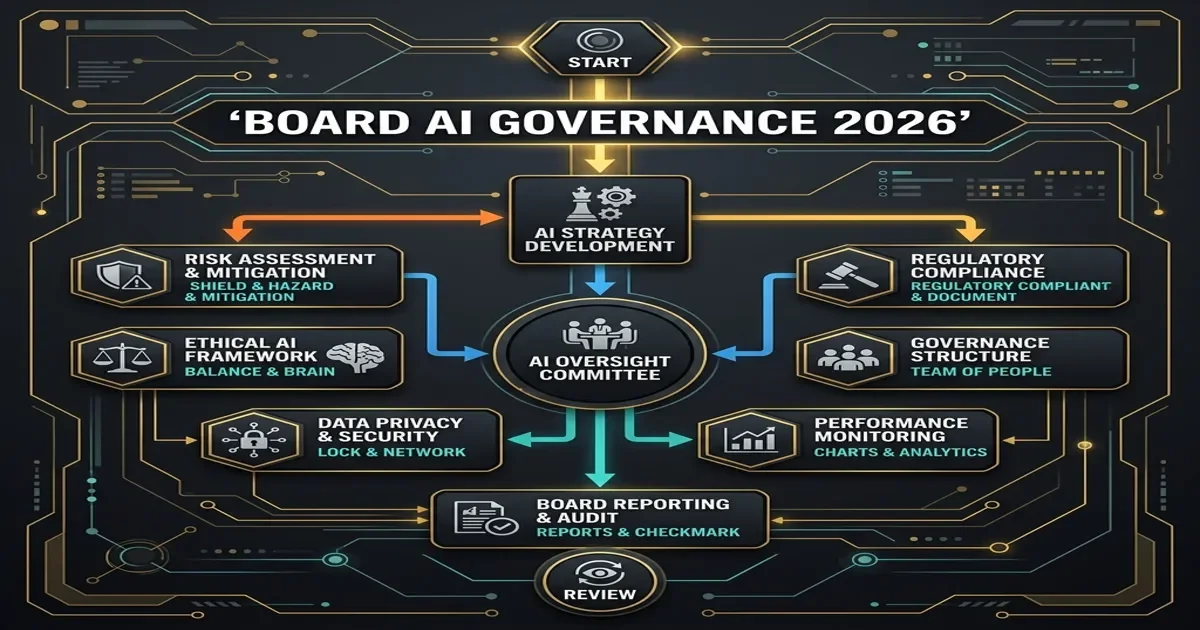
STRATEGIC OVERVIEW Strategic Blueprint Checklist (2026-2030) :::tip Executive Mandate: Complete this board-level checklist before enterprise-wide Claude Code r…
Strategic Blueprint Checklist (2026-2030)
- [ ] Unit economics model approved by CFO—developer hours vs compute/API line items with 12-month sensitivity bands.
- [ ] Sandbox perimeter documented—workspace isolation, egress allowlists, secret scanners on agent write paths.
- [ ] Policy-as-code for file write, shell, and network—no ad-hoc "trust the model" exceptions in production repos.
- [ ] High-intent role map published—who owns intent, who approves agent actions, who audits traces.
- [ ] Immutable audit ledger—WORM or append-only store with prompt hash, tool call, commit SHA linkage.
- [ ] Shadow AI kill switch—approved toolchain catalog; consumer Claude accounts blocked on corp data paths.
- [ ] EU AI Act / sector mapping—high-risk use cases flagged; human oversight gates on regulated workflows.
📘 Compliance-to-Code Mapping (Executive Control Plane)
| Board Risk | Control Objective | Claude Code Implementation | Evidence Artifact |
|---|---|---|---|
| Runaway spend | Per-team API budgets | Token proxy + session caps | finops/agent-budget-ledger.json |
| Data exfiltration | Egress containment | Sandbox WAN deny + MCP allowlist | security/egress-policy.yaml |
| Unapproved AI | Shadow tool elimination | Approved CLI + SSO gateway | governance/approved-agent-catalog.json |
| Non-repudiation | Attested agent actions | Signed trace + commit linkage | audit/trace-schema-v2.json |
| Regulatory findings | Human oversight on high-risk flows | HITL gates on prod-impacting tool calls | compliance/hitl-manifest.yaml |
Introduction: Why the Board Cares About a Terminal Agent
In 2024, generative AI meant autocomplete and slide decks. In 2026, agentic CLI tools—led by Claude Code—execute multi-step engineering work inside your perimeter: read repos, run tests, open pull requests, call internal APIs via MCP. That is not a IDE plugin. It is delegated labor with shell privileges.
CxOs who treat Claude Code as "another Copilot license" mis-price the decision. The economic variable is not seats—it is throughput per high-intent engineer minus compute, risk, and rework. Legal cares because agents write to production paths. Security cares because sandboxes fail open by default in pilots. HR cares because job descriptions written for 2020 hiring loops do not mention orchestration accountability.
This blueprint delivers five executive chapters—each with diagrams, luxury comparison tables, and compliance hooks:
- Economics of Agentic Coding — ROI models CFOs accept.
- Sandboxing and Code Integrity — containment SAST loops, write policy.
- Restructuring the High-Intent Team — org design for agent leverage.
- Audit Trails & Explainability — schemas for regulated domains.
- Future Proofing (2026–2030) — capability roadmap without hype debt.
The board question you're actually being asked
When a director asks, "Should we adopt Claude Code?", they're rarely asking about Anthropic. They're asking: Will this reduce time-to-revenue without creating a material cyber or compliance event? Your answer must be a control-plane story in under three minutes—economics, containment, accountability, roadmap—then offer the appendix risk register if they want depth.
Directors who've lived through cloud lift-and-shift recognize the pattern: engineers want speed, auditors want evidence, Finance wants predictability. Agentic coding compresses that triangle into weeks instead of years because shell access is instant. That's why this introduction insists on delegated labor framing. You're not buying smarter autocomplete; you're authorizing bounded operators inside the same repositories that hold payment logic, PHI workflows, and infrastructure-as-code.
Stakeholder pre-read matrix
Send this playbook in split packets—do not email the full PDF to every executive unchanged.
| Recipient | Read first | Skip on first pass |
|---|---|---|
| Audit committee | Appendix A, Ch.4 | CLI configuration |
| CFO | Ch.1, FinOps JSON | MCP tier tables |
| CHRO | Ch.3 | Sandbox egress code |
| CISO | Ch.2, Appendix A | Future 2030 swarms |
| CTO | Executive Overview, Ch.5 | — |
Executive Overview: The Agentic Control Plane (2026–2030)
Why Claude Code landed on the CxO agenda
Anthropic's Claude Code is not the first AI coding assistant. It is the first enterprise-grade agent runtime that product teams can pilot without immediately begging platform engineering for a custom orchestrator. That accessibility is a trap for executives: easy pilot, hard scale. Scaling requires a control plane—economics, sandbox, org design, audit—that this playbook defines.
The control plane sits above any single IDE or model vendor. Whether you also run GitHub Copilot, Cursor background agents, or internal agents, the CxO questions are identical:
- Who is accountable when an agent changes production?
- How do we measure margin impact, not demo applause?
- How do we prove compliance to regulators and customers?
- How do we avoid shadow tools bypassing the perimeter?
Landscape map: four stakeholder worlds
| Stakeholder | Primary fear | Primary metric | Playbook chapter |
|---|---|---|---|
| CEO / BU president | Brand & revenue delay | Time-to-market | 1, 5 |
| CFO | Unbounded Opex | Agent $/PR, ROI proxy | 1 |
| CISO / CRO | Exfiltration, fines | Blocks, MTTR, audit coverage | 2, 4 |
| CHRO / Eng VP | Talent revolt, quality | Leverage ratio, review quality | 3 |
Architectural blueprint (Mermaid state)
stateDiagram-v2
  [*] --> PilotReadOnly
  PilotReadOnly --> SandboxWrite: Security sign-off
  SandboxWrite --> ScaledLanes: Positive unit economics
  ScaledLanes --> RegulatedHITL: GRC requirements
  ScaledLanes --> [*]: Negative ROI
  RegulatedHITL --> FutureSwarm: 2027+ capability
Decision tree: fund, pause, or kill
flowchart TD
  A[Quarterly unit economics] --> B{Agent $/PR down QoQ?}
  B -->|yes| C{Incidents flat or down?}
  B -->|no| D[Pause write access]
  C -->|yes| E[Fund scale]
  C -->|no| F[Strengthen sandbox/SAST]
  D --> G[Read-only coaching sprint]
Comparative intelligence: editor assist vs agentic CLI
| Dimension | Inline assist (Copilot-class) | Claude Code agentic CLI |
|---|---|---|
| Execution | Suggestion in editor | Shell, tests, Git, MCP tools |
| Governance focus | Seat + DLP | Sandbox + trace ledger |
| CxO metric | Adoption % | $/merged PR, blocks |
| Incident blast radius | Usually local file | Repo + CI + cloud via tools |
Pitfalls & industrial anti-patterns (global)
| Anti-pattern | Symptom | Remedy |
|---|---|---|
| Demo-driven procurement | Big launch, no ledger | Chapter 4 before scale |
| Security as late gate | Pilot bypasses corp network | Chapter 2 week zero |
| Vanity merge metrics | PR count up, SEVs up | Rework rate in QBR |
| Shadow Claude | Data in consumer tier | SSO + DLP Chapter 2 |
| Org chart unchanged | "10x dev" mythology | Chapter 3 roles |
| Vendor religion | One model to rule all | MCP catalog, multi-vendor governance |
Codelabs: production-ready governance snippets
TypeScript — budget gateway middleware:
export async function budgetGate(teamId: string, estUsd: number): Promise<void> {
  const cap = await ledger.remaining(teamId);
  if (estUsd > cap) throw new Error(`BUDGET_EXCEEDED:${teamId}`);
}
Go — append-only trace writer:
func (w *Writer) Append(e Event) error {
  e.PrevHash = w.lastHash
  e.Hash = hash(e)
  return w.store.Put(e)
}
Python — board rollup CLI:
if __name__ == "__main__":
    print(unit_economics(load_lanes_from_warehouse()))
PHP — admin approval for protected path (Laravel-style hook sketch):
Gate::define('agent-write', fn ($user, $path) => Policy::allows($user, $path));Polyglot samples signal platform neutrality—your stack varies; patterns do not.
52-week rollout runbook (summary)
| Phase | Weeks | Milestone |
|---|---|---|
| Discover | 1–4 | Shadow AI inventory, economic baseline |
| Contain | 5–10 | Sandbox + deny egress + read-only agents |
| Measure | 11–16 | FinOps ledger live, QBR metrics |
| Write | 17–24 | Sandbox write on non-prod repos |
| Scale | 25–36 | 40–60% teams on governed lanes |
| Regulate | 37–44 | HITL on high-risk, SOC2 evidence |
| Evolve | 45–52 | 2027 swarm pilots with blast caps |
Governance maturity model (C0–C4)
Most enterprises stall between enthusiasm and evidence. Use a five-stage maturity model so the board compares apples to apples quarter over quarter—not against a vendor's demo reel.
| Stage | Label | What exists | Board signal |
|---|---|---|---|
| C0 | Ad hoc | Individual Claude accounts, no ledger | Shadow AI risk ↑ |
| C1 | Cataloged | Approved toolchain, read-only pilots | Spend invisible |
| C2 | Contained | Sandbox + deny egress + FinOps tags | Blocks measurable |
| C3 | Attested | Trace → commit linkage, HITL on high-risk | Audit-ready |
| C4 | Optimized | Positive unit economics at scale | Fund expansion |
flowchart LR
  C0[Ad hoc] --> C1[Cataloged]
  C1 --> C2[Contained]
  C2 --> C3[Attested]
  C3 --> C4[Optimized]
  C2 -.->|incident| C1
C3 -.->|audit gap| C2CxOs should publish current stage per business unit in the quarterly ops review. A payments ART at C3 while corporate marketing remains at C0 is acceptable if data paths are segregated. It is unacceptable if marketing repos touch customer PII and agents run without catalog enforcement.
Enterprise architecture review board (EARB) integration
Agent programs die in architecture review limbo when platform teams treat Claude Code as "just another IDE plugin." Elevate agent infrastructure to a first-class EARB workstream with three standing agenda items:
- Data classification — Which repos may agents touch at each maturity stage?
- Integration surface — MCP servers proposed, tiered T0–T2 per Chapter 2.
- Exit criteria — What evidence promotes a lane from read-only to sandbox write?
sequenceDiagram
  participant BU as Business Unit
  participant EARB as EARB
  participant Sec as CISO Office
  participant Plat as Platform
  BU->>EARB: Agent lane charter
  EARB->>Sec: Threat & data class review
  Sec-->>EARB: Conditional approve
  EARB->>Plat: Sandbox profile ID
Plat-->>BU: Lane provisionedWhen EARB and the capital allocation committee (Chapter 1.10) align, you avoid the classic split: Finance funds API spend while Architecture never approved MCP connectors to production databases.
Executive overview: quarterly operating system
Treat agent governance as a quarterly operating system with inputs, processes, and outputs—not a one-time policy PDF. Inputs: FinOps ledger, security denies, audit completeness, workforce sentiment, customer questionnaire cycle times. Processes: triad meetings, EARB lane charters, risk register updates, training completion. Outputs: lane promotions/demotions, funding tranches, board briefs, trust pack revisions.
flowchart TB
  subgraph Inputs
    F[FinOps]
    SEC[Security telemetry]
    AUD[Audit CCM]
  end
  subgraph Process
    TRI[Triad]
    EARB[EARB]
  end
  subgraph Outputs
    L[Lane decisions]
    B[Board brief]
  end
  Inputs --> Process --> Outputs
Miss a quarter of inputs and you'll promote lanes on narrative—narrative collapses the first time a journalist asks how your "AI engineering" program prevented a breach. The operating system also prevents initiative fatigue: dozens of teams inventing their own broker hacks creates un-auditable sprawl. Central platform publishes patterns; BUs innovate within patterns.
Cross-functional literacy matters at the top. If only the CTO understands agent lanes, the CFO will cut them in a downturn as "mystery Opex." Rotate short primers—15 minutes each QBR—for non-technical executives on KRIs and residual risk. Education is cheaper than misunderstanding.
Chapter 1: The Economics of Agentic Coding
1.1 From seat-based productivity to throughput accounting
Traditional engineering economics count FTE × loaded cost × utilization. Agentic coding adds a second fuel: inference and orchestration compute. Mature programs split the P&L into:
| Cost bucket | Pre-agentic (2023) | Agentic program (2026) |
|---|---|---|
| Salaries & benefits | 72–82% of eng spend | 65–75% (fewer pure typists, more orchestrators) |
| Cloud & SaaS | 8–12% | 10–14% |
| Model API & agent runtime | <1% | 4–12% (scales with autonomy depth) |
| Rework / incidents | 6–10% | Target ↓ 15–30% when tests + sandbox mature |
Boards approve programs when margin per feature improves, not when developers report happiness. Happiness correlates; it is not sufficient.
1.2 Economic return model (executive view)
Agentic ROI has three measurable levers:
- Cycle compression — Median PR cycle time ↓ 20–35% when TDD loops and sandboxed agents run in CI-adjacent workspaces (internal benchmarks from financial services and SaaS pilots, 2025–2026).
- Quality-adjusted throughput — Defect escape rate ↓ when SAST + test gates bind agent writes; otherwise ROI is negative (rework tax).
- Leverage ratio — One senior intent owner directing 2–4 background agent streams vs hiring three mid-level implementers for the same throughput only if codebase modularity supports it.
1.3 Traditional engineering costs vs agentic scale
Human-only delivery scales linearly with headcount. Agentic lanes scale sub-linearly on repetitive refactors, test fixing, and boilerplate—super-linearly on risk if governance is absent.
flowchart LR
  A[Intent Owner] --> B[Claude Code Supervisor]
  B --> C[Sandbox Executor]
  C --> D{Tests + SAST}
  D -->|pass| E[PR / Deploy path]
  D -->|fail| B
The diagram is not decoration—it defines where dollars burn: failed loops retry inference; passed loops amortize cost across many commits.
1.4 Software delivery speed benchmarks
Publish one internal scorecard—not vendor marketing stats:
| Metric | Definition | Target band (mature) |
|---|---|---|
| P50 PR cycle | Open → merge on agent-assisted repos | −20% vs baseline quarter |
| Rework rate | PRs reopened or hotfixed within 14d | <8% on agent-touched merges |
| Agent $/merged PR | API + runtime / merged PR count | Trend down QoQ via caching |
| Human review minutes | Reviewer time per agent PR | Flat or ↓—never ↓ by skipping review |
1.5 Scaling margin curve of code generation
Early pilots show high marginal return per agent hour. As autonomy deepens, returns hit an inflection unless:
- Prompt caching and context routing cut token spend 40–70% (documented in enterprise Claude deployments using static system + tool manifests).
- Repositories enforce modular boundaries so agents do not thrash on monoliths.
- FinOps tags attribute spend to value stream, not "AI experiment slush fund."
1.6 Luxury Table: Cost Matrix — Developer vs Compute Unit Economics
| Unit | Typical loaded $/month (US enterprise) | Output unit | Agentic substitution boundary |
|---|---|---|---|
| Senior intent owner | $18k–$28k | Features / architecture decisions | Not substitutable—multiplies via agents |
| Mid implementer | $12k–$18k | Stories / PRs | Partial—boilerplate, tests, refactors |
| Agent runtime + API | $800–$6k / team | Agent-hours, tokens | Scales with autonomy; cap per sprint |
| Incident rework | Variable | SEV hours | ↑ 300–500% if sandbox weak |
1.7 CxO FinOps worksheet (Python export model)
Finance teams want spreadsheets that reconcile engineering narrative. Ship a monthly export from your token proxy:
"""Monthly Claude Code FinOps rollup — CFO-facing."""
from dataclasses import dataclass
from typing import List

@dataclass
class TeamLane:
    team_id: str
    merged_prs: int
    agent_usd: float
    engineer_hours_saved_est: float  # from time-study, not vibes

def unit_economics(lanes: List[TeamLane]) -> dict:
    total_agent = sum(l.agent_usd for l in lanes)
    total_prs = sum(l.merged_prs for l in lanes)
    return {
        "agent_usd_per_merged_pr": round(total_agent / max(total_prs, 1), 2),
        "lanes": [
            {
                "team": l.team_id,
                "usd_per_pr": round(l.agent_usd / max(l.merged_prs, 1), 2),
                "roi_proxy": round(l.engineer_hours_saved_est * 85 - l.agent_usd, 2),
            }
            for l in lanes
        ],
    }
$85/hr is a conservative blended rate for planning—replace with your loaded cost. The CFO cares about roi_proxy trend, not absolute precision in month one.
1.8 Board narrative that survives audit
Say: "We invested in governed agent lanes that reduced P50 PR cycle by 22% at $47 per merged PR in Q2, with security blocks preventing 14 policy violations pre-merge."
Do not say: "AI writes our code now."
Link depth: FinOps Transformation 2026.
1.9 Three-year sensitivity model (bear / base / bull)
Finance committees reject point estimates. Model three lanes:
| Scenario | Agent adoption | Rework assumption | Net engineering margin impact |
|---|---|---|---|
| Bear | 15% of teams | +25% incidents year 1 | −2% to flat |
| Base | 45% of teams | Flat incidents | +4–7% throughput equivalent |
| Bull | 75% of teams | −20% incidents by year 2 | +9–14% throughput equivalent |
1.10 Capital allocation committee (CAC) agenda template
Use this 45-minute agenda verbatim structure:
- Problem statement (5 min) — Coordination tax, not typing tax, limits margin.
- Pilot evidence (10 min) — P50 PR cycle, agent $/PR, policy blocks prevented.
- Risk register (10 min) — Shadow AI, egress, self-merge, regulatory mapping.
- Funding ask (10 min) — Platform headcount + API budget + audit storage.
- Decision (10 min) — Approve phase-2 write access only with Chapter 2 controls live.
1.11 Industry snapshots (composite benchmarks)
Global bank (anonymized): Read-only agents on payments microservices for two PIs; agent spend $38k/quarter; avoided ~420 engineer-days of test-fix toil; Legal required trace schema before write promotion.
B2B SaaS (anonymized): 60% of teams on sandboxed Claude Code; agent $/merged PR fell from $89 → $41 after prompt caching + repo modularization; customer-visible incidents flat.
Industrial IoT (anonymized): Pilot halted in week 3 when agent attempted firmware path write—policy engine blocked; executive takeaway: blocks are success metrics, not embarrassments.
1.12 Outsourcing and vendor leverage
Agentic lanes compress low-variance vendor statements of work—maintenance, dependency bumps, test stabilization. Do not cancel strategic vendors; renegotiate outcome-based SOWs with your audit requirements embedded. Vendors must accept your trace and sandbox rules or remain off corp repos.
1.13 Build vs buy: agent control plane
| Approach | CapEx/Opex | When |
|---|---|---|
| Anthropic enterprise + your broker | Lower platform build | Default for 2026 |
| Custom control plane | High engineering | Regulated, multi-model, air-gapped |
| SI integrator package | Medium + risk | Only with exportable policies |
1.14 Anti-patterns that destroy ROI
- License sprawl — Copilot + Claude + Cursor with no catalog.
- Autonomy without tests — Agents amplify untested repos.
- Missing FinOps tags — Cannot attribute spend to value stream.
- Celebrating merge volume — Vanity metric; track rework and SEVs.
- Skipping human review on main — Single incident erases quarter of trust.
1.15 Downloadable asset: finops/agent-budget-ledger.json schema
{
  "$schema": "https://shahvatsal.com/schemas/agent-budget-ledger-v1.json",
  "team_id": "payments-art-2",
  "period": "2026-Q2",
  "caps": { "agent_usd": 12000, "agent_hours": 800 },
  "actuals": { "agent_usd": 9142, "merged_prs": 188 },
  "attribution": { "value_stream": "core-payments", "cost_center": "CC-4410" }
}
Platform teams publish JSON Schema to internal Confluence/Git—finance pulls monthly via ETL.
1.16 Executive workshop exercise (90 minutes)
Breakout A models unit economics for one value stream. Breakout B drafts policy deny list for CI paths. Plenary merges into one-page decision memo signed by Eng + Security + Finance. No memo, no phase-2 funding—non-negotiable gate.
1.17 MCP and API spend coupling
Every MCP tool is a latent cost center—database queries, ticket creation, cloud APIs. CxOs should require per-tool cost estimates in the catalog alongside security tier. See MCP guide for protocol context; FinOps owns the meter.
1.18 Quarterly business review (QBR) metrics slide
Minimum viable executive slide:
- Agent $/merged PR (trend)
- Policy blocks (count + severity)
- P50 PR cycle (agent repos vs control repos)
- Shadow AI incidents (hopefully zero)
- Training completion % for intent owners
1.19 Legal and procurement clauses (checklist)
Contracts with model vendors should address: data retention, subprocessors, indemnity, audit rights, region residency, and prohibition on training on your code without explicit opt-in. Procurement templates written for SaaS seats need amendment for agentic throughput pricing.
1.21 Total cost of ownership and balance-sheet treatment
CFOs ask whether agent spend is Opex experimentation or capacity-planned engineering fuel. The answer affects headcount planning, not just cloud bills. TCO for Claude Code at enterprise scale has four layers beyond API invoices: broker infrastructure (runners, token proxy, ledger storage), security operations (rule tuning, pen tests, SIEM ingestion), governance labor (GRC mapping, audit exports), and rework insurance (incidents when guardrails slip).
Capitalize platform build only when you meet your accounting policy for internal-use software—most 2026 programs remain expensed because models and policies change quarterly. Do not capitalize "we bought Claude seats" and pretend the control plane is done. Amortization fantasies create stranded assets when you switch models or tighten EU AI Act evidence requirements mid-depreciation.
Run a 12-month TCO sensitivity tied to autonomy depth: read-only lanes cost little but prove little; full write lanes without SAST cost 3–5× in rework when measured honestly. Finance should see TCO per merged outcome, not per token—tokens are inputs, outcomes are the product.
1.22 Portfolio prioritization under agent capacity constraints
You will not give every squad autonomous write access in Q3—nor should you. Treat agent capacity like CPU capacity in 2010 capacity planning: finite, contested, and politically charged. Prioritize lanes where (a) modular repos support bounded context, (b) golden tests exist, (c) FinOps attribution is clean, and (d) regulatory heat is manageable or HITL is funded.
quadrantChart
  title Agent lane prioritization
  x Low regulatory heat --> High regulatory heat
  y Low test maturity --> High test maturity
  quadrant-1 Scale write access
  quadrant-2 HITL + audit first
  quadrant-3 Fix tests before agents
quadrant-4 Do not pilot hereDefer big-bang legacy modernization behind smaller lanes that prove unit economics. The board wants a portfolio of bets, not a single hero repo where agents thrash for weeks burning budget without merges.
1.23 Vendor concentration and model exit economics
Anthropic may be your 2026 anchor vendor—that is rational. It is not a strategy to bet the company on one model API without export paths. Contract for: policy artifact export, trace archive portability, and MCP definitions you own. Exit cost is measured in months to retrain supervisors and rewrite broker rules, not in switching API keys.
| Exit component | Typical effort | Executive risk if ignored |
|---|---|---|
| Trace archives | Low if WORM designed well | Litigation blind spot |
| Policy-as-code | Medium | Re-certification delay |
| Supervisor playbooks | High | Quality collapse post-switch |
| FinOps attribution | Medium | Budget chaos |
1.24 Real options thinking for agent investments
Traditional NPV struggles with reversible vs irreversible agent bets. Frame pilots as real options: spend modest Opex to learn whether a value stream tolerates autonomy at positive unit economics; only then commit platform headcount and multi-year API commits. Kill options early when KRIs breach—don't sunk-cost fallacy into quarter three of negative roi_proxy.
| Option type | Spend | Learning | Kill signal |
|---|---|---|---|
| Read-only coach | Low | Repo modularity | Agents can't navigate codebase |
| Sandbox build | Medium | $/PR trend | Rework > 12% |
| Ship lane | High | Margin per feature | SEV1 or audit gap |
1.25 Intercompany chargeback and shared services
In conglomerates, who pays for the token proxy becomes political. Publish a chargeback model by month two: central platform hosts broker; BUs pay agent_usd from FinOps ledger attributed to value streams. Avoid subsidizing one BU's experimentation from another's margin—that breeds shadow tools when budgets feel unfair.
Central IT may resist chargeback; remind them unmetered central spend is how AWS bills exploded in 2014–2018. Agents repeat that movie faster because autonomy loops burn tokens overnight. Transparent chargeback aligns intent owners with economic consequences without punishing learning lanes that stay in Coach mode on purpose.
1.27 Working capital of engineering attention
Attention is finite even when agents run overnight. Intent owners splitting focus across four agent lanes without supervisors burn decision quality, not just calendar. Cap concurrent missions per owner—typically two active, one in review—based on your incident data, not vendor slogans. CHRO and VP Eng should protect focus as fiercely as FinOps caps tokens.
Attention debt shows up as rubber-stamped reviews and rising P95 PR cycle times. When you see those signals, don't add agents—add supervisors or reduce WIP. Lean principles apply; agents amplify WIP mistakes.
1.26 Executive deep dive: margin mechanics in agentic programs
Let's talk about margin the way a COO understands it—not token counts. When a product squad ships a feature, margin absorbs engineering time, infrastructure, support load, and incident rework. Agentic coding changes the shape of engineering time: less mechanical typing, more specification, review, and orchestration. That shift is favorable only if specification quality rises faster than autonomy mistakes create rework. We've seen bear-case programs where incident rework ate 6 points of margin equivalent in a single quarter because agents amplified an already brittle test suite. Bull-case programs gained 4–7 points because golden tests and modular repos made agent loops converge instead of thrash.
The CFO should model engineering output as throughput of validated outcomes, not commits. Validated outcomes mean merged PRs that survive 14 days without hotfix, pass security gates, and tie to a value-stream OKR. When you rebase incentives on validated outcomes, mid-level implementers aren't "threatened" by agents—they're redeployed toward edge cases agents mishandle: cross-service contracts, subtle concurrency bugs, customer-specific compliance hooks. That's a workforce narrative CHRO can defend.
Capital markets will eventually ask how much of your engineering Opex is non-human variable. Get ahead by segmenting GL codes now: salaries, contractor, classical SaaS, agent runtime, platform broker, audit storage. Analysts forgive experimentation Opex; they punish opaque blobs labeled "digital transformation." Transparency also helps internal portfolio committees compare agent lanes to low-code, offshore, or plain hiring—apples-to-apples decisions instead of religion.
Finally, resist the fantasy that agents eliminate technical debt. They surface debt by attempting refactors that humans avoided. Debt paydown is a valid agent use case, but budget it explicitly with time-boxed missions and definition-of-done tied to measurable complexity metrics (cyclomatic complexity down, coverage up, CVE count down). Otherwise debt paydown becomes infinite-loop spend with pretty dashboards.
1.28 Narrative case: portfolio committee decision
Imagine a portfolio committee reviewing three agent lane requests. Lane A wants Ship mode on a customer-facing monolith with 40% test coverage—FinOps projects glowing $/PR because agents churn quickly, but rework rate is 14% and policy denies are near zero because engineers disabled the broker "temporarily." Lane B requests Build mode on internal admin tools with 85% coverage and rising deny counts—looks expensive and noisy. Lane C stays in Coach on payments microservices while trace schema hardens.
The correct decision is approve B, fund C's audit completion, reject A's promotion until broker restored and rework falls. The incorrect decision—approve A for executive visibility—produces the SEV1 that freezes the entire program. This narrative is fictionalized but composite from multiple 2025–2026 enterprise pilots.
Portfolio committees need veto authority without villainy. Publish criteria so Lane A sponsors understand rejection is economic, not political. Criteria: test coverage floor, rework ceiling, deny rate non-zero, trace completeness, named supervisor bench depth.
Economics without portfolio discipline becomes whack-a-mole funding: each BU maxes tokens until Finance cuts everyone. Central caps with BU accountability preserves fairness.
1.20 Chapter 1 synthesis
Economics chapter sets permission to scale. Without CFO-facing metrics and bear case honesty, Security will halt pilots at first incident. Invest in measurement before invest in autonomy depth.
Chapter 2: Sandboxing and Code Integrity
2.1 The failure mode executives underestimate
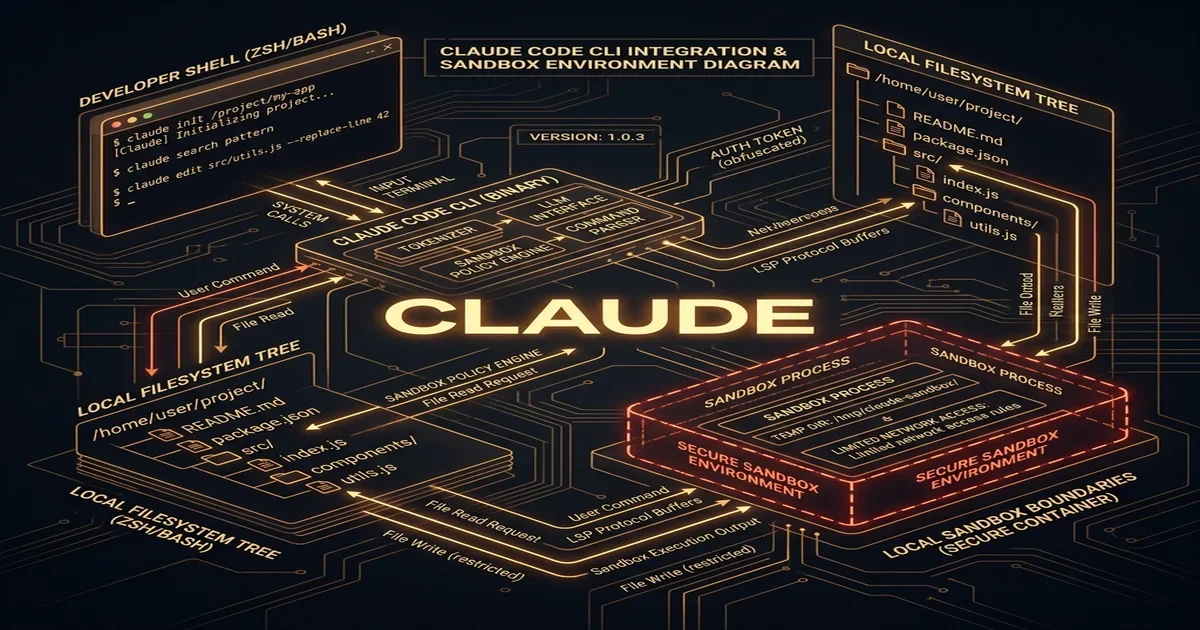
Developers praise speed. Security teams see shell access. Every agentic CLI is a remote operator with file write and subprocess spawn. Without sandboxing, Claude Code can:
- Read secrets from
.envcommitted by mistake - Exfiltrate via
curlto unknown endpoints - Modify CI workflows to persist access
- "Fix" production configs into non-compliance
2.2 Hardened sandbox environment
Production pattern:
| Layer | Control |
|---|---|
| Filesystem | Workspace-only RW; deny .. traversal; block /etc, home dirs |
| Network | Default deny WAN; allow package registries + internal API gateway |
| Process | No root; cgroup CPU/mem caps; kill runaway loops |
| Secrets | Inject via vault sidecar; never echo in traces |
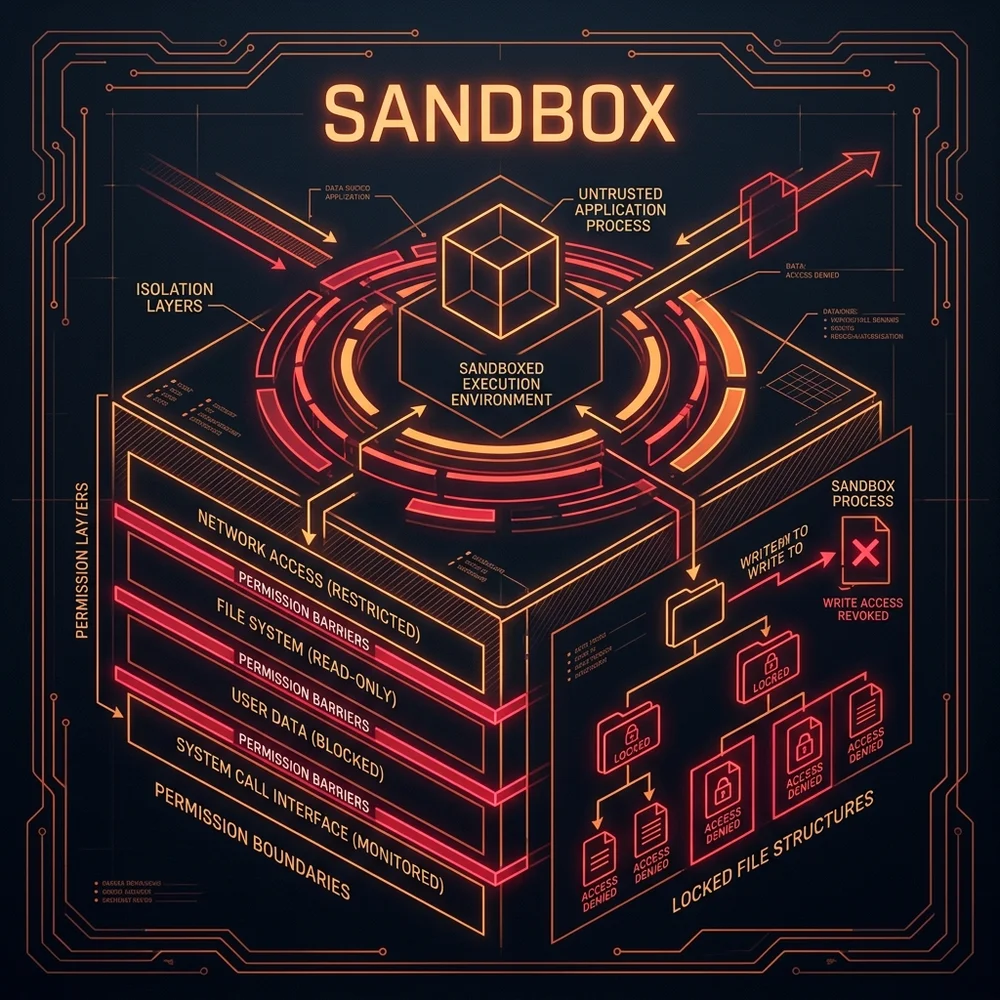
2.3 Process isolation and WAN firewall blocks
// Enterprise egress policy sketch — deny-by-default agent runner
export const EGRESS_ALLOWLIST = [
  "registry.npmjs.org",
  "pypi.org",
  "api.github.com",
  "mcp-gateway.corp.internal",
] as const;

export function assertEgress(host: string): void {
  if (!EGRESS_ALLOWLIST.includes(host as (typeof EGRESS_ALLOWLIST)[number])) {
    throw new Error(`EGRESS_BLOCKED: ${host}`);
  }
}
Operations teams mirror this at network layer (firewall/SWG), not only in application code—defense in depth.
2.4 Static analysis (SAST) agent check loops
Agents must not merge on green vibes. Bind SAST + dependency scan + secret scan on every agent-touched branch:
stateDiagram-v2
  [*] --> AgentWrite
  AgentWrite --> SAST
  SAST --> Tests
  Tests --> HumanReview: high_risk
  Tests --> MergeQueue: low_risk
  SAST --> AgentWrite: fix_loop
  HumanReview --> MergeQueue
  MergeQueue --> [*]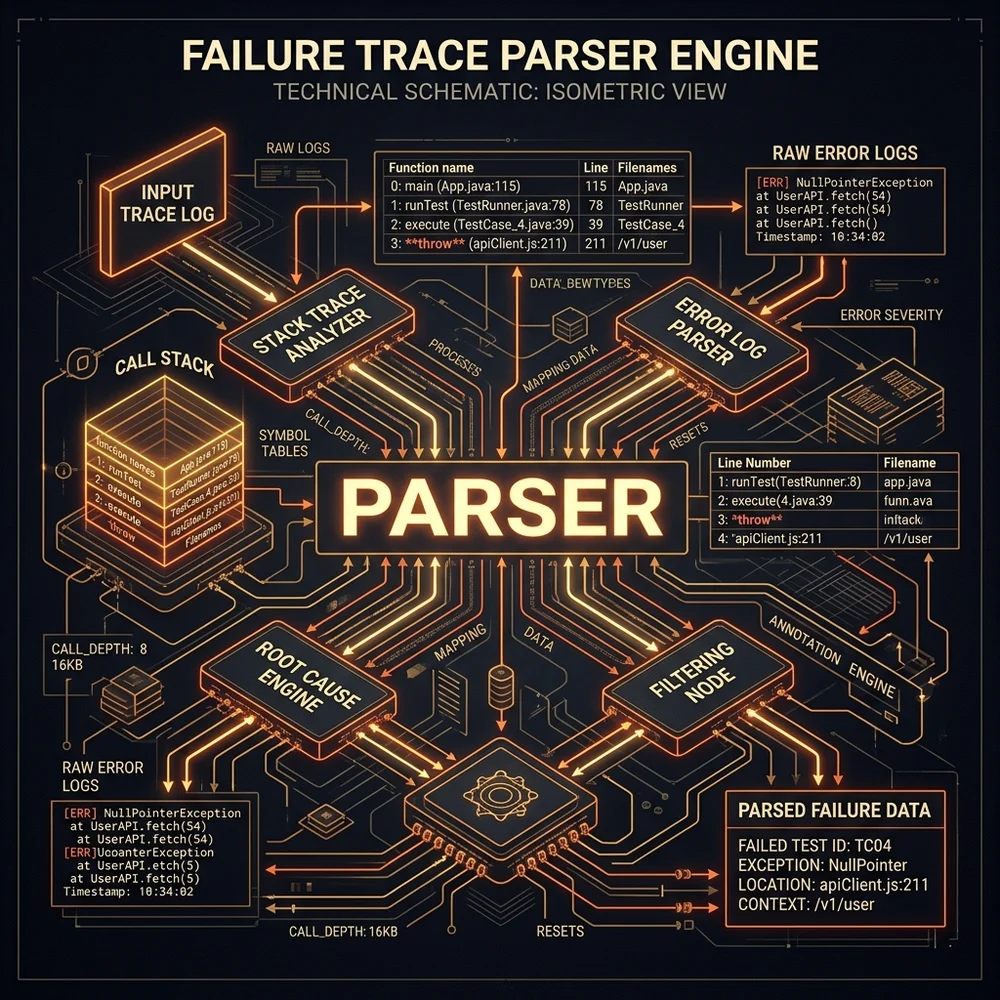
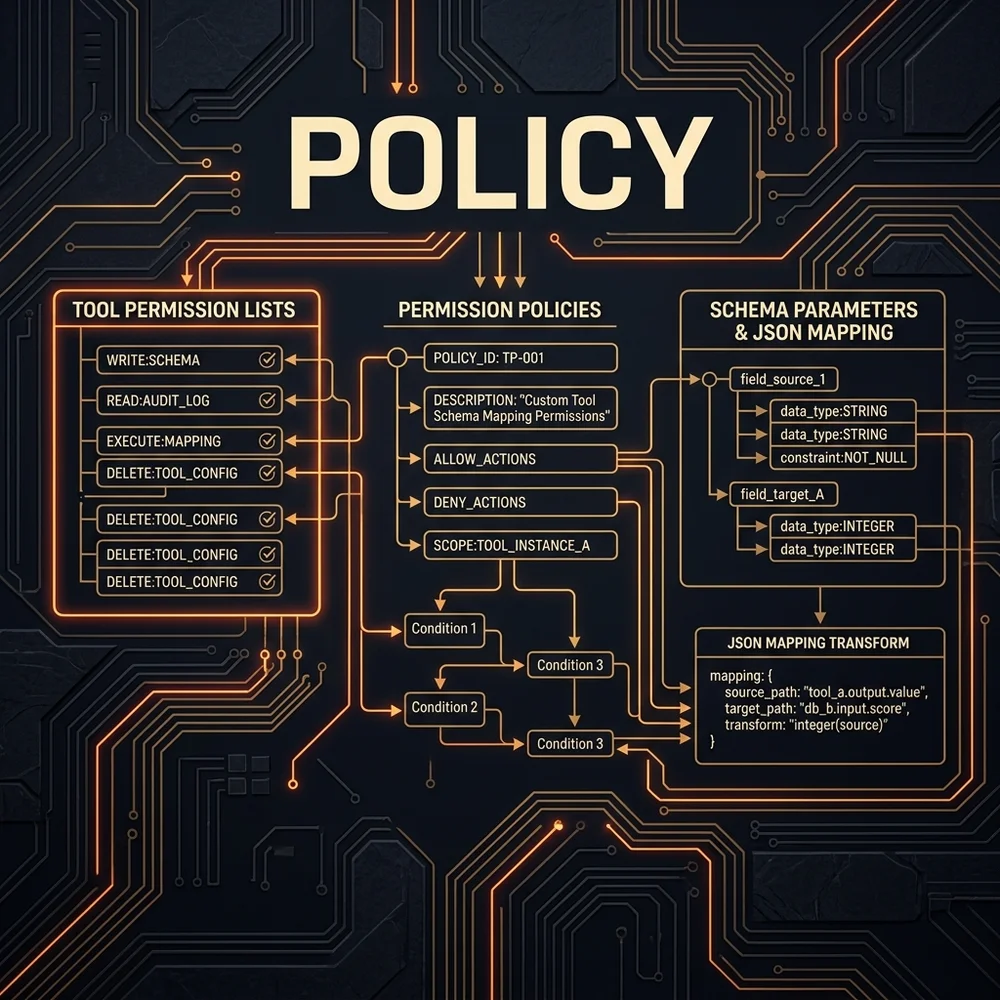
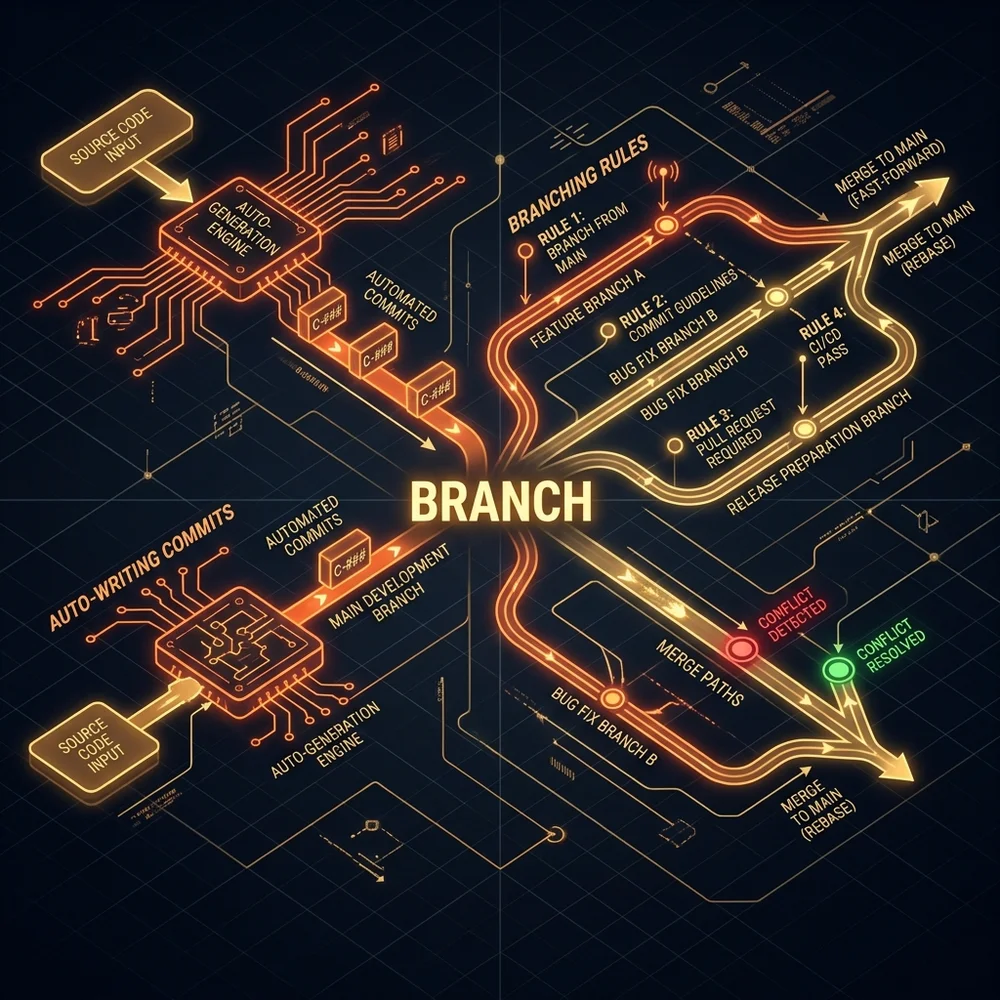
2.5 Policy-based write restrictions and file locking
Policy-as-code examples executives should demand:
- Deny writes to
.github/workflowswithoutplatform-approverrole - Deny edits to
terraform/*.tfon default branch agents - Lock
package-lock.jsonchanges unless dependency ticket present
<?php
// Illustrative path policy hook — integrate with agent broker
declare(strict_types=1);

final class AgentWritePolicy
{
    private const DENY_GLOBS = [
        '.github/workflows/*',
        '**/production.tfvars',
        'config/secrets/*',
    ];

    public function assertAllowed(string $relativePath): void
    {
        foreach (self::DENY_GLOBS as $glob) {
            if (fnmatch($glob, $relativePath)) {
                throw new RuntimeException("POLICY_DENY: {$relativePath}");
            }
        }
    }
}
2.6 Luxury Table: Threat Matrix — Attack Vectors and Mitigations
| Threat | Agentic exposure | Mitigation | Owner |
|---|---|---|---|
| Prompt injection via issue/PR text | Agent executes malicious instructions | Sanitize inputs; separate planning vs tool context | AppSec |
| Secret exfiltration | .env read + network POST | Sandbox deny WAN; secret scanners | SecOps |
| Supply-chain poison | Agent adds malicious dep | Dependency allowlist + SBOM diff | Platform |
| CI pipeline tampering | Workflow edit for persistence | Path policy + CODEOWNERS | DevOps |
| Shadow Claude accounts | Unlogged corp data to consumer tier | SSO gateway + DLP | GRC |
2.7 Go broker: execution attestation stub
package broker

type ExecRequest struct {
    WorkspaceID string
    Cmd         []string
    TraceID     string
}

func (b *Broker) Run(req ExecRequest) error {
    if err := b.policy.CheckPaths(req.WorkspaceID); err != nil {
        return err
    }
    if err := b.egress.Assert(req); err != nil {
        return err
    }
    return b.sandbox.Run(req)
}
Pair with Shadow AI Governance—consumer tools are the bypass lane.
2.8 Zero Trust alignment for agent runners
Treat agent hosts as untrusted workloads:
- mTLS to internal MCP gateway
- Short-lived OIDC tokens per session
- No persistent admin on runner VMs
- Continuous compliance scan on runner image
2.9 Secrets management: vault patterns
Never pass API keys via repo .env files agents can read. Use dynamic secrets with TTL < 1 hour for CI and agent lanes. Vault audit logs feed the same ledger as shell traces.
2.10 Supply chain: dependency allowlists
Maintain allowed-packages.lock per org. Agent-proposed dependencies trigger automated diff review against allowlist. Unknown packages require platform exception ticket with expiry.
2.11 Red team scenarios (tabletop)
Run annual tabletops: prompt injection via Jira ticket → agent → exfil attempt. Success = block at egress + alert. Failure = program pause until broker patch.
2.12 Incident response playbooks
| Severity | Trigger | Executive action |
|---|---|---|
| SEV1 | Agent modified prod without approval | Freeze agent writes globally |
| SEV2 | Secret scanner hit on agent branch | Quarantine repo |
| SEV3 | Repeated egress deny | Review team policy |
2.13 Data residency and air-gap options
Regulated entities may require on-prem inference or VPC-private endpoints. Architecture is harder; economics still compute—often higher $/PR but lower regulatory fine risk.
2.14 Insurance and cyber underwriting
Carriers increasingly ask about AI agent controls. Export Chapter 2 threat matrix + block counts as evidence for renewal packets.
2.15 Penetration test scope language
Include in RFP: "Attempt prompt injection to exfiltrate synthetic PAN from sandboxed workspace." Vague "AI testing" clauses get ignored.
2.16 Windows vs Linux sandbox parity
Enterprises run mixed estates. Policy must specify both bubblewrap profiles and AppContainer mappings—do not certify Linux-only and leave Windows laptops exposed.
2.17 Third-party MCP risk tiering
| Tier | MCP example | Controls |
|---|---|---|
| T0 | Internal read-only docs | Logged |
| T1 | Ticketing create | Rate limit + HITL |
| T2 | Production DB write | Denied by default |
2.18 Security KPI dashboard
- Egress denies / week
- Policy denies / week
- Mean time to patch broker rule after SEV
- % repos with agent policy file present
2.20 Board-ready security narrative (without FUD)
Security leaders often brief the board in one of two broken modes: techno-jargon that loses directors, or catastrophe theater that freezes investment. The third path is evidence storytelling: "We blocked 412 egress attempts and 37 policy denies this quarter; zero secrets reached WAN; one SEV2 quarantined in four hours."
Directors care about materiality, not CVE counts. Translate controls into business language:
- Containment → "Agents cannot phone home except through our gateway."
- Attestation → "Every bot commit maps to a human-approved mission ID."
- Recovery → "We can freeze all agent writes globally in under ten minutes."
flowchart TD
  subgraph Board[Board lens]
    B1[Brand / customer trust]
    B2[Regulatory fine exposure]
    B3[Insurance renewal]
  end
  subgraph Evidence[Quarterly evidence pack]
    E1[Block counts]
    E2[Pen test letter]
    E3[Tabletop outcomes]
  end
Evidence --> BoardPair narrative with comparative spend: incident rework dollars avoided vs broker Opex. That reframes Security from cost center to margin protector, which helps when Engineering wants more agent lanes next quarter.
2.21 Identity federation for agent principals
Human engineers have SSO identities. Agents must not inherit human long-lived tokens attached to laptops. Federation pattern: each agent session receives a short-lived workload identity scoped to workspace, repo, and tool tier. Bot commit keys rotate; humans approve mission scope.
| Principal type | Lifetime | Scope | Audit field |
|---|---|---|---|
| Human intent owner | SSO session | Approve missions | user:staff-* |
| Agent runtime | < 1 hr OIDC | Workspace RW | agent:lane-* |
| Bot committer | 90-day rotate | Sign only via broker | bot:broker-* |
// Sketch: exchange human SSO for agent workload token
export async function mintAgentToken(missionId: string, approverSub: string) {
  return oidc.exchange({
    grant: "agent_lane",
    mission_id: missionId,
    approved_by: approverSub,
    ttl_seconds: 3600,
  });
}Cross-reference Shadow AI Governance: consumer Claude sessions bypass federation entirely; network controls are mandatory backstop.
2.22 Containment vs velocity trade-off framework
Security wants deny-all; Engineering wants Friday merges. Executives exist to price the trade-off explicitly. Define three operating modes per lane:
| Mode | Write access | Network | Typical use |
|---|---|---|---|
| Coach | Read-only | Internal docs MCP only | Learning, design spikes |
| Build | Sandbox write | Allowlist registries + corp gateway | Feature dev |
| Ship | Build + gated auto-merge low-risk | Same as Build + HITL on prod paths | Mature lanes only |
stateDiagram-v2
  [*] --> Coach
  Coach --> Build: Tests + policy file + FinOps cap
  Build --> Ship: 3 green quarters + audit C3
  Ship --> Build: SEV1 or audit gap
Build --> Coach: Negative unit economicsRevisit mode quarterly in the Eng–Security–Finance triad (Chapter 3.15). Mode creep—Build lanes silently gaining WAN for "just this integration"—is how shadow autonomy returns inside approved tools.
2.23 Cloud security posture for agent runners
Agent runners are workloads, not laptops. Apply CSPM/CWPP where you run them: no public IPs, no overly broad instance profiles, image signing, and weekly CIS-hardened AMIs. If runners live in Kubernetes, separate namespace, NetworkPolicy deny-all egress except via egress gateway, and admission control that rejects privileged pods.
flowchart TB
  subgraph Cluster[Agent runner cluster]
    NS[Namespace agents]
    GW[Egress gateway]
  end
  NS --> GW
  GW --> Allow[Corp allowlist]
GW -.->|deny| Internet[Public internet]Pen testers should receive runner subnet diagrams annually. Obscurity is not a control; architecture clarity is.
2.27 Coordinated vulnerability disclosure for agent stacks
When broker or MCP vulnerabilities emerge, coordinate disclosure across all lanes simultaneously—partial patching leaves weakest link. Security comms template: impact, mitigations, timeline, whether agent writes paused. Executives align external customer messaging with internal facts.
Bug bounty programs should include agent injection scenarios with safe harbor rules for researchers. Bounties cost less than breach response.
2.24 Legal hold and sandbox destruction
When litigation holds hit, destroying sandboxes can spoliate evidence if traces weren't exported first. Legal hold runbook order: (1) freeze lane writes, (2) snapshot workspace and trace partition, (3) then recycle runners. GC signs off on destruction cadence—Engineering doesn't guess.
2.26 Vendor and OSS dependency in agent suggestions
Agents propose dependencies you didn't plan. Treat every agent dependency PR as supply chain event: license scan, maintainer health, typosquatting check, and alignment with allowed-packages.lock. Platform publishes monthly deny list updates; AppSec tracks near-misses where agents attempted known-bad packages.
Executives should ask quarterly: How many dependency near-misses became blocks vs merges? Rising blocks with flat incidents means controls work; flat blocks with rising incidents means controls are bypassed.
2.25 Executive deep dive: security as product feature
Your CISO organization is about to become a publisher of policies consumed by machines. That's a cultural shift as large as DevSecOps a decade ago. Policy-as-code for agents isn't a nice-to-have; it's the interface between Security intent and runtime behavior. When Security publishes only PDF standards, engineers improvise broker rules under deadline—and improvisation is where breaches breed.
Treat deny events as product telemetry. Product managers obsess over funnel drop-off; Security should obsess over why agents attempted forbidden paths. Was the path wrong? Was the training unclear? Was a supervisor careless? Pattern analysis converts blocks into training backlog for intent owners, not shame statistics.
Align red team findings with lane promotion. If red team compromises a Build-mode lane in October, Ship promotions for that lane family freeze until fixes ship and tabletop re-runs pass. This couples offensive findings to economic consequences, which executives understand better than CVSS scores alone.
Cyber insurance is a lagging judge. Start exporting quarterly: egress deny trends, secret scanner hits on agent branches, mean time to patch broker after findings, percentage repos with agent-policy.yaml (name illustrative). Underwriters will price your program; give them structured data or they'll assume worst case.
Remember: customers don't distinguish "our employee pasted into ChatGPT" from "our agent exfiltrated via MCP." Brand impact is identical. Sandbox investment is customer retention for B2B, not IT hygiene.
2.19 Chapter 2 synthesis
Sandbox is brand protection. One viral "AI deleted prod" story costs more than a year of Claude licenses. Fund Security before Marketing celebrates AI.
Chapter 3: Restructuring the High-Intent Team
3.1 Job descriptions from 2020 are liabilities
Hiring "10x engineers" who type fast is obsolete theater. High-intent leaders define outcomes, constraints, and acceptance tests—then orchestrate agents that implement. HR and engineering leadership must co-author roles:
| Legacy title focus | 2026 intent-owner focus |
|---|---|
| Lines of code | Merged outcomes / SLO impact |
| Language expertise | System boundaries & contracts |
| Individual heroics | Agent supervision & review quality |
| Sprint task completion | Portfolio-level trade-offs |
3.2 High-intent team architecture
┌──────────────────────────────────────────────┐
│  VP Engineering / Product — economic intent     │
└────────────────────┬─────────────────────────┘
                     │
┌────────────────────▼─────────────────────────┐
│  Intent Owners (Staff+) — problem framing       │
│  Golden tests, policy context, risk calls       │
└────────────┬───────────────────┬───────────────┘
             │                   │
   ┌─────────▼─────────┐  ┌──────▼──────────────┐
   │ Agent Supervisors │  │ Platform / SecOps    │
   │ (review, escalate)│  │ (sandbox, MCP, SAST) │
   └─────────┬─────────┘  └─────────────────────┘
             │
   ┌─────────▼─────────────────────────┐
   │ Background micro-agents (bounded)    │
   └────────────────────────────────────┘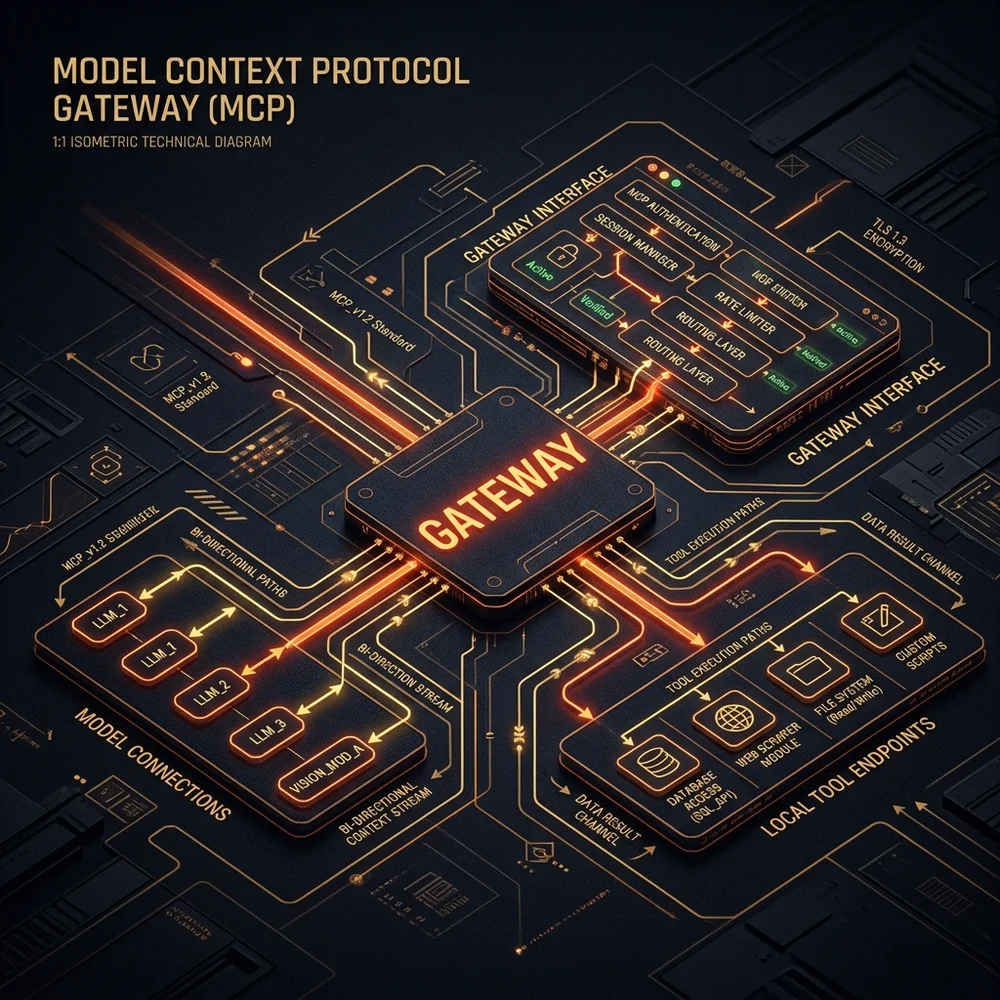
3.3 Orchestrating background micro-agents
Micro-agents are short-lived workers: fix flaky test, update changelog, regenerate OpenAPI client. They are not "second engineers"—they are cron with judgment, capped by budget and scope.
Governance rules:
- One mission per spawn — no unbounded "fix the repo"
- Time-to-live — kill after N minutes or M tool calls
- No shared credentials — OIDC per agent lane
- Queue depth alerts — FinOps signal for runaway loops
3.4 Developer-to-agent leverage ratios
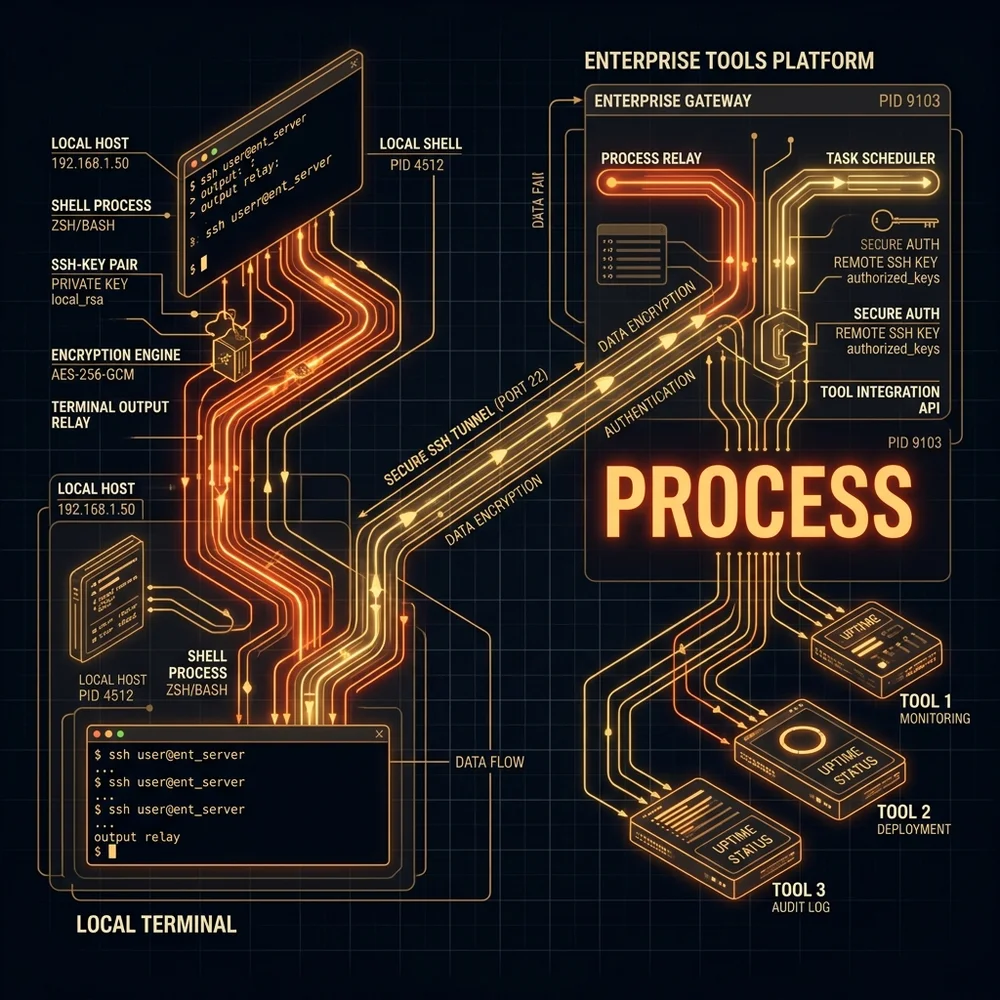
Plan leverage explicitly—do not hope it emerges:
| Team maturity | Intent owners : implementers : agent lanes |
|---|---|
| Pilot | 1 : 3 : 1 read-only |
| Controlled scale | 1 : 2 : 2 (write in sandbox) |
| Mature | 1 : 1 : 3–4 background lanes |
3.5 Strategic intent vs task delegation
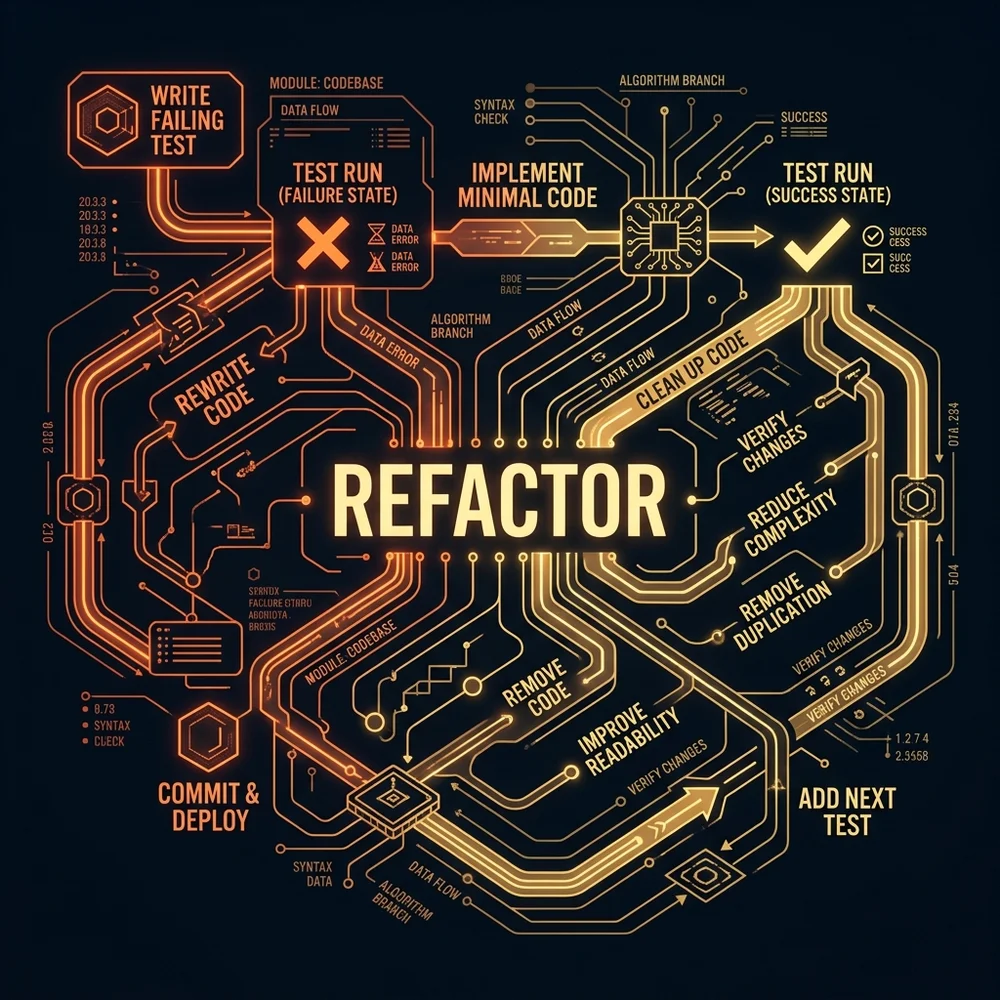
flowchart TD
  I[Business intent] --> O[Outcome + constraints doc]
  O --> A[Agent plan — human approved]
  A --> E[Execution in sandbox]
  E --> R[Human review gate]
  R --> D[Deploy / merge]
Executives should fund outcome docs and golden tests before funding more API tokens. Intent without tests is expensive improvisation.
3.6 Luxury Table: Org Matrix — Roles in an Agent-Native Team
| Role | Accountable for | Not responsible for | Reports to |
|---|---|---|---|
| Intent Owner | Outcomes, acceptance tests, risk acceptance | Typing every file | Eng Director |
| Agent Supervisor | Review quality, escalation | Platform uptime | Intent Owner |
| Platform Guardian | Sandbox, MCP, CI policy | Feature priority | VP Platform |
| GRC Partner | Control mapping, audit evidence | Story pointing | CRO / GC |
3.7 Change management: what to tell the workforce
Transparency reduces sabotage. Message: "Agents handle toil; you own judgment." Offer re-skilling on orchestration, review, and threat modeling—not prompt trivia contests.
Link: The Post-Managerial Era for leadership framing.
3.8 Compensation and performance review shifts
Do not reward raw merge counts. Reward outcome attainment, review quality scores, and incident-free quarters. Middle managers who punish "lower LOC" will sabotage agent programs—retrain or remove.
3.9 Hiring profile: intent owner interview rubric
Interview signals:
- Frames problems as constraints + tests
- Explains trade-offs to non-engineers
- Demonstrates calm escalation when agents err
- Red flag: "I don't read agent output"
3.10 Training curriculum (40 hours)
| Module | Hours | Audience |
|---|---|---|
| Agent economics | 4 | All eng leadership |
| Sandbox & policy | 8 | Platform + leads |
| Review craftsmanship | 12 | Supervisors |
| Audit & compliance | 8 | GRC + leads |
| Hands-on pilot | 8 | Intent owners |
3.11 Union and workforce council engagement
Early consultation prevents work stoppage narratives. Message: augmentation, re-skilling budget, no silent layoff plans tied to month-one pilots.
3.12 Distributed / offshore coordination
Agent traces make visibility easier across time zones—supervisors in each region with shared ledger. Do not allow offshore lanes to bypass HITL on regulated code paths.
3.13 Product management partnership
PMs co-own outcome docs and acceptance tests, not just stories. Agents consume PM artifacts; garbage stories → garbage autonomy.
3.14 Center of Excellence (CoE) charter
CoE maintains: catalog, policy templates, training, quarterly metrics—not bottleneck approvals on every PR. CoE fails when it becomes another ITIL stage gate.
3.15 Conflict resolution: Eng vs Security vs Finance
Standing triad meeting biweekly during scale-up. Escalation path to CTO/CISO/CFO tie-break within 5 business days—programs die in unresolved triangles.
3.16 Diversity of thought on review panels
Homogeneous review teams miss bias in agent-suggested designs. Rotate reviewers; track demographic-blind quality metrics only in aggregate for health.
3.18 Squad topology: regulated vs innovation lanes
One org chart cannot fit PCI-scoped payments and internal admin dashboards without forcing either over-control or under-control. Split topology:
- Regulated lane squads — Higher supervisor ratio, mandatory HITL, slower autonomy promotion, shared GRC partner embedded in planning.
- Innovation lane squads — Faster Build mode, lighter HITL except customer data touch, stronger product experimentation metrics.
flowchart TB
  subgraph Reg[Regulated lane]
    R1[Intent owner]
    R2[2x Supervisors]
    R3[Agents HITL-gated]
  end
  subgraph Inno[Innovation lane]
    I1[Intent owner]
    I2[1x Supervisor]
    I3[Agents Build mode]
  end
  VP[VP Engineering] --> Reg
VP --> InnoCHRO and Eng VP must message that innovation lanes are not punishment postings—they're where new product surfaces learn agent discipline before promotion to regulated paths.
3.19 Middle management in the agent-native enterprise
Directors and engineering managers built careers on task decomposition and status visibility. Agents compress task execution; middle management must shift to risk surfacing, stakeholder translation, and review system design. Managers who only aggregate Jira tickets add little when agents close tickets overnight.
Redesign expectations:
| Old behavior | 2026 behavior |
|---|---|
| Count story points closed | Escalate policy blocks and audit gaps |
| Assign typing tasks | Curate outcome docs and golden tests |
| Heroic unblock via personal coding | Broker access and lane health metrics |
Some roles shrink; platform guardians and principal reviewers grow. Headcount plans should show reallocation, not silent RIF tied to month-two pilots—that triggers union and press risk (Chapter 3.11).
3.20 Measuring review quality without metric gaming
Merge volume is trivially gamed when agents open PRs. Review quality is harder—but not impossible. Use composite signals: post-merge defect rate, reviewer comment depth (not length), re-open rate within 14 days, and spot audits where Staff engineers sample agent diffs for architectural drift.
flowchart LR
  PR[Agent PR merged] --> D14[Defect signal 14d]
  PR --> AUD[Quarterly spot audit]
  D14 --> Q[Review quality score]
AUD --> QExecutives should ask "Are we faster and safer?" not "Are we merging more?" If human review minutes drop because reviewers skip files, you'll see it in defect signals within a quarter—fund review craftsmanship training (Chapter 3.10) before buying more tokens.
3.21 Executive sponsorship without hero culture
Sponsorship should be boring and persistent—quarterly attendance at triad meetings, public praise for blocks prevented, protection of Platform budget—not photo ops at hackathons. Hero culture encourages teams to bypass sandbox for a demo that impresses the sponsor; that's how boards get surprised by SEV1s.
Sponsors also absorb political cost when Finance challenges headcount reallocation. CHRO and CTO alignment messages should come from the same sponsor voice to avoid mixed signals.
3.22 Guilds and communities of practice
Beyond CoE documents, fund guilds where intent owners share review patterns, redacted trace lessons, and outcome doc templates. Guilds are volunteer-led, monthly, and not approval bodies. They scale culture faster than mandatory LMS videos.
| Guild topic | Cadence | Metric of health |
|---|---|---|
| Review craftsmanship | Monthly | Spot audit scores improve |
| FinOps literacy | Quarterly | Fewer cap breaches |
| Regulated lane patterns | Bi-monthly | HITL time stable |
3.24 Building the supervisor bench
Supervisors are the rate limiter for safe scale. Hire and train them before you spawn background lanes. A supervisor should read diffs critically, understand threat models at architecture level, and escalate policy gaps without hero-fixing code themselves. Bench depth rule: at least two supervisors per intent owner on regulated lanes so PTO doesn't force rubber stamps.
Supervisor career path should be visible—it's a principal track, not exile from "real coding." Compensation comparable to staff engineers; performance based on review quality metrics (3.20) and incident outcomes, not lines reviewed.
flowchart TB
  IO[Intent owner] --> S1[Supervisor primary]
  IO --> S2[Supervisor backup]
  S1 --> Q[Review queue]
S2 --> Q3.23 Executive deep dive: culture and accountability
Technology is the easy half. The hard half is convincing senior engineers that reviewing agent output is honorable, high-leverage work—not punishment for failing to "keep up with AI." Staff engineers who dismiss agent diffs without reading them are creating single points of failure as dangerous as any legacy hero operator. Executives must celebrate careful reviewers publicly: promotions, spot bonuses, conference speaking slots about review craftsmanship.
Middle managers need new coaching scripts. Instead of "why isn't this ticket done," ask "what outcome doc blocked the agent?" and "which policy deny should we escalate to Platform?" Managers who micromanage keystrokes will drive talent back to shadow tools where nobody logs anything.
Diversity and inclusion intersect agent programs in non-obvious ways. Homogeneous teams may accept agent-generated designs that encode biased assumptions in APIs (credit scoring, hiring workflows). Rotate reviewers; include domain experts from risk/compliance in design reviews for sensitive features—not as gatekeepers, as sense-makers.
Global teams should share sunrise handoffs via trace summaries, not Slack novels. A supervisor in London leaves a structured trace note; a supervisor in Chicago continues the mission with bounded context. That's operational excellence, not bureaucracy.
When layoffs happen—and boards may ask for efficiency—do not tie layoffs to month-three agent pilots. Correlation will be weaponized internally. If workforce reduction is necessary, decouple messaging from agents; continue investing re-skilling pools. Otherwise you'll sabotage the program culturally even if economics eventually justify it.
3.17 Chapter 3 synthesis
Org design converts tooling into throughput. Without role clarity, agents become blame magnets after incidents.
Chapter 4: Audit Trails & Explainability
4.1 Regulators ask "show your work"—not "show your demo"
When Claude Code touches regulated systems—payments, health records, critical infrastructure—explainability is exportable evidence:
- Who approved the mission?
- What tools ran?
- What files changed?
- Which model version?
- Where did human review occur?
4.2 Immutable explainability registry
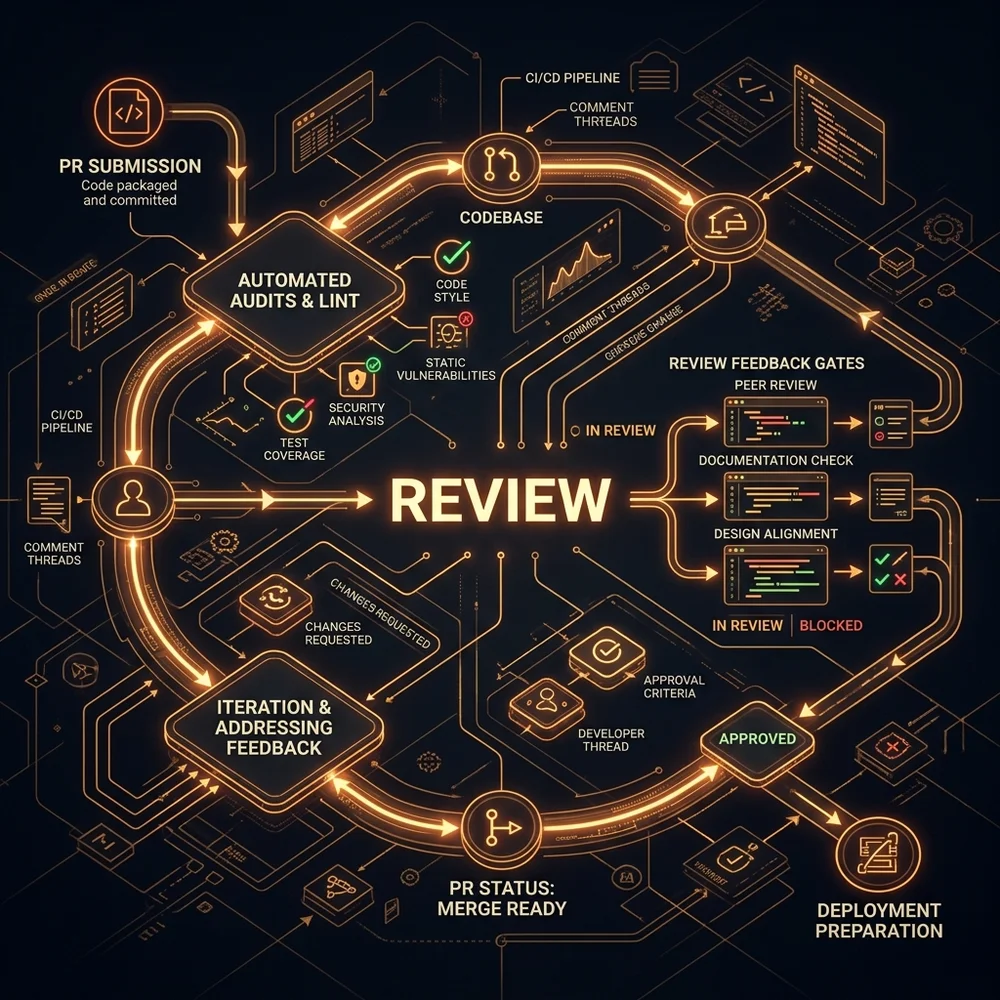
Architecture pattern:
| Component | Function |
|---|---|
| Trace collector | Append-only events per agent session |
| Hash chain | Tamper-evident linking |
| Commit linker | Maps trace_id → git SHA |
| Retention policy | WORM 7y for finance; shorter for internal tools |
4.3 Trace logging of agent shell actions
Minimum event schema:
{
  "trace_id": "tr_8f2a",
  "timestamp": "2026-06-06T14:22:01Z",
  "actor": "agent:claude-code",
  "supervisor": "user:staff-441",
  "action": "shell.exec",
  "cmd_hash": "sha256:…",
  "workspace": "ws_payments",
  "policy_decision": "allow",
  "exit_code": 0
}
Never store raw secrets in traces—store hashes and classifications.
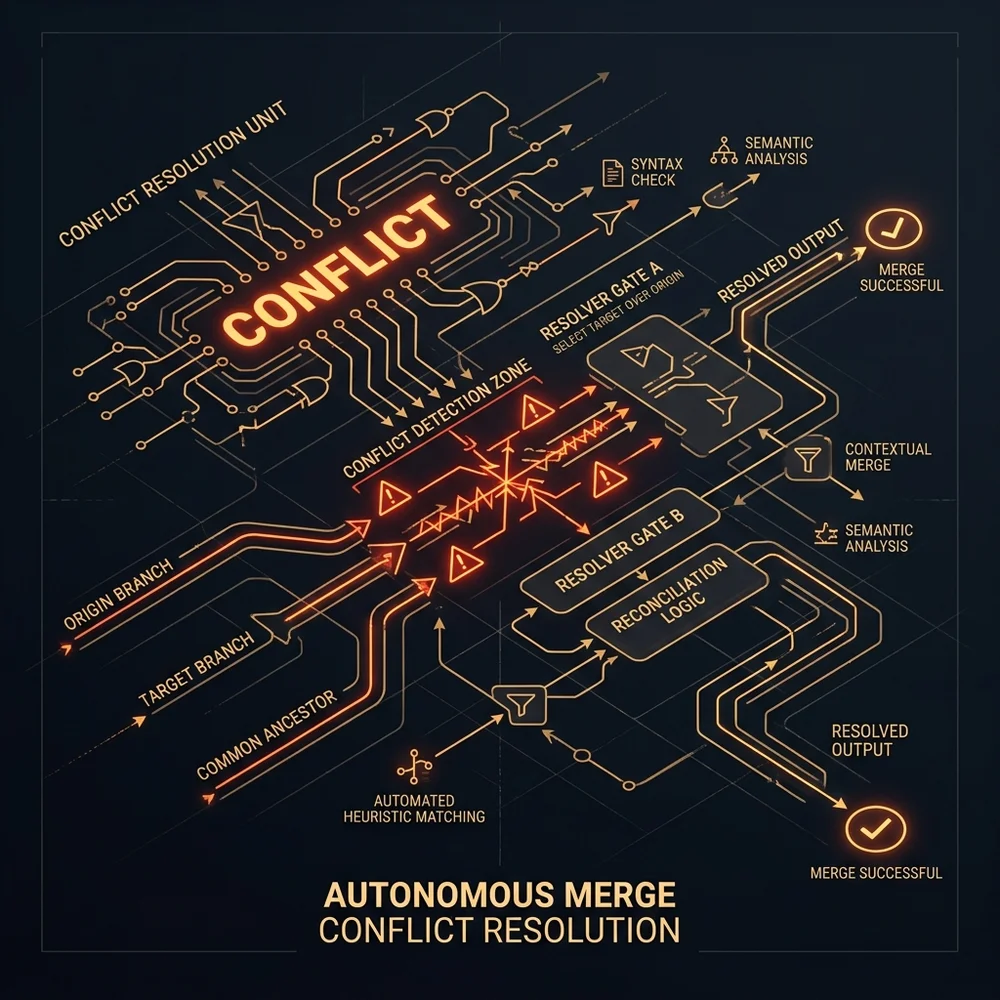
4.4 Verifiable commit attestation paths
sequenceDiagram
  participant Agent
  participant Broker
  participant Git
  participant Ledger
  Agent->>Broker: propose commit
  Broker->>Ledger: record trace + diff hash
  Broker->>Git: signed commit (bot key)
  Git-->>Ledger: SHA linkage
Attestation proves this merge came from this supervised session—critical for SOC2 and internal investigations.
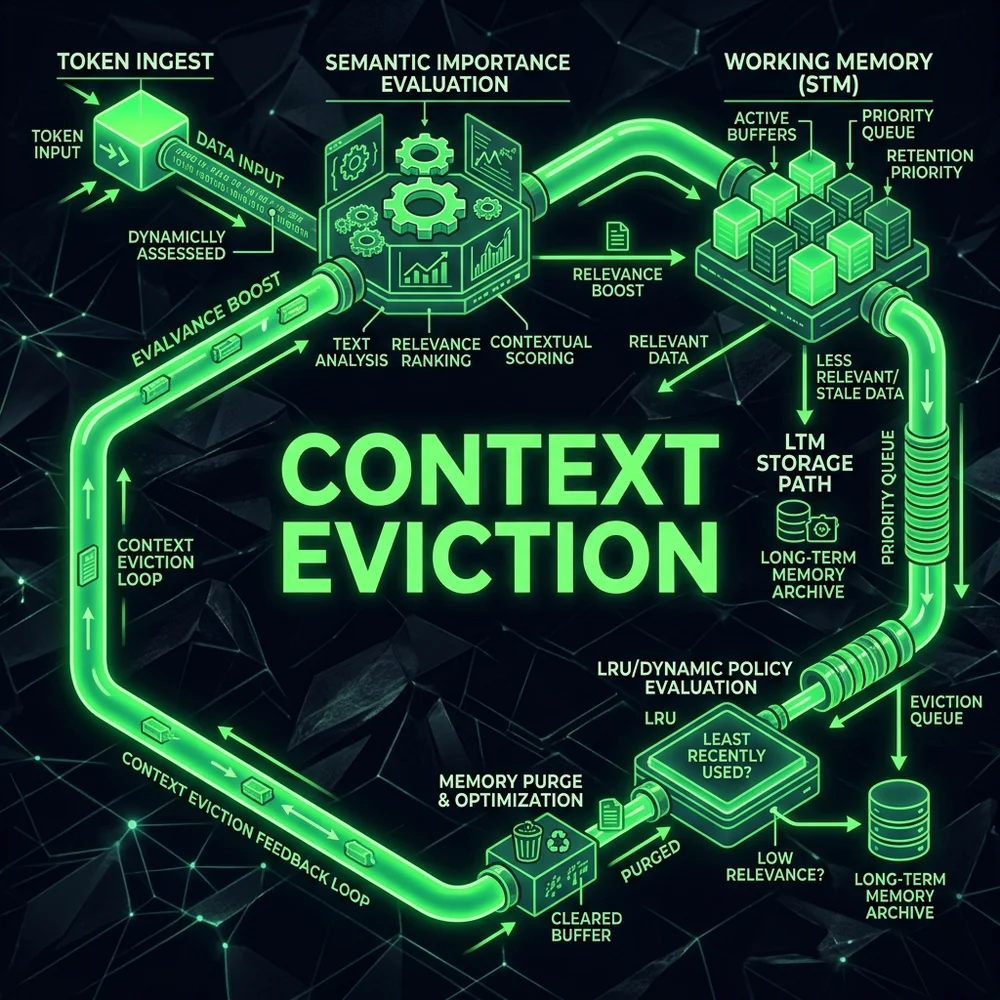
4.5 Regulatory compliance checklist tracking
Map controls to artifacts (EU AI Act high-risk themes illustrative):
| Control theme | Evidence artifact |
|---|---|
| Human oversight | hitl-manifest.yaml + review logs |
| Logging | audit/trace-schema-v2.json exports |
| Accuracy / testing | Golden test reports per release |
| Cybersecurity | Sandbox policy + pen test letter |
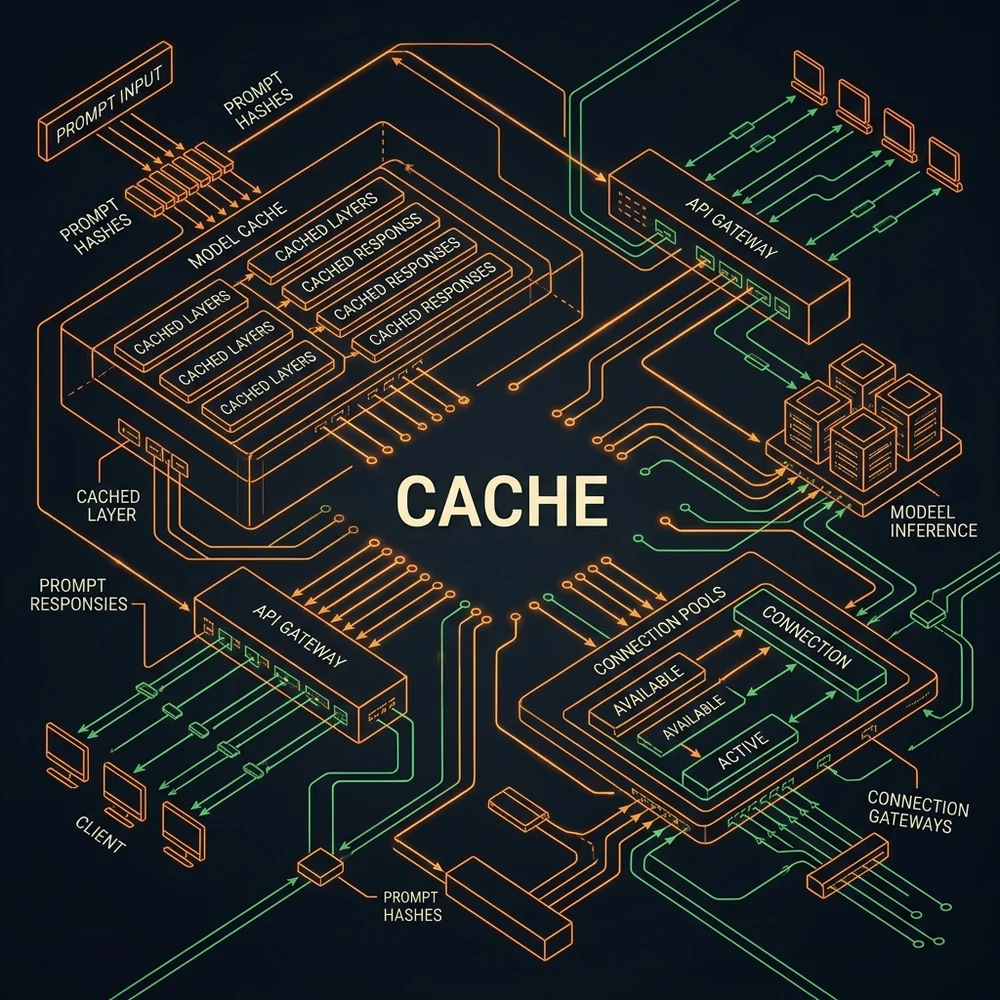
4.6 Luxury Table: Mandatory Audit Logging Schemas (High-Risk Domains)
| Domain | Required fields | Retention | Review cadence |
|---|---|---|---|
| Financial services | trace_id, approver, model_id, diff_hash, policy_id | 7 years | Quarterly |
| Healthcare (HIPAA-aligned) | PHI classification flag, redaction proof | 6 years | Quarterly |
| Public sector | Mission ticket, change advisory ID | Per agency statute | Monthly |
News cross-read: EU AI Act GPAI enforcement 2026.
4.7 SOC2 Type II mapping (illustrative)
Map CC6/CC7 controls to trace retention, access reviews on bot keys, and change management evidence for agent merges.
4.8 Discovery for litigation holds
Legal hold must freeze ledger partitions by repo and date range without stopping entire platform. Counsel needs runbook—prepare before subpoena.
4.9 Model version pinning policy
Every trace stores model_id and policy_pack_version. Reproducibility for investigations requires no silent model upgrades on regulated lanes without change ticket.
4.10 Redaction pipeline for support engineers
Support views traces with automatic secret redaction and role-based field visibility. Raw trace access is break-glass only.
4.11 Cross-border transfer analysis
If traces contain personal data, DPA and transfer impact assessments apply. EU employees using US inference needs documented mechanism—legal not engineering guess.
4.12 Board reporting pack (quarterly)
One-page: sessions count, blocks, merges, SEVs, open audit findings, training completion.
4.13 Integration with SIEM
Forward POLICY_DENY, EGRESS_BLOCKED, HITL_REQUIRED events to Splunk/D Sentinel with stable schema IDs.
4.14 Forensic timeline reconstruction
Investigators must reconstruct session timeline in < 30 minutes for SEV1. Drill quarterly.
4.16 External auditor walkthrough playbook
SOC2, ISO, and sector regulators increasingly ask for live reconstruction, not PDF attestations. Prepare a 90-minute auditor walkthrough with four stations: (1) trace sample pull by trace_id, (2) commit linkage demo on Git, (3) policy deny replay, (4) HITL approval record for a high-risk merge.
Auditors fail you for gaps in the chain, not for using AI. Common gaps: missing model_id, bot commits without supervisor field, traces stored in SaaS without WORM export. Fix before they arrive—remediation under observation is expensive theater.
sequenceDiagram
  participant Aud as Auditor
  participant GRC as GRC Lead
  participant Led as Ledger
  participant Git as Git
  Aud->>GRC: Request trace_id sample
  GRC->>Led: Export bundle
  Led-->>Aud: Hash chain + events
  GRC->>Git: Resolve SHA
Git-->>Aud: Signed commit metadataYour external firm does not need Claude Code training; they need your schema. Publish audit/trace-schema-v2.json with field dictionary in the data room.
4.17 Customer trust pack for enterprise B2B sales
Enterprise buyers now ask suppliers: How do you use AI agents on our code or data? Legal inserts AI addenda into MSAs. Product and Sales need a customer trust pack aligned with Chapter 4 evidence—not marketing fluff.
Minimum pack contents:
- Subprocessor disclosure — Model vendor, region, retention.
- Human oversight statement — HITL on production-impacting paths.
- Data flow diagram — Corp tenant vs training opt-out.
- Incident notification SLA — Agent-related breaches included.
- Right to audit — Summarized trace export on request (scoped).
Sales must not promise "AI builds your feature overnight" when your lane is Coach mode on their contract repo. Align commercial narrative with actual autonomy mode per engagement.
4.18 Data minimization vs retention tension
Regulators want long retention for finance; privacy officers want short retention for employee prompts. Executives must adjudicate with Legal, not Engineering alone. Pattern: store hashed commands + classifications for seven years; store raw prompts only where necessary, encrypted, with 90-day default TTL on non-regulated lanes.
| Data class | Retention default | Raw prompt storage |
|---|---|---|
| Public OSS mirror | 1 year | No |
| Internal tools | 2 years | Redacted snippets |
| Regulated | Statute-driven | Case-by-case with GC |
flowchart TD
  T[Trace event] --> C{Contains PII?}
  C -->|yes| R[Redact + classify]
  C -->|no| H[Hash cmd only]
  R --> W[WORM partition]
H --> WMinimization reduces storage cost and breach blast radius—CFO and CISO both win when you resist "log everything because we might need it someday."
4.19 Continuous control monitoring (CCM) for agents
Point-in-time audits fail when agents run 24/7. CCM pulls daily: % sessions with complete trace chain, % merges with HITL where required, policy deny rate anomalies, model version drift on regulated lanes. Anomaly detection beats checkbox compliance.
# Daily CCM rollup — executive threshold flags
def ccm_daily(traces: list) -> dict:
    total = len(traces)
    complete = sum(1 for t in traces if t.get("commit_sha") and t.get("supervisor"))
    rate = complete / max(total, 1)
return {"trace_completeness": rate, "alert": rate < 0.995}CCM dashboards feed Appendix A R-05 KRIs automatically—GRC shouldn't manually spreadsheet trace gaps.
4.20 Third-party reliance and subprocessors
Your ledger proves your controls; customers still ask about Anthropic and MCP hosts. Maintain subprocessor register aligned with trust pack (4.17). When MCP vendor breaches occur, your trace should show which tool tier was invoked—otherwise you cannot scope customer notification.
4.21 Executive deep dive: evidence as competitive moat
In regulated B2B, auditability becomes a SKU. Two vendors pitch similar features; the buyer's CISO asks for AI governance evidence. Vendor A hands marketing fluff; Vendor B hands trace schema, sample redacted session, HITL policy, pen test excerpt. Vendor B wins six-figure deals slower but surer. Your GC and CRO should co-own that moat narrative—not relegate it to junior compliance analysts.
Litigation holds and regulatory inquiries share a pattern: sudden, document-hungry, unforgiving of "we'll pull logs next week." Pre-partition trace stores by repo and date now. Legal should run a tabletop that assumes an agent touched a disputed transaction; Engineering demonstrates 30-minute reconstruction. If reconstruction takes three days, you have a material weakness regardless of tool brand.
Model vendors will rev versions frequently. Regulated lanes need change control symmetrical with human code changes: ticket, approver, rollback, post-change monitoring window. Executives who allow silent upgrades deserve the investigation they'll get when behavior shifts on a payments path.
Privacy teams sometimes oppose logging; security teams oppose gaps. Executives adjudicate with data minimization (Chapter 4.18) plus hash-based command capture—you can prove what happened without hoarding sensitive literals. That compromise is mature governance, not compromise-as-failure.
Finally, educate the board that explainability ≠ interpretability of neural weights. Explainability here means operational traceability: who approved, what ran, what changed, what tests passed. That's achievable and sufficient for most supervisory frameworks today.
4.22 Narrative case: regulatory inquiry dry run
GC schedules a dry run: "Regulator asks how agent X changed file Y on date Z." Team has 90 minutes to produce trace bundle, HITL record, test report, model version, and approver identity. Success in 28 minutes because trace_id was in change ticket. Failure mode in alternate run: traces in SaaS without export API—team needs three days—material weakness flagged for remediation funding.
Dry runs should include broken scenarios on purpose: incomplete trace, wrong model version field, missing supervisor on holiday handoff. Fix runbooks, not blame people.
Regulators may not understand MCP; they understand who approved production impact. Speak in oversight language. Bring Developer Masterclass engineers to translate only if asked—executives own message.
Customer contracts increasingly include right-to-audit AI processing clauses. Align contract repository with trust pack versions so account teams don't promise 2026 controls while 2024 practices still run in a subsidiary.
4.15 Chapter 4 synthesis
Audit is license to operate in regulated sectors. Under-invest here, over-invest in demos—classic enterprise mistake.
Chapter 5: Future Proofing (2026–2030)
5.1 Capability waves—plan without betting the company
| Year | Enterprise capability | Executive decision |
|---|---|---|
| 2026 | Governed Claude Code lanes, read→write promotion | Fund sandbox + audit first |
| 2027 | Multi-agent swarms per value stream | Standardize MCP internal marketplace |
| 2028 | Autonomous repo deployments with policy gates | Shift ops headcount to supervision |
| 2029 | Self-healing infra meshes (bounded) | Insist on blast-radius caps |
| 2030 | Intent-to-app for non-critical surfaces | Keep human sign-off on regulated paths |
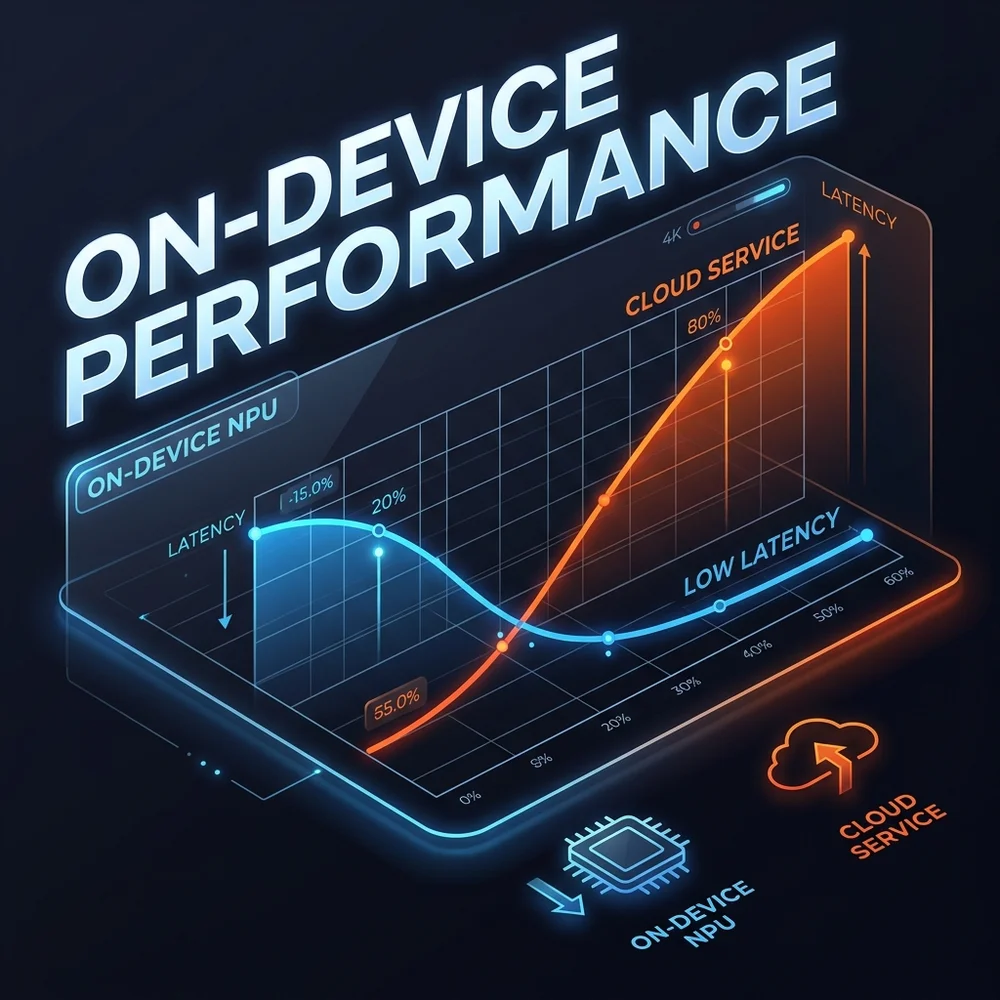
5.2 Multi-agent swarm evolution
Swarms are not chaos— they are typed workers with contracts. CxOs demand swarm budgets and failure budgets like error budgets in SRE.
5.3 Autonomous repository deployments
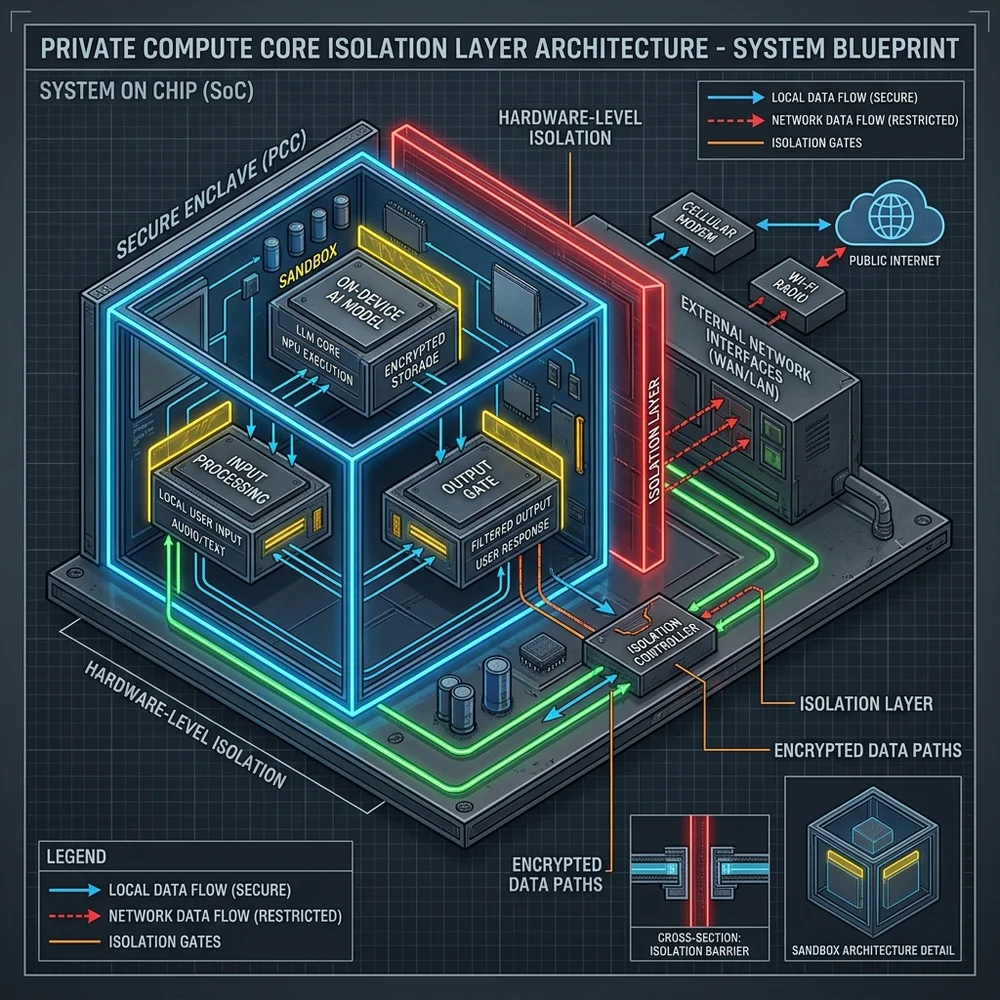
Promotion path:
- Agent opens PR (sandbox)
- SAST + tests + human review
- Progressive deploy canary with auto-rollback
- Post-deploy agent only diagnoses—no silent rollback without human ack in regulated lanes
5.4 Self-repairing infrastructure meshes
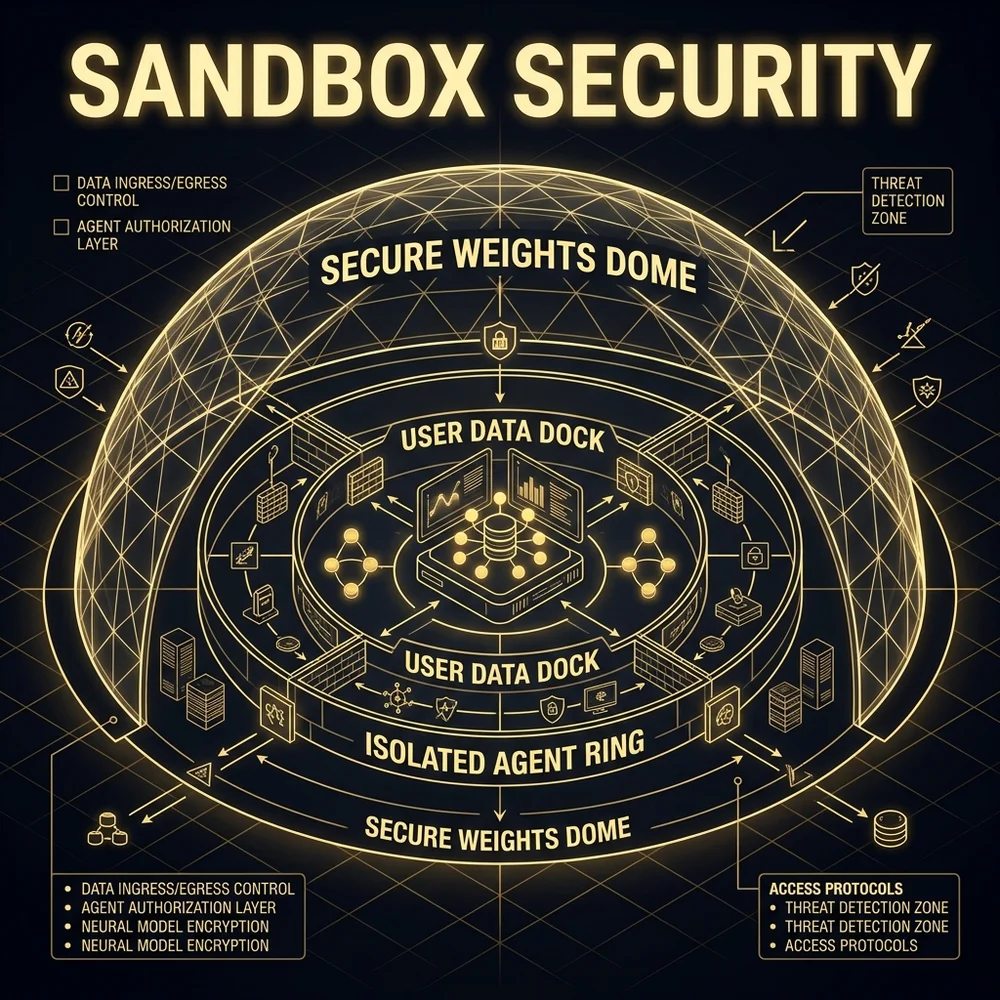
Self-repair means automated triage and patch proposals—not unsupervised prod changes. Pair agents with runbook-as-code and immutable infra (Terraform/Kubernetes) with policy gates.
5.5 User intent to total app generation flow
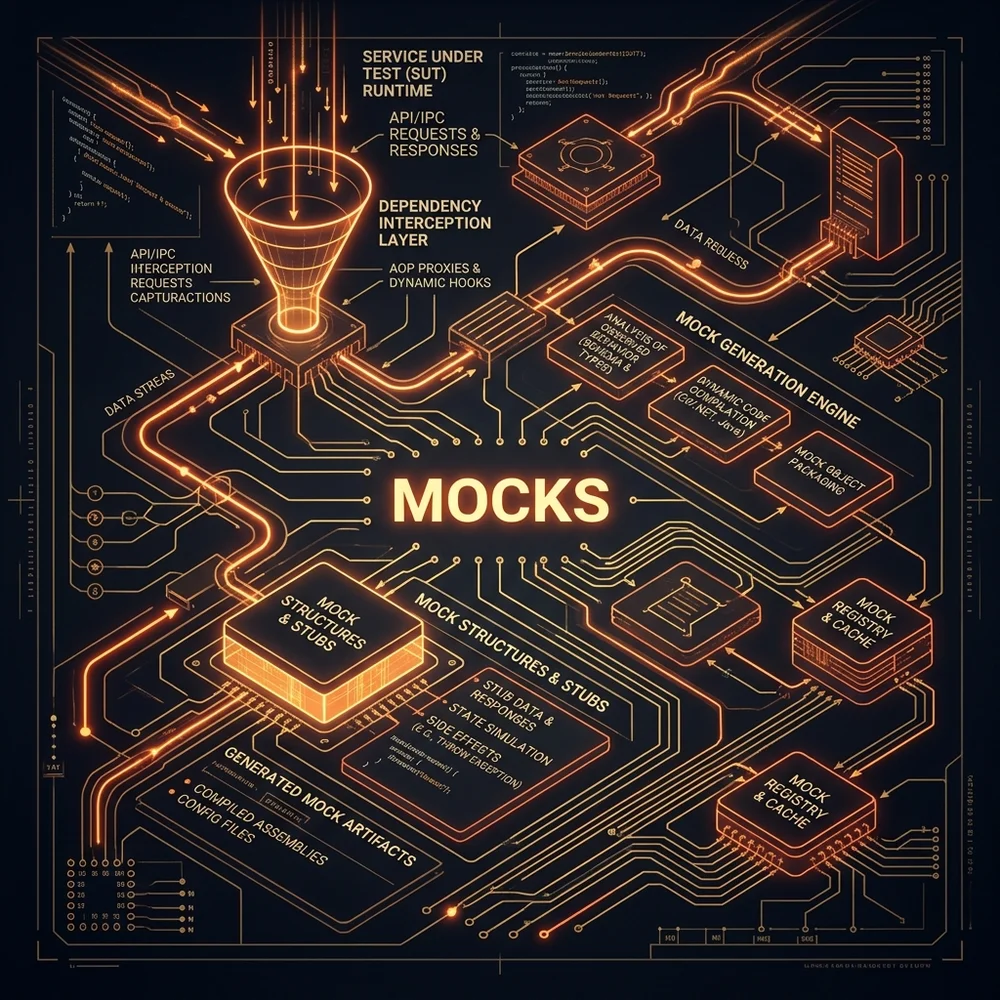
2030 vision for internal tools and low-regret surfaces: intent doc → agent scaffold → human style/security review → ship. Customer-facing regulated flows keep human sign-off indefinitely.
5.6 Luxury Table: Evolution Timeline 2026–2030
| Year | Technology shift | Governance shift | KPI emphasis |
|---|---|---|---|
| 2026 | Claude Code + MCP enterprise | Sandbox + audit ledger | $/merged PR, policy blocks |
| 2027 | Multi-agent orchestration | Agent catalog + FinOps tags | Leverage ratio |
| 2028 | Autonomous deploy lanes | Progressive delivery policy | Change failure rate |
| 2029 | Infra self-heal proposals | Blast-radius caps | MTTR, rollback frequency |
| 2030 | Intent-to-app (bounded) | Sector-specific AI law | Outcome $ / agent $ |
5.7 Dual-playbook operating model
| Audience | Playbook |
|---|---|
| CxO / GRC / FinOps | This document |
| Platform / developers | Claude Code Developer Masterclass |
5.8 Horizon scanning: standards bodies
Track MCP, A2A, and ISO/IEC emerging AI management standards. Standards reduce vendor lock-in—assign platform architect 2h/month scan.
5.9 M&A due diligence questions
Acquiring company with wild agent usage: ask for ledger samples, policy files, incident history. No logs = discount or walk.
5.10 Public sector procurement
RFPs must specify agent controls as scored criteria, not boilerplate "AI optional."
5.11 Education partnerships
University pipelines teaching only syntax graduate into obsolete roles. Sponsor orchestration clinics with corp sandbox tenants.
5.12 Ethical use committee
Cross-functional committee reviews high-risk use cases quarterly—credit, hiring, health—agents prohibited by default until approved.
5.13 Exit strategy
If vendor relationship ends, export: policies, trace archives, training materials. Traces are corporate records—contract must guarantee export port.
5.14 Competitive moat narrative
Governed agent velocity is defensible moat when product quality and compliance matter more than raw feature count in enterprise sales cycles.
5.15 Chapter 5 synthesis
Future sections are directional, not purchase orders. Revisit roadmap annually; do not pre-buy 2030 autonomy licenses in 2026.
5.16 Scenario planning for capability shocks
Model capability jumps are step functions, not smooth curves. In 2027–2028, expect vendors to ship longer autonomous horizons and cheaper swarm orchestration. Scenario-plan three futures for the board:
| Scenario | Trigger | Executive response |
|---|---|---|
| Capability leap | Agent completes multi-day refactors reliably | Tighten Ship criteria; don't widen blast radius by default |
| Price war | API costs fall 40% | Reinvest in audit + tests, not vanity autonomy |
| Regulatory shock | Sector rule mandates new HITL | Freeze promotion; fund GRC sprint |
timeline
  title Capability shock preparedness
  2026 : Baseline governance C2-C3
  2027 : Swarm pilots with caps
  2028 : Autonomous deploy selective
2029 : Regulatory recalibration likelyShocks expose weakest control, not strongest demo. Companies with C3 attestation absorb leaps; C0–C1 companies become cautionary headlines.
5.17 Platform engineering investment case
Agents don't remove the need for platform engineering—they concentrate it in brokers, sandboxes, and MCP gateways. Under-funding platform while over-funding API credits produces fragile pilots that collapse at scale. Build the investment case like any critical platform: reduced cycle time × teams, incident avoidance, and vendor switch insurance.
| Platform capability | Without it | With it |
|---|---|---|
| Token proxy + FinOps | Unbounded spend | CFO trust |
| Policy broker | Path chaos | Deny metrics |
| Trace ledger | Audit failure | Regulated sales |
5.18 Competitive response without an autonomy arms race
Competitors will market "fully autonomous engineering." Your moat is governed velocity—ship faster with evidence, not faster until evidence. Competitive response checklist:
- Do not skip audit to match their launch timeline.
- Publish customer trust pack where B2B (Chapter 4.17).
- Highlight block counts as maturity, not embarrassment.
- Invest in modular architecture so agents scale economically (Chapter 1.22).
2030 intent-to-app (Section 5.5) is a productivity multiplier on low-regret surfaces—not permission to bypass Life Sciences validation because a competitor tweeted a vibe-coded demo.
5.20 Alliance and ecosystem strategy
No enterprise is an island. Cloud providers, SI partners, and ISVs will bundle "agent-ready" stacks—Kubernetes add-ons, observability hooks, compliance attestations. CxOs should prefer open contracts: MCP servers you host, policies you version, traces you own. Alliances make sense when they accelerate C2→C3, not when they obscure who holds data.
| Partner type | Value | Watch-out |
|---|---|---|
| Hyperscaler | Runner hosting, private link | Hidden egress paths |
| SI | Policy migration | Black-box broker |
| ISV observability | CCM feeds | Schema lock-in |
5.21 Executive deep dive: roadmap without hype debt
Roadmaps fail when they promise autonomy levels the control plane cannot support. Publish capability ceilings per year tied to maturity stage: 2026 ceiling is governed lanes with human review on anything touching customer data; 2027 ceiling might include limited swarms on internal tools only. Ceilings reassure boards—they signal discipline, not pessimism.
Internal R&D may experiment above ceiling in labs disconnected from corp data—that's fine if lab VLANs are real, not wishful thinking. The moment lab agents touch customer clones, ceiling rules apply. Acquisitions inherit ceilings on day one; don't assume startup habits survive diligence.
Standards bodies will fragment before they converge. Assign a platform architect diplomat—two hours monthly—to scan MCP and agent-to-agent proposals and feed EARB. Buying every vendor's proprietary orchestration because it's first to market recreates cloud lock-in faster than executives realize.
Public sector and healthcare will lag commercial velocity—plan dual speed without condescension. Regulated divisions aren't "behind"; they're correctly cautious. Fund their C3 path generously; don't steal their platform engineers for flashier BU demos.
Ethics committee work isn't theater if it has teeth: default-deny lists for harmful use cases, with appeal paths that don't route through Sales. Executives must attend once a year to signal priority.
5.19 CTA: Deploy with governance first
Deploy Claude Code with Vatsal Shah — executive workshops, FinOps models, sandbox architecture reviews, and audit schema design paired with engineering rollout via the Developer Masterclass.
Executive staff essays: cross-cutting lessons
These essays synthesize chapters 1–5 for CEO, COO, GC, and audit committee chairs who will not read every subsection. They are deliberately repetitive on accountability—the failure mode of agent programs is diffusion of responsibility.
Essay 1 — The program is capital allocation, not tooling
Every dollar for Claude Code enterprise is a bet that governed autonomy beats status quo delivery on margin-adjusted throughput. Boards that approved cloud migration in the 2010s remember promises of "faster IT" that materialized only after platform engineering matured. Agentic coding repeats that pattern: the control plane is the product, Claude Code is one implementation. Underfund the control plane and you will conclude "AI didn't work" when governance didn't work—an expensive misdiagnosis that poisons the next budget cycle.
Segment funding into tranches tied to maturity evidence, not fiscal year hope. Tranche one buys catalog, SSO, read-only Coach lanes, and FinOps instrumentation. Tranche two buys sandbox write on non-production repos after deny metrics prove containment. Tranche three buys regulated HITL and trace attestation at C3. Tranche four funds swarm pilots with blast caps—only after three green quarters on tranche three metrics. Skipping tranches is how enterprises buy autonomy theater.
That bet has a control group: teams without agents on similar repos, matched by complexity proxies. Without a control group, you're storytelling. Finance should approve tranches—Coach, Build, Ship—not annual lump sums that encourage "use it or lose it" token burn in December.
Tooling vendors will offer volume discounts tied to seats or tokens. Negotiate discounts after FinOps proves unit economics, not before. Early discounts seduce you into over-provisioning autonomy you cannot govern. The better discount is enterprise support for broker patterns—reference architectures, audit schemas—not free tokens that fund reckless loops.
Capital allocation also covers opportunity cost of platform engineers. Every platform FTE on agents is not on data platform or core SRE. That's fine if agents move revenue-critical value streams; it's not fine if agents become a science project for engineering vanity. COO should see value stream mapping quarterly: which lanes tie to customer-facing OKRs vs internal toil reduction. Both are valid; only one impresses the board in a downturn.
When downturns arrive, executives cut "experimental AI." Protect C3 regulated lanes as operational infrastructure, not experiments—language matters in memos. Cut Coach-mode pilots first; demote Ship lanes to Build before freezing audit storage. Freezing audit storage is like deleting CCTV to save disk—cheap and catastrophic.
Essay 2 — Trust is the product
Customers, regulators, and insurers buy trust in your operating discipline. Agent speed is secondary. A quarter of flawless demos followed by one unattributed bot merge to production erases trust faster than a year of conservative delivery. GC should treat agent governance as terms of use for engineering itself: permitted modes, forbidden paths, escalation, records.
Trust packaging (Chapter 4.17) must be versioned like software. When HITL rules change, bump trust pack version and notify account teams. Silent changes destroy sales relationships when customer security teams compare old vs new PDFs.
Internal trust matters too. Engineers must trust that reporting a near-miss block won't end their lane. Near-miss reviews belong in blameless postmortems—"agent attempted workflow edit, policy denied" is a success story. Executives who punish teams for high deny counts will get low deny counts and high incident counts via shadow behavior.
Essay 3 — Time is the hidden variable
Calendar time compresses in agent programs. A pilot that used to take six months to evaluate now takes six weeks—which sounds great until Legal and Security haven't finished standards. Calendar governance is explicit: no lane promotion until artifacts exist, regardless of engineering enthusiasm. Artifacts are FinOps cap, sandbox profile ID, policy file in repo, trace schema wired, named intent owner on charter.
Parallelize artifacts, don't skip them. Platform can draft sandbox while GRC drafts HITL manifest while Finance drafts cap—triad synchronizes weekly. Serial gating ("Security first, then Finance") doubles calendar and invites bypass.
Time zones and vendor support SLAs matter at scale. If your broker breaks Friday night US, APAC teams shouldn't run unlogged workarounds. Fund follow-the-sun runbooks or accept geographic pauses—both are valid; pretending 24×7 coverage without investment is not.
Essay 4 — Measurement ethics
Metrics drive behavior. If you reward merges, you get merges. If you reward validated outcomes, you get tests, reviews, and thoughtful missions. If you reward token savings only, you get under-powered models and failed loops retried manually in shadow tools—worse than before.
Executive dashboards should show distributions, not only averages. P50 PR cycle can improve while P95 explodes on agent repos—tail risk signals architecture trouble. FinOps should show spend variance by team, not only mean $/PR.
Publication bias affects benchmarks. Vendors showcase best pilots; your board sees your portfolio. Maintain internal benchmark bands by industry segment and repo type; compare yourself to yourself quarter over quarter first.
Essay 5 — When to pause the program
Pause is not failure. Pause triggers: two consecutive quarters negative roi_proxy, SEV1 with agent root cause unresolved in 30 days, audit finding on trace integrity, regulatory inquiry without adequate counsel prep, or shadow AI incidents after SSO rollout. Pause means global demotion to Coach mode and charter freeze—not canceling contracts in panic.
Resume requires written checklist signed by triad: remediation merged, tabletop passed, FinOps model updated, board briefed if material. Resume without checklist guarantees repeat.
flowchart TD
  T[Trigger threshold] --> P[Global Coach mode]
  P --> R[Remediation sprint]
  R --> C{Checklist signed?}
  C -->|yes| Resume[Selective resume]
C -->|no| PEssay 6 — Procurement and commercial leverage
Enterprise software procurement evolved for seat-based SaaS, not autonomy-metered workloads. Your procurement office needs a playbook addendum: unit of measure (tokens, agent-hours, merged outcomes), burst handling, true-up clauses, and right to export traces and policies on termination. Vendors will resist export clauses; that's a signal. Prefer vendors comfortable with your ledger existing.
Benchmark total contract value against internal build of broker + proxy—not to build everything, but to know walk-away price. Walk-away price strengthens negotiation and prevents panic renewals after a single successful pilot quarter.
Include service credits tied to SLA on inference availability and support response for broker incidents, not only model API uptime. Your developers experience outages as "agents stuck," regardless of whether Anthropic or your runner failed.
Essay 7 — Communications and narrative discipline
Marketing will want to announce "AI-powered engineering." If announcement precedes C2 containment, you invite shadow usage from engineers embarrassed to wait. Sequence communications: internal charter publication → controlled pilot results → customer trust pack for sales → external PR. Each step has evidence attachments.
Employee communications should name concrete role evolution (intent owner, supervisor) and re-skilling budget dollars—not vague "AI upskilling." Vague promises breed cynicism; precise budgets breed patience.
When incidents occur, communicate fact, remediation, prevention within 72 hours internally. Silence breeds rumor. Externally, follow GC guidance; don't let engineers tweet details.
Essay 8 — Data and IP boundaries
Who owns agent-generated code? Your IP counsel should publish a memo: work-for-hire defaults, open-source license compliance on agent suggestions, and prohibition on pasting proprietary customer code into consumer models. Memo referenced in onboarding.
Third-party OSS in training data of models is vendor problem until you merge suggested code—then it's your compliance problem. SBOM diff on agent branches is mandatory, not optional.
Joint ventures and partnerships need data segregation rules: partner repos may not share agent lanes with your core IP without separate brokers and legal sign-off.
Essay 9 — Board education curriculum
Directors need annual 30-minute module on agent governance, not ad-hoc deep dives during crises. Curriculum: economics KRIs, sandbox narrative, one redacted trace walkthrough, risk register excerpt, pause authority. Audit committee receives Appendix A quarterly; full board annually.
Avoid live agent demos in board meetings—demos fail, directors remember failure. Show graphs and evidence packs instead.
Essay 10 — Integration with enterprise risk management (ERM)
ERM frameworks already track cyber, compliance, operational, and strategic risks. Map R-01–R-10 into ERM IDs so agent risks aren't a sidecar spreadsheet GRC maintains alone. Sidecars die in reorganizations.
ERM integration forces likelihood and impact scoring discipline. Challenge scores in workshop: if likelihood is Low but you're C0 maturity, likelihood is not Low. Honest scoring drives funding.
Strategic risk: competitor outpaces you with governance moat while you stall in C1—lost deals, not breaches. Balance risk register toward opportunity risk of slow adoption with controls, not only threat risk of fast adoption without controls.
quadrantChart
  title ERM balance for agent programs
  x Slow adoption --> Fast adoption
  y Weak controls --> Strong controls
  quadrant-1 Governed acceleration
  quadrant-2 Danger zone
  quadrant-3 Stagnation
  quadrant-4 Reckless speed
Target quadrant-1: fast adoption with strong controls—this playbook's thesis. Quadrant-2 is startup envy; quadrant-3 is incumbent denial; quadrant-4 is pilot theater.
Essay 11 — Sustainability of the program office
Programs die when champions leave. Institutionalize: wiki RACI versioned, risk register custodian role in job descriptions, FinOps exports automated, EARB standing agenda item. Bus factor on Platform guardian team must be ≥3 people trained on broker failover.
Succession planning for intent owners—document missions, golden tests, and policy context so departures don't orphan lanes. Knowledge in Slack is not succession planning.
Annual external review—consultant or friendly CISO peer—scores maturity C0–C4 per BU. External view breaks internal denial.
Essay 12 — Closing accountability for the CxO
If you are the accountable executive, you own pause authority, funding tranches, role clarity, and board narrative. Delegation to CTO does not absolve you if agents touch customer trust. Ask quarterly: Are KRIs green? Are we in the ERM quadrant we claim? Did we promote lanes with evidence? Did we fund platform and GRC enough?
If answers are uncomfortable, say so to the board before journalists say so for you. That is the job.
Long-form board briefing narrative (read-aloud script)
The following script is ~12 minutes read-aloud for audit committee or full board sessions. Adapt numbers to your FinOps exports; keep structure.
"Directors, our Claude Code program is not a science project—it is governed delegated engineering inside our existing repos and CI. We fund it because coordination and validation—not typing—limit how fast we ship margin-safe software. We measure success with validated outcomes and agent dollars per merged pull request, not seat counts or demo applause.
We are currently at maturity stage [C?] enterprise-wide, with regulated lanes at [C?] and innovation lanes at [C?]. Last quarter agent spend was $[X] against cap $[Y], with agent dollars per merged PR trending [down/flat/up] to $[Z]. We prevented [N] policy violations and [M] egress attempts before merge—those blocks are controls working, not embarrassment.
Our sandbox is deny-by-default on public internet; secrets enter via vault with TTL; high-risk paths require human-in-the-loop documented in manifests Legal co-signed. Every bot merge links to an append-only trace with supervisor identity and model version—reconstruction drill last month took [T] minutes for a sample incident scenario.
Organizationally, intent owners frame outcomes and tests; supervisors review agent diffs; platform operates brokers and policies. We are not replacing engineers—we are changing the work mix toward orchestration and review craftsmanship, with re-skilling budget $[B].
Risks R-01 through R-10 in Appendix A show residual ratings after controls. Current KRI breaches: [none/list]. If we breach twice consecutively, we demote lanes to Coach mode per escalation matrix.
Looking forward, we will not match competitor autonomy headlines on regulated customer data. We will expand lanes only with evidence. 2027 swarm pilots remain capped and internal until C3 is stable. Our moat is governed velocity with customer trust packs, not reckless speed.
The ask today is [approve tranche / fund platform FTE / endorse pause resume checklist / accept risk register update]. Implementation detail lives with engineering via our Developer Masterclass; this briefing is accountability and economics.
Questions we welcome: materiality of spend, incident scenarios, regulatory mapping, workforce impact, and pause authority—not terminal features."
Supplemental discussion prompts for directors
Use these if Q&A stalls—each ties to a playbook chapter.
- Economics — "What would bear-case rework cost if we doubled autonomy tomorrow without tests?" (Chapter 1)
- Security — "Walk us through one blocked egress event and what we learned." (Chapter 2)
- Workforce — "How many intent owners graduated review craftsmanship training?" (Chapter 3)
- Audit — "What percentage of traces lack commit SHA linkage last month?" (Chapter 4)
- Future — "Which 2027 capability are we explicitly not funding yet?" (Chapter 5)
Industry context without benchmark theater
Peers in financial services report 18–24 months from sandbox to audit-grade attestation; SaaS peers move faster on internal tools, slower on customer data paths. Your pace should reflect your regulatory load, not LinkedIn timelines. Compare internal quarters first; external benchmarks second—vendor case studies omit rework and audit cost.
Media narratives swing between AI replaces developers and AI is fraud. Your board narrative should be third path: AI agents as supervised operators with economics and evidence. Stability of message matters across earnings cycles; flip-flopping erodes credibility with institutional investors.
Why two playbooks exist
Executives read this CxO blueprint; builders read the Developer Masterclass. Split is intentional—mixed audiences create either shallow governance or drowned executives. Quarterly, run a joint session half-day: executives present risk and economics; builders demonstrate broker, trace, and policy reality; together update lane charters and FinOps caps. Joint session output is the operating system heartbeat for the next quarter.
Final checklist before publishing internally
- [ ] FinOps JSON schema linked from finance wiki
- [ ] Appendix A KRIs wired to dashboards
- [ ] Appendix B RACI signed by CTO/CISO/CFO
- [ ] Trust pack versioned for sales (if B2B)
- [ ] Pause authority named in incident runbook
- [ ] Developer Masterclass linked from onboarding
Essay 13 — Geopolitics and regional deployment
Model hosting regions matter for data residency and operational continuity. If primary inference runs in US-East, document failover to EU-West for GDPR workloads and test quarterly. Geopolitical export controls on chips and models may shift; maintain model catalog alternatives vetted by Legal—not frantic vendor switching during crises.
Government customers may require on-prem or sovereign cloud inference; economics shift but governance chapters remain valid. Do not abandon control plane because deployment is air-gapped.
Essay 14 — Measuring customer outcomes, not engineering vanity
Eventually executives must link agent lanes to customer outcomes: NPS, activation time, defect tickets, revenue per feature. Engineering metrics are leading indicators; customer metrics lag. Bridge them in quarterly business reviews: "Payments lane reduced P50 PR cycle 22%; chargeback disputes down 4%—plausible link, monitor next quarter."
Avoid false causation—run simple controls. If disputes fell company-wide while only one lane used agents, credit macro factors, not agents.
Essay 15 — Sustainability and energy disclosure
Large model inference has energy footprint. ESG-conscious firms may disclose agent compute in sustainability reports. FinOps tags by lane enable rough kWh proxies via cloud billing APIs—immature but directionally useful for 2027+ reporting expectations.
Essay 16 — Intellectual honesty in executive communications
Say "we don't know yet" when pilots lack control groups. Say "we paused" when KRIs breach. Say "we won't" on regulated autonomy to match competitors. Credibility compounds; hype decays. Boards forgive caution; they rarely forgive surprise material incidents.
Essay 17 — Integration with OKRs and value streams
OKRs fail when key results measure activity ("launch agent pilot") instead of outcomes ("reduce chargebacks 5%"). Map each agent lane charter to one parent OKR with leading engineering metrics and lagging business metrics. Review in QBR; kill lanes that improve leading metrics while lagging worsens for two quarters—prevents local optimization.
Value stream mapping from Lean enterprise helps: identify steps where agents remove wait time vs steps where agents add review wait. Optimize the whole stream, not the fastest subprocess.
Essay 18 — The first 90 days for a newly appointed CxO sponsor
Days 1–30: inventory shadow AI, freeze consumer tools on corp networks, appoint triad, publish RACI draft. Days 31–60: stand FinOps proxy, Coach pilots on two repos, draft Appendix A. Days 61–90: first board brief with real numbers, EARB first charter approvals, Developer Masterclass rollout schedule. Do not announce company-wide write access before day 90 unless you enjoy incident-driven learning.
Essay 19 — Why "good enough" governance beats perfect paralysis
Perfectionism delays C2 containment waiting for ideal trace schema v3 while engineers use shadow tools. Ship minimum viable governance: deny WAN, cap spend, log hashes, human review on main for regulated repos—then iterate quarterly. Perfectionism also appears as over-classifying every repo as regulated to avoid scrutiny—Finance will see rising cost without throughput.
Good enough is measurable: blocks work, caps enforced, traces reconstruct sample sessions, RACI signed. Perfect is enemy of deployed.
Essay 20 — Consolidated principles (non-negotiables)
- No autonomy without economics — FinOps or pause.
- No write without sandbox — Network and filesystem containment.
- No scale without attestation — Trace → commit on regulated paths.
- No mission without owner — Intent owner Accountable on charter.
- No vendor story without evidence — Internal benchmarks beat conferences.
- No workforce surprise — Change management funded upfront.
- No board surprise — Material incidents in 72h internal comms.
- No single playbook audience — CxO + Developer Masterclass together quarterly.
Essay 21 — Looking back from 2030 (scenario letter)
Letter from future self to 2026 board: "In 2030 our governed lanes ship half our internal tools and none of our regulated customer paths without human sign-off—by choice, not lag. The 2026 decision that mattered wasn't which model—it was funding trace storage and supervisor benches when competitors mocked our 'slow AI.' The 2027 incident we avoided was broker bypass on payments—because denies were celebrated. The regret wasn't caution; it was almost approving Ship mode on a monolith to please a headline."
Use scenario letters in strategy offsites to invert time—boards think longer when asked to judge past selves.
Appendix A: Board Risk Register
The compliance table in the Executive Overview is a summary. This appendix is the operating risk register the board audit committee and CRO should review quarterly. Each row ties inherent risk to residual risk after controls, with named owners—not "IT" as a black hole.
How to use this register
- Inherent rating — Risk before Claude Code controls, assuming enthusiastic adoption.
- Control linkage — Playbook chapter and artifact path.
- Residual rating — After controls at target maturity (usually C3).
- KRI — Key risk indicator with threshold; breach triggers escalation to CAC (Chapter 1.10).
| ID | Risk statement | Inherent | Primary controls | Residual (C3) | Owner | KRI / threshold |
|---|---|---|---|---|---|---|
| R-01 | Unbounded agent API spend destroys engineering margin | H | Ch.1 FinOps ledger, token proxy caps | M | CFO / FinOps | Team exceeds cap 2 weeks → freeze lane |
| R-02 | Credential exfiltration via agent shell + WAN | C | Ch.2 sandbox deny, secret scan | M | CISO | Any confirmed exfil → SEV1 |
| R-03 | Shadow Claude on consumer tier with corp data | H | SSO catalog, DLP, network block | L | GRC | Shadow incidents = 0 / quarter |
| R-04 | Prompt injection drives malicious merge | H | SAST loops, path policy, HITL | M | AppSec | Injection tabletop fail → pause writes |
| R-05 | Non-repudiation failure in audit | H | Ch.4 trace + commit attestation | L | GRC / Platform | >0.5% traces missing SHA link |
| R-06 | EU AI Act / sector fine for inadequate oversight | H | HITL manifest, model pinning | M | GC | Open regulatory findings |
| R-07 | Workforce backlash / union action | M | Ch.3 change mgmt, re-skilling | L | CHRO | Engagement survey delta |
| R-08 | Vendor lock-in / pricing shock | M | Ch.1.23 dual-vendor drill, MCP ownership | L | CTO | Annual exit drill completed |
| R-09 | Customer MSA breach via undisclosed agent use | H | Ch.4.17 trust pack, sales enablement | L | CRO / Sales | Security questionnaire cycle time |
| R-10 | Autonomy arms race after competitor launch | M | Ch.5.18 exec checklist | L | CEO / CTO | Write promotion without C3 evidence |
Narrative: residual risk is a governance outcome
Boards sometimes ask, "If we buy enterprise Claude, isn't AI risk solved?" No. Enterprise tenancy solves data handling with the vendor; it does not solve your agent executing curl with a leaked token inside a poorly sandboxed workspace. Residual ratings above assume C3 attestation—teams still in C0–C1 carry inherent ratings until proven otherwise.
flowchart TD
  Q[Quarterly audit committee] --> R[Review R-01 to R-10 KRIs]
  R --> B{Any Critical residual?}
  B -->|yes| F[Freeze autonomy promotion]
  B -->|no| P[Approve next lane charter]
  F --> Rem[Remediation 30-60d]
Rem --> REscalation matrix
| Condition | Escalate to | Action within 5 business days |
|---|---|---|
| KRI breach × 2 consecutive quarters | Audit committee chair | Independent control review |
| SEV1 agent incident | CEO + CISO | Global write freeze |
| Regulatory inquiry on AI | GC | Legal hold on trace partitions |
| Negative unit economics 2 quarters | CFO | Lane demotion to Coach mode |
Risk register maintenance ritual
Assign GRC as register custodian with Platform providing KRI feeds automatically. Each quarter: add risks discovered in incidents, retire risks with two quarters green KRIs, and never delete rows without audit committee note (history matters for insurers). Export CSV to the data room before fundraising or M&A diligence—buyers increasingly request agent control evidence (Chapter 5.9).
Deep dive: interconnecting R-01 through R-06
Financial and cyber risks are not independent. R-01 runaway spend often correlates with R-04 injection loops—agents retry failed exploits, burning tokens. FinOps dashboards should overlay deny rate and $/hour so CFO and CISO see the same spike. When R-03 shadow AI persists despite blocks, you'll often find R-09 customer contract exposure because Sales used consumer tools on client repos while waiting for enterprise provisioning.
Regulatory risk R-06 intensifies when R-05 non-repudiation fails—not because regulators understand Claude, but because they understand missing logs. EU AI Act themes map cleanly if you treat high-risk agent missions like high-risk human changes: documented approver, test evidence, model version, rollback plan. GC should maintain a living mapping spreadsheet from statute article → artifact path → owner—not a one-time PowerPoint.
flowchart TD
  R01[R-01 Spend] --> Loop[Retry loops]
  R04[R-04 Injection] --> Loop
  Loop --> R01
  R03[R-03 Shadow] --> R09[R-09 Customer breach]
R05[R-05 Audit gap] --> R06[R-06 Regulatory]Board reporting cadence for the register
| Month | Activity | Output |
|---|---|---|
| Jan / Apr / Jul / Oct | KRI measurement | Dashboard |
| Feb / May / Aug / Nov | Custodian review | Updated ratings |
| Mar / Jun / Sep / Dec | Audit committee excerpt | 2-page brief |
Heat map narrative for audit committee chairs
Translate the register into a heat map slide: likelihood on one axis, residual impact on another, plot R-01–R-10 as bubbles sized by spend exposure. Chairs grasp visuals faster than ten-row tables. Move bubbles quarter over quarter; stagnation in high-high quadrant without funding plan triggers escalation to full board.
Explain correlation explicitly: R-01 and R-04 moving together suggests retry-loop economics—FinOps and AppSec joint remediation. R-03 and R-09 moving together suggests shadow tools on customer work—network and sales enablement joint remediation. Uncorrelated movement suggests isolated incidents—standard postmortem.
Insurers and rating agencies may request heat maps in 2027—building discipline now avoids scrambling later.
Adding enterprise-specific risks (R-11+)
Template for new rows: risk statement, inherent rating, controls, residual, owner, KRI. Examples to consider: model vendor insolvency, key person on platform team, MCP supplier breach, major cloud region outage, union action on agent monitoring. Custodian reviews additions in November planning cycle; drop risks only with two green quarters and audit committee note.
Appendix B: Sample RACI for Agent Programs
RACI clarifies who decides when autonomy, spend, and audit collide. This sample fits a single enterprise program office model; federated BUs may duplicate the Platform Guardian column per division. R Responsible, A Accountable, C Consulted, I Informed.
Program-level RACI (strategic)
| Activity | CEO | CTO | CFO | CISO | GC/GRC | VP Eng | Platform |
|---|---|---|---|---|---|---|---|
| Approve enterprise agent strategy | A | R | C | C | C | C | I |
| Set FinOps caps per value stream | I | C | A | I | I | C | R |
| Publish sandbox / egress standard | I | C | I | A | C | C | R |
| Define HITL manifest for high-risk | I | C | I | C | A | C | R |
| Promote lane Coach → Build → Ship | I | A | C | C | C | R | R |
| Quarterly board risk register update | I | C | C | R | A | I | C |
Lane-level RACI (tactical)
| Activity | Intent owner | Agent supervisor | Platform guardian | GRC partner | |
|---|---|---|---|---|---|
| Author outcome doc + golden tests | A/R | C | I | I | |
| Approve agent mission scope | A | R | C | C | |
| Operate broker / sandbox profile | I | C | A/R | I | |
| Review agent PR for architecture | C | A/R | I | I | |
| Export trace bundle for audit | I | C | R | A | |
| Request FinOps cap increase | R | I | C | I | A (CFO) |
flowchart LR
  subgraph Accountable[Single accountability per decision]
    M[Mission scope] --> IO[Intent owner]
    S[Sandbox profile] --> PG[Platform guardian]
    T[Trace export] --> GRC[GRC partner]
endDecision rights that must be in writing
- Global write freeze — CISO or delegate; CTO informed within 1 hour.
- MCP T2 promotion — Platform + CISO joint; no BU override.
- Model version change on regulated lane — GRC A, Platform R, change ticket mandatory.
- Customer trust pack edits — GC A, Sales C, no field claims without GRC sign-off.
CoE vs program office tension
A Center of Excellence (Chapter 3.14) often wants C on everything. Limit CoE to standards and training—do not make CoE Accountable for daily mission approvals or you'll recreate ITIL stage gates. Program office (if you stand one up) owns cadence: QBR metrics, risk register hygiene, EARB packet quality.
RACI rollout workshop (half day)
| Hour | Activity | Output |
|---|---|---|
| 1 | Exec alignment on strategic RACI | Signed one-pager |
| 2 | Lane leads map tactical RACI per pilot | Lane charter annex |
| 3 | Conflict hotspots (Eng vs Sec vs Fin) | Escalation path to triad |
| 4 | Publish to wiki + onboarding | No agent lane without charter |
Pair this appendix with Appendix A: when R-05 KRI blinks, tactical RACI should show Platform + GRC already responsible for trace integrity—if the matrix says otherwise, fix the matrix before the incident.
Extended narrative: resolving RACI disputes before they become SEV1s
The most common RACI failure is Consulted overload—everyone in meetings, nobody Accountable. When two VPs both believe they're A for lane promotion, agents run in limbo with informal write access. Resolve with a single written delegation from CTO naming VP Eng as Accountable for lane promotion, CISO Accountable for sandbox standards, CFO Accountable for caps. CEO retains Accountable only for enterprise strategy and crisis freeze—not daily merges.
Second failure: Platform responsible for everything because "they own the tools." Platform owns broker integrity; intent owners own mission outcomes. If Platform is R on mission scope, you centralize bottleneck and strip economic accountability from BUs.
Third failure: GRC consulted but never informed until audit week. GRC should be Informed on every FinOps cap breach and Consulted on every MCP T1 promotion at minimum—otherwise trust packs lie.
flowchart TD
  Dispute[RACI dispute logged] --> T[Eng-Sec-Fin triad 48h]
  T -->|resolved| Doc[Update wiki RACI]
  T -->|escalate| E[CTO/CFO/CISO tie-break 5d]
E --> DocSample lane charter excerpt (fills RACI blanks)
Every lane charter should include: lane ID, repos, autonomy mode (Coach/Build/Ship), intent owner name, supervisor rotation, FinOps cap ID, sandbox profile ID, HITL paths list, and RACI table copy for that lane only. EARB approves charter; Platform provisions; GRC archives. No charter, no broker credentials—non-negotiable provisioning gate.
Closing synthesis: The operating rhythm executives own
Tools change quarterly; operating rhythm is what separates enterprises still running governed agent lanes in 2028 from those that posted a LinkedIn announcement in 2026 and quietly disabled agents after a scandal. Rhythm has four beats: Measure, Contain, Attest, Scale—repeat, never skip.
Measure (weekly at team, monthly at exec): FinOps rollup, block counts, P50 PR cycle for agent repos vs controls. Leaders who only measure quarterly discover budget overruns too late—autonomy loops don't respect fiscal calendars.
Contain (continuous): Sandbox profiles, egress denies, policy engine updates after every pen test finding. Containment is not a project with an end date; it's infrastructure hygiene like patching.
Attest (per merge on regulated paths, sampled elsewhere): Trace completeness, HITL records, model version pins. Attestation is what lets you sleep when Sales promises a Fortune 50 prospect you have AI governance.
Scale (only when C3 evidence exists): New lanes, Ship mode, swarm pilots with caps. Scale is the reward, not the birthright.
flowchart LR
  M[Measure] --> C[Contain]
  C --> A[Attest]
  A --> S[Scale]
S --> MWhat you should expect to feel uncomfortable
- Slower initial merges while sandboxes and reviews mature—that's buying down tail risk.
- Higher Opex in platform and GRC before headcount savings appear—TCO honesty from Chapter 1.21.
- Public block counts that look "bad" to outsiders who don't understand KRIs.
- Saying no to competitor-matching autonomy on regulated paths—career courage for CTOs.
Handoff to implementation
This playbook stops where configuration begins. Your platform team implements brokers, MCP gateways, trace stores, and IDE/CLI standards documented in the Claude Code Developer Masterclass. Executives provide funding, RACI, risk appetite, and operating rhythm; builders provide reliable execution. Neither alone succeeds.
Deploy workshops that pair both audiences in the same room for half a day—CxO narrative first, builder demo second, then joint signing of lane charter and FinOps cap. Alignment in one session beats months of email threads.
Final board sentence (template)
"We are scaling governed agentic engineering with positive unit economics, deny-by-default containment, and audit-grade attestation—expanding lanes only where evidence supports margin and regulatory duty."
If you can say that sentence truthfully—with Appendix A KRIs green—you've earned the next phase. If not, you're still in valuable C1–C2 learning, and the honest message is: we're investing in controls before autonomy depth.
Operating calendar (reference)
| Week | Executive action |
|---|---|
| 1–4 | Shadow AI inventory, triad charter |
| 5–8 | FinOps proxy live, Coach pilots |
| 9–12 | First EARB charters, RACI signed |
| 13–16 | Build promotion candidates, audit dry run |
| 17–20 | QBR with agent metrics, board brief draft |
| 21–24 | Regulated HITL manifest Legal co-sign |
| 25+ | Scale only with C3 evidence |
Peer accountability for executive sponsors
Pair executives across BUs as sponsor buddies reviewing each other's KRIs quarterly—reduces fiefdoms where one BU hides shadow metrics. Buddies don't need technical depth; they need permission to ask uncomfortable FinOps questions. COO or CEO staff facilitates first cycle until habit forms.
Sponsor buddies also share lane charter templates and postmortems—organizational learning scales faster than centralized CoE alone. Celebrate cross-BU borrowings in all-hands: "Payments lent trace schema to Insurance" signals culture of control, not competition.
When buddies disagree on promotion readiness, escalate to triad with data—not title battles. Data means side-by-side rework rates, trace completeness, and deny trends—not slideware.
Document buddy review minutes in the program wiki—future auditors appreciate consistent governance rhythm even when leadership rotates.
Refresh this playbook annually—agent capabilities, regulatory expectations, and insurer questions evolve faster than traditional software standards. Version the markdown in Git; note updated frontmatter when board-facing sections change materially. Assign a single custodian (typically GRC or chief of staff to CTO) to diff revisions and circulate a one-page "what changed for the board" summary—directors should never diff two-hundred-page markdown themselves. That discipline keeps the playbook living without overwhelming governance forums. Treat annual refresh as operating expense, not optional documentation debt. Skipping refresh guarantees board briefings drift from operational reality within two quarters—fix that governance cadence early.
Frequently Asked Questions
Should the CEO approve Claude Code before Security signs off?
No. Sequence: sandbox architecture → audit schema → pilot economics → scale. CEO sponsorship matters; Security and GRC gates are non-negotiable prerequisites.
How do we price agent API spend against headcount savings?
Use agent USD per merged PR and hours saved per intent owner from time studies—not developer self-reporting. Finance should see both metrics quarterly; see Chapter 1 FinOps worksheet.
Does Claude Code replace outsourcing vendors?
It can reduce low-complexity vendor throughput for maintenance and boilerplate—if governance is strong. Strategic architecture and regulated sign-off stay in-house or with named partners under your audit regime.
What is the relationship to Microsoft Copilot Studio or GitHub Copilot?
Copilot-family tools optimize individual productivity in editors. Claude Code optimizes repo-level agentic execution with shell and Git. Many enterprises run both—unify governance via catalog and DLP, not one-vendor religion.
How do we prevent shadow Claude usage?
SSO to approved enterprise tenant, block consumer endpoints on corp networks, DLP on paste/upload paths, and internal approved agent catalog. See Shadow AI governance blog linked in Chapter 2.
What audit evidence satisfies EU AI Act high-risk themes?
Immutable logs with human oversight points, model/version IDs, test evidence, and risk classification per use case—not generic "we use AI" statements. Map controls in Chapter 4 tables to your GRC framework.
Can agents approve their own pull requests?
Policy should forbid self-merge on protected branches. Require human reviewer on high-risk paths; bot accounts may commit only through signed broker keys tied to trace IDs.
What is the minimum viable pilot for a CxO?
One value stream, read-only agents for two weeks, then sandbox write on non-production repos, FinOps weekly rollup, Security review of blocked egress events. Scale only after three consecutive weeks of positive unit economics.
How does this playbook pair with the Developer Masterclass?
This document sets economics, org design, audit, and roadmap. The Developer Masterclass implements CLI, MCP, TDD loops, and token optimization. Deploy both—different audiences, shared governance files.
What is the biggest anti-pattern in 2026?
Autonomy before audit. Teams that skip trace logging and sandbox deny lists create incident debt that erases any PR cycle time wins within one quarter.
How do we report agent program health to the audit committee?
Use Appendix A: residual risk ratings, KRI breaches, and remediation status—not tool adoption percentages. Attach a two-page brief quarterly with block trends, trace completeness CCM (Chapter 4.19), and any SEV1 root-cause summary. Audit committees want materiality and trend, not product marketing.
When should we pause or demote agent lanes globally?
Pause triggers include consecutive negative unit economics, trace integrity audit findings, unresolved SEV1 with agent root cause, or material shadow-AI incidents after enterprise SSO. Pause means global Coach mode and charter freeze—not panic contract cancellation. Resume requires triad-signed checklist (Executive staff Essay 5).
How does RACI avoid conflict between Engineering and Security?
Appendix B assigns single Accountable roles: CTO for lane promotion, CISO for sandbox standards, CFO for caps, intent owner for mission outcomes. Disputes escalate through Eng–Sec–Fin triad within 48 hours, then CTO/CFO/CISO tie-break. Oral agreements fail—version RACI in Git next to governance artifacts.
What should we tell investors about agentic engineering?
Speak in governed throughput and GL segmentation: agent runtime Opex, platform broker investment, and validated outcome metrics. Avoid hype multiples or "fully autonomous" claims unless Ship-mode evidence and audit C3 exist. Bear-case sensitivity (Chapter 1.9) belongs in investor data rooms alongside bull narrative.
How do regulated and innovation lanes coexist?
Chapter 3.18: separate topology and autonomy modes—regulated lanes with higher supervisor ratio and mandatory HITL; innovation lanes faster Build mode on low-blast-radius repos. Same hiring bar; different control envelopes. Never label innovation lanes as lower talent—only lower material risk.