The OpenAI Agents SDK has been released, establishing a production-grade multi-agent orchestration standard. By introducing structured agent handoff patterns and the Responses API, OpenAI solves the complexity of state preservation across agent swaps. To prevent uncontrolled token spending and chaotic custom graph builds, platform teams must immediately standardize execution tracing and enforce security guardrails.
What Happened: Preserving State Across Agent Handoffs
OpenAI has announced the production release of its OpenAI Agents SDK, offering developers a standardized framework to coordinate multi-agent systems. Rather than relying on custom-built routing scripts or complex graph networks, engineering teams can now leverage native SDK boundaries to manage conversation state, delegate task execution, and inspect agent reasoning steps in real-time.
Key components of the release include:
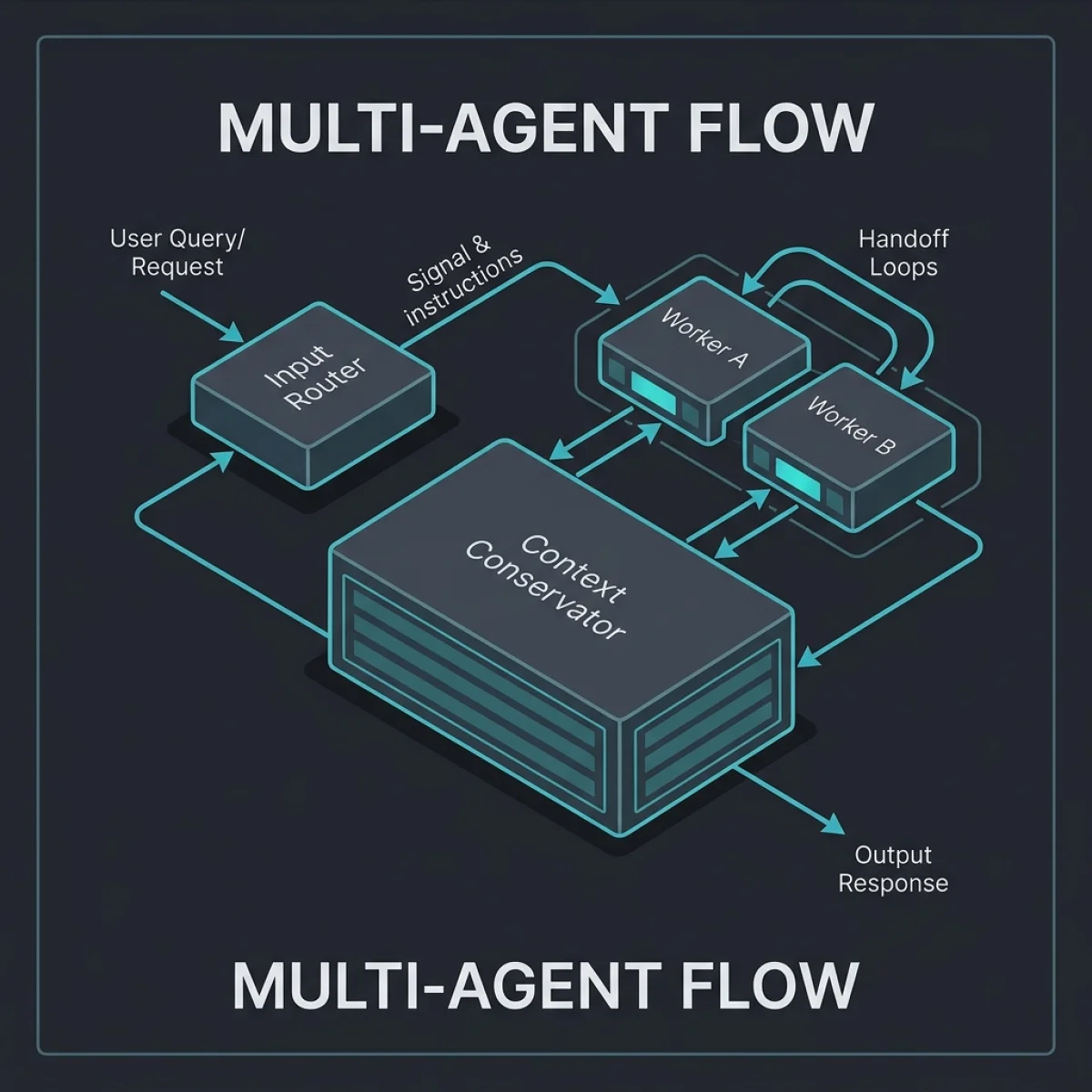
- Multi-Agent Handoff Patterns: The SDK allows agents to transfer execution authority dynamically. For example, a customer-triage agent can pass a support ticket, context history, and parsed variables directly to a specialized billing agent without losing conversation state.
- Responses API Integration: A unified wrapper consolidating model responses, tool invocations, and runtime guardrails under a single Promise. This replaces legacy event-listener hierarchies and prevents sync errors during multi-step runs.
- Runtime Agent Tracing: Built-in instrumentation hooks mapping step-by-step agent decisions. Teams can monitor execution paths, tracking which agent executed which tool, the latency of each execution hop, and token consumption footprints.
- Granular Context Control: Developers can restrict which system variables and API scopes are exposed to individual workers, preventing lateral context poisoning across agent boundaries.
Why It Matters: Establishing the Enterprise Policy Boundary
The launch of the OpenAI Agents SDK addresses the "spaghetti graph" problem in AI systems. Until now, engineering teams built custom routing loops using LangChain, LangGraph, or custom Python libraries. This led to fragmented codebases where every team defined its own state schemas and context-passing logic.
In my advisory work with platform teams, I have seen this custom abstraction model fail under scale:
- The Graph Tech Debt: Maintaining custom routing networks across 20+ specialized microservices incurs high engineering overhead. The Agents SDK provides a standard interface, making multi-agent transitions declarative rather than procedural.
- Context Leakage Risks: Without hard boundaries, giving an agent access to database logs can result in prompt injection attacks that compromise sensitive customer data. The SDK's context controls allow platform architects to apply least-privilege principles to individual worker nodes, much like configuring a Zero-Trust Node Mesh to block unauthorized file-system queries.
- Traceability in Audit Trails: Compliance mandates require full auditability of AI actions. Native runtime tracing logs every agent decision, providing a transparent trail of which tools were executed and why.
What to Watch Next
As teams integrate the OpenAI Agents SDK into production architectures, watch for these key trends:
- Protocol-Native Tooling: Expect direct integrations with Model Context Protocol (MCP) servers, allowing OpenAI agents to interface with database systems and local file-system mounts using standardized schemas.
- Edge Routing Runtimes: Future updates will likely allow local orchestration routing to run on edge servers, switching between local small language models (SLMs) and cloud-hosted frontier models to optimize latency.
- Unified Audit Dashboards: Third-party observability tools will release native plugins for OpenAI runtime tracing logs, consolidating agent performance monitoring into corporate security consoles.