What Happened In a landmark policy shift, Samsung Electronics has officially lifted its three-year-old restriction on generative AI tools. On June 21, 2026, th…
What Happened
In a landmark policy shift, Samsung Electronics has officially lifted its three-year-old restriction on generative AI tools. On June 21, 2026, the South Korean conglomerate announced a company-wide deployment of OpenAI's ChatGPT Enterprise alongside the secure Samsung Codex developer platform. The initiative will span the entirety of Samsung's South Korea workforce and its global Device eXperience (DX) division, which oversees mobile, consumer electronics, and smart home developments.
This deployment marks a complete generative AI ban reversal for Samsung. The original restriction was implemented in May 2023 after multiple software engineers accidentally uploaded proprietary semiconductor source code and sensitive meeting notes to ChatGPT's public servers. For three years, Samsung maintained a strict sandbox strategy, forcing developers to rely on highly restricted internal models.
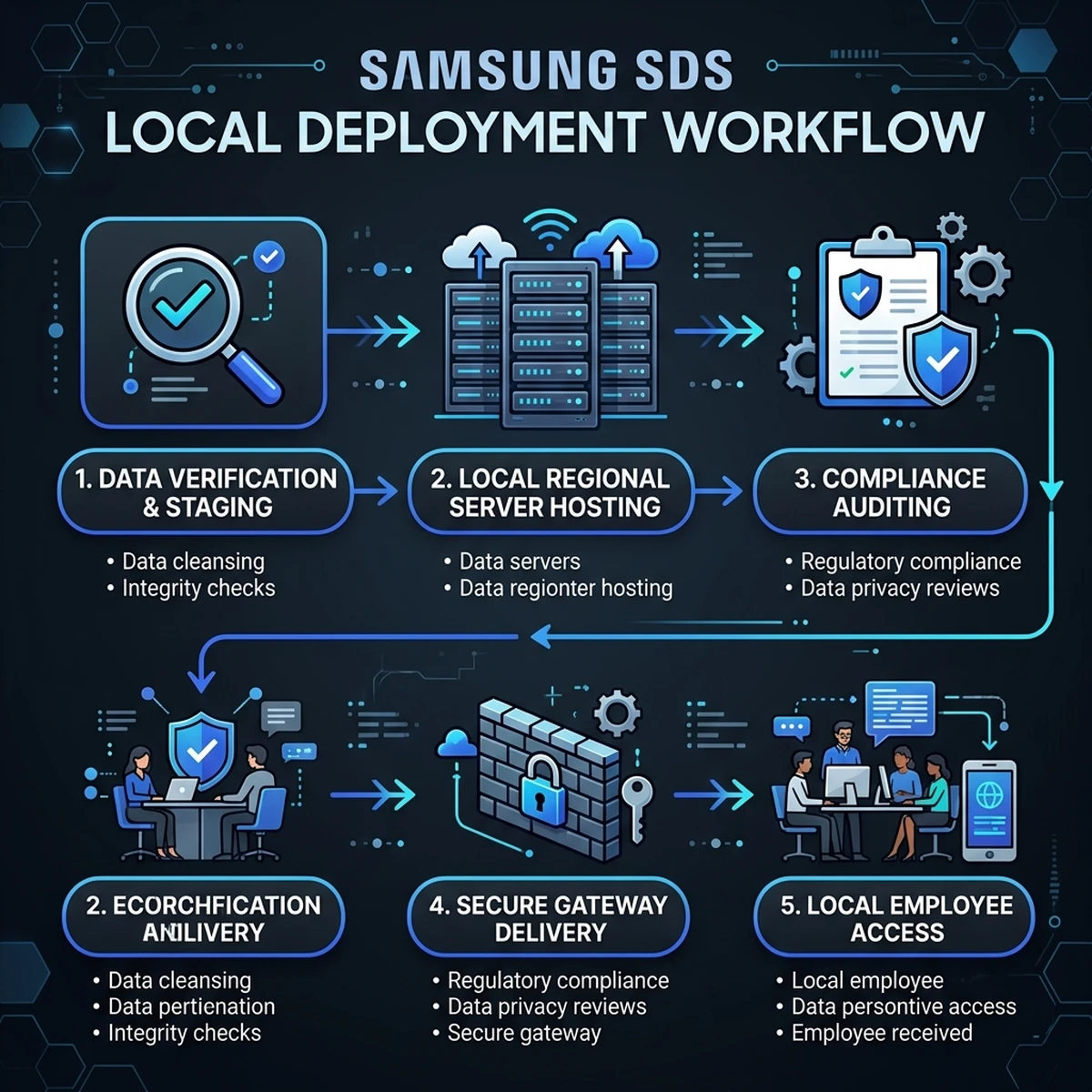
To facilitate this massive deployment safely, Samsung has partnered with its IT service subsidiary, Samsung SDS. Acting as the certified reseller and systems integrator, Samsung SDS will host local API gateways, perform real-time data inspection, and ensure strict compliance with regional data protection rules.

Why It Matters
This deployment highlights a mature compromise between corporate productivity and intellectual property security. In the early waves of generative AI adoption, enterprises reacted with outright bans to prevent data leakage. By 2026, the cost of restricting developer productivity has become higher than the cost of implementing advanced network containment layers.
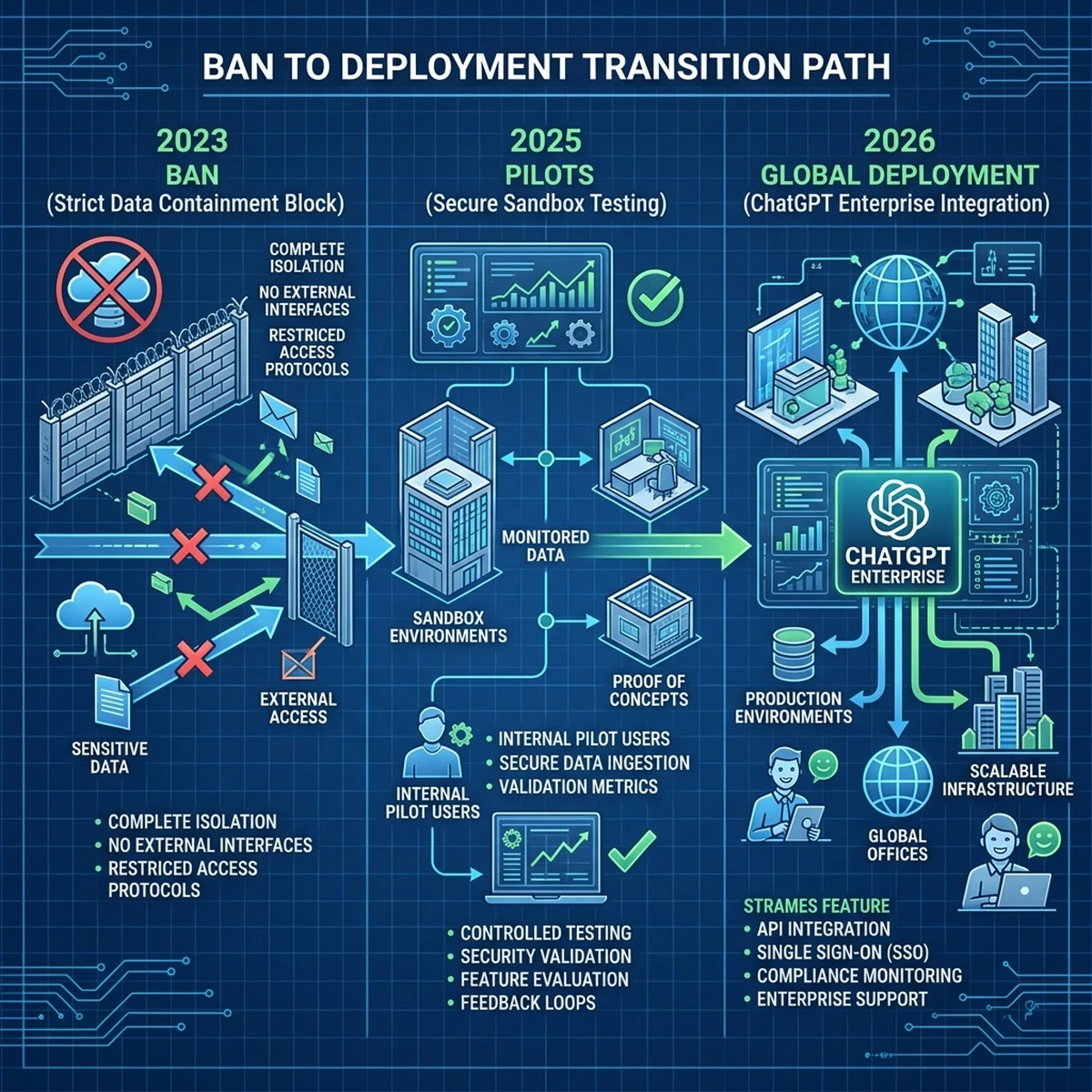
The Ban-to-Deployment Transition Path
Samsung's transition from a strict blockade to a global deployment represents a standard blueprint for modern enterprise IT governance.
   2023 Ban Phase              2025 Pilot Phase             2026 Deployment Phase
┌──────────────────────┐    ┌──────────────────────┐    ┌──────────────────────────┐
│ Source Code Leak     │    │ Private VPC Sandboxes│    │ ChatGPT Enterprise +     │
│ Public Access Blocked│───►│ SDS Proxy Auditing   │───►│ Samsung Codex Global API │
│ Internal IP Protected│    │ Dept-Level Testing   │    │ SDS Secure Gateway Active│
└──────────────────────┘    └──────────────────────┘    └──────────────────────────┘
By transitioning through these phases, Samsung was able to audit user behaviors, measure risk thresholds, and build the custom auditing proxies needed for global scale. For detailed guidance on preventing data leaks, see my analysis on Surviving Shadow AI: Architecting Enterprise Governance.
Custom Coding Integration
While ChatGPT Enterprise handles general knowledge work, the deployment of the Samsung Codex developer platform directly impacts the engineering lifecycle. Operating as an IDE-integrated assistant, the Codex platform is optimized to suggest hardware description code (such as Verilog and VHDL) alongside standard software languages like C++, Java, and Python.
This integration addresses a critical engineering bottleneck. Samsung's internal benchmarks indicate that developers using localized coding assistants write code 32% faster, with a 15% reduction in syntax errors. The challenge, however, lies in keeping these suggestions compliant with licensing constraints and secure from supply chain vulnerabilities.
To manage this risk, Samsung's engineering teams must operate under structured governance guidelines, similar to those outlined in The Post-Managerial Era: Leading Autonomous Agents.
:::insight — Vatsal's Expert Take
Samsung's policy reversal is a warning to enterprise leaders who still rely on outright bans to manage AI risk. You cannot run a competitive technology company in 2026 by keeping your engineers away from frontier tools. The solution is never exclusion; it is architected containment.By utilizing Samsung SDS as a local reseller and secure proxy layer, Samsung has built a defensive perimeter around OpenAI's API. This ensures that their proprietary intellectual property—especially semiconductor layout designs and manufacturing source code—never leaves their controlled environments.
If you are designing AI policies for your organization, prioritize three rules:
- Model Training Opt-Outs: Enforce strict zero-retention policies where model providers cannot use your inputs to train public systems.
- Local Gateway Decryption: Inspect all prompt payloads for sensitive patterns (like API keys, passwords, or hardware layouts) before they leave your VPC.
- Hybrid Model Routing: Route non-sensitive tasks to public clouds, but execute highly proprietary code completions on local micro-models.
Geopolitical Data Governance & Privacy Protocol
The foundational element of the Samsung SDS reseller partnership is the custom-built data gateway. In South Korea, strict personal data protection laws (PIPA) prevent corporate entities from exporting sensitive user data without explicit consent.
To comply with these laws, Samsung SDS established local regional hosting endpoints. Any query sent by a Samsung employee first passes through an SDS compliance filter, which removes personally identifiable information (PII), scrambles internal IP addresses, and checks for proprietary code snippets.
The following diagram illustrates the secure pipeline:
[Employee Client] ──► [SDS Auditing Gateway (DLP)] ──► [Local VPC Proxy Node] ──► [OpenAI API (SSL)]
                             │                                  │
                             ▼                                  ▼
                     Strip PII & IP                     Audit Log Generated
This local proxy ensures that even if a developer enters proprietary information, the auditing gateway catches and blocks the payload before it leaves Samsung's internal network.
This architecture sets a new standard for corporate AI data governance. By combining local regional compliance gates with international API endpoints, multinational corporations can safely implement third-party AI models without compromising local regulatory compliance.
What to Watch Next
- Semiconductor IP Isolation: Watch for details on how Samsung intends to isolate its foundry and memory business divisions. While the DX division has adopted ChatGPT Enterprise, the Device Solutions (DS) division—which manufactures physical microchips—may continue to enforce strict internal sandbox models.
- Rival Enterprise Rollouts: Watch to see if competitors like SK Hynix or LG Electronics follow Samsung's path. If Samsung's developer efficiency metrics show positive results in Q3 2026, we can expect a wave of similar policy reversals across other South Korean conglomerates.
- Samsung SDS expansion: Samsung SDS is positioned to market this secure auditing gateway to other global enterprises. Look for new enterprise cybersecurity offerings from Samsung SDS that allow organizations to deploy public APIs behind custom corporate proxies.